I’ve recently started working on prep for a free online course (Coming Soon!) and for my fall classes, and I wasn’t happy with most of the course planning or unit planning guides I found online, so I created my own. I’ve included it here as a printable PDF and also a fully editable MS Word Document. Feel free to take this and use it any way you like!
If you’re currently a content creator or thinking about becoming a content creator, it’s my opinion that teachers and writers are most suited to creating online courses. I’ve also found that online courses are not only fun to create (I always learn something every time), but they are also the most potentially lucrative. Creating an online course can offer numerous benefits for content creators and their audience. Here are some key advantages to working with this medium:
Share expertise and knowledge: Online courses allow content creators to package their expertise and knowledge in a structured format. They can share their unique insights, skills, and experiences with their audience, providing valuable learning opportunities.
Reach a wider audience: By offering an online course, content creators can reach a global audience. Unlike traditional in-person workshops or seminars, online courses can be accessed by anyone with an internet connection, breaking down geographical barriers and increasing the potential reach of their content.
Monetization opportunities: Online courses can be a source of income for content creators. They can charge a fee for access to the course, creating a revenue stream that complements other content creation efforts. Courses can also be offered as part of a subscription or membership model, providing ongoing revenue.
Establish authority and credibility: Developing and delivering high-quality online courses can enhance a content creator’s reputation as an authority in their field. By sharing in-depth knowledge and providing valuable educational content, they can build credibility and trust among their audience, potentially leading to additional opportunities such as speaking engagements or collaborations.
Fostering deeper engagement: Online courses often provide a more immersive and interactive learning experience compared to other forms of content. They allow content creators to engage with their audience on a deeper level, facilitating active participation, discussions, and feedback. This can strengthen the relationship between the content creator and their audience.
Flexible learning options: Online courses offer flexibility in terms of timing and accessibility. Learners can access the course material at their own pace and convenience, fitting their education into their schedule. This flexibility accommodates diverse learning styles and allows individuals to tailor their learning experience to their specific needs.
Addressing specific needs: Online courses enable content creators to address specific pain points or needs of their audience. They can develop courses that provide practical solutions, step-by-step guides, or specialized knowledge in a particular niche. This targeted approach enhances the value of the course and increases its relevance to the learners.
Evergreen content and scalability: Once created, online courses can be available indefinitely, making them evergreen resources. Content creators can continue to generate revenue and provide value over time without constantly creating new content. Additionally, online courses can be scaled easily to accommodate a growing audience without significant additional resources.
By creating online courses, content creators can leverage their expertise, reach a wider audience, generate income, establish authority, foster engagement, provide flexible learning options, address specific needs, and scale their offerings. It can be a win-win situation for both content creators and their audience, providing valuable educational experiences while creating new opportunities for growth.
I’ll be honest, in the summer I tend to fluctuate between wanting to do nothing but sit on the couch watching Netflix and eating Taco Bell, to wanting to work on projects that I never have time for (like writing my novel), to wanting to do some prep for the coming school year.
It’s important to rest and recharge, but I also find that I get more out of summer, and have a less stressful school year, when I plan to do a little work on projects and prep. I make it fun, by working in a coffee shop or preparing a snack to eat while I work, and I stick to being producting only a few days a week, while the rest of the week I do things with my kids.
Here are some suggestions for things to do to prepare for the coming school year:
Reflect on the previous year: THIS IS SO IMPORTANT. Take time to reflect on the previous school year, identifying both successes and areas for improvement. Consider what worked well and what changes you want to implement in the upcoming year.
Set goals: Establish clear and achievable goals for the upcoming school year. These can be related to student achievement, personal growth, or professional development. Setting goals will give you a sense of direction and purpose.
Create or update resources: Take the time to create or update teaching resources, such as lesson plans, worksheets, and presentations. Consider incorporating new instructional strategies, technologies, or resources that can enhance student learning.
Explore new teaching strategies: Stay up to date with the latest educational research and pedagogical approaches. Explore new teaching strategies that align with your goals and the needs of your students. Look for professional development opportunities or online courses that can expand your teaching toolkit.
Read educational literature: Read books, articles, or research papers related to education and teaching. Explore topics that interest you, such as classroom management, instructional strategies, or social-emotional learning. These readings can deepen your understanding and inform your practice.
Refresh your knowledge: Review content knowledge in your subject area. Brush up on topics you might be teaching and ensure you are up to date with any changes in your field. This will boost your confidence and help you deliver accurate and meaningful instruction.
Take care of yourself: Remember to prioritize self-care during the summer break. Engage in activities that recharge you mentally, emotionally, and physically. Take time for hobbies, relaxation, and spending quality time with loved ones. A well-rested and rejuvenated teacher can bring more energy and enthusiasm to the classroom.
Plan for classroom management: Reflect on your classroom management strategies and consider any necessary adjustments. Plan for establishing routines, rules, and procedures at the beginning of the school year to create a positive and structured learning environment.
By engaging in some of these activities, we can start the school year feeling prepared and inspired.
I’ve been pondering the problem of AI and ChatGPT for writers and teachers of writing, and there is one important, overlooked role of writing in our lives and especialy in the ELA classroom, which is the role of writing as THINKING. It would be valuable for teachers to model for their students a change in percecption as writing as a hoop to jump through or a task to check off. The focus on writing as confined, rigid final product that meets an assignment requirement will only incentivize students to take shortcuts in the form of plaigairism or overreliance on AI tools.
What is writing as thinking?
Writing as thinking is a process in which you use writing as a tool to clarify and develop your thoughts. It involves putting your ideas into words, organizing them on paper or a digital document, and refining them as you go. Here are a few examples of how writing can be used as a means of thinking:
Journaling: Keeping a journal is a common way to engage in writing as thinking. By writing about your experiences, thoughts, and emotions, you can gain a deeper understanding of yourself and your reactions to the world around you. It allows you to reflect on your experiences and explore different perspectives.
Example: “Today, I felt overwhelmed by the workload at my job. I started journaling to understand why I feel this way and to brainstorm possible solutions. As I wrote, I realized that my lack of time management is contributing to my stress. I made a list of tasks I need to complete and identified areas where I can improve my efficiency.”
Free Writing: Free writing involves setting a timer and writing continuously without worrying about grammar, spelling, or coherence. The goal is to let your thoughts flow without any restrictions. This technique can help you bypass self-censorship and access deeper layers of your thinking.
Example: “I have been struggling with a decision lately. Should I take that job offer or stay in my current position? There are so many factors to consider: salary, work-life balance, career growth, and personal fulfillment. As I free wrote about it, I discovered that my fear of change and the unknown is holding me back. It made me realize that I need to explore my fears and evaluate the potential benefits of taking the leap.”
Mind Mapping: Mind mapping is a visual technique that allows you to brainstorm and organize your thoughts in a non-linear manner. It involves creating a diagram with a central idea and branching out to related concepts and subtopics. Mind maps can help you see connections between ideas and generate new insights.
Example: “I was assigned a research project, and I started by creating a mind map. I wrote down the main topic in the center and then brainstormed related keywords and concepts around it. As I expanded the branches, I noticed patterns and themes emerging. This helped me clarify the scope of my project and identify potential areas of focus.”
Drafting and Revising: When working on a complex piece of writing, such as an essay or a report, you can use the drafting and revising process as a form of thinking. By writing an initial draft, you can externalize your thoughts and ideas. Then, through the process of revising and editing, you can refine and develop your arguments and structure.
Example: “I started writing an essay on climate change, and my initial draft was scattered and lacked a clear argument. As I revised my work, I realized that I needed to narrow down my focus and develop a strong thesis statement. I also found gaps in my evidence and had to conduct further research to strengthen my arguments. The act of writing and revising helped me clarify my thoughts and present a more coherent and persuasive piece.”
These are just a few examples of how writing can be used as a thinking tool. The process of putting your thoughts into words can help you explore ideas, uncover insights, and gain a deeper understanding of complex topics. It’s a valuable practice for personal reflection, problem-solving, and academic or professional writing.
I’ve been selling on Teachers Pay Teachers (who recently changed their brand and name to TpT) since 2017, but I’ve only recently begun to have a small amount of success. I typically make between $25-50 a month (I made a grand total of $644 last year), but am slowly seeing that number increase as I work to create more products and improve the quality of my resources and product descriptions.
There is a little bit of controversy about TpT in some teaching circles, but in other professions it’s completely normal to sell IP (intellectual property) and consulting services. As an educator, I have found some high-quality resources that have ranged from life-saving to just making my life easier on a Monday morning. That being said, there are some poor-quality resources on TpT, so buyer beware. I never buy or sell anything that doesn’t have a detailed product description and a preview of what I’m buying or selling, but more on that below.
If you’ve never sold on TpT before, here are some tips to help you get started selling lesson plans and curriculum resources.
Research the market: Before you start creating your lesson plans and curriculum resources, take some time to research what is already available on Teachers Pay Teachers. Look for popular topics and themes, as well as gaps in the market where you could provide valuable resources. Pay attention to pricing, too; you don’t want to underprice or overprice your materials.
Identify your niche: Start by identifying your area of expertise and the topics you are most passionate about. Consider the subjects and grade levels you teach, the resources you’ve developed over time, and the areas where you feel you can make the greatest impact.
Create high-quality resources: Once you have a good understanding of the market, it’s time to start creating your lesson plans and curriculum resources. Make sure that your materials are high-quality and well-designed, with clear instructions and engaging activities. Consider adding in some interactive elements, such as games or quizzes, to make your materials even more engaging.
Price your resources strategically: Pricing your resources is an important aspect of selling on Teachers Pay Teachers. Consider the time and effort you put into creating your resources, as well as their quality and value. Check the prices of similar resources on the marketplace and use that as a guide.
Promote your resources: Once you’ve created and listed your resources on Teachers Pay Teachers, you need to promote them to potential buyers. Use social media to share your resources with your network and encourage others to share them as well. You can also use email marketing and other digital marketing strategies to get your resources in front of more people.
Update and improve your resources: It’s important to keep your resources up to date and make improvements based on feedback from buyers. Consider creating a feedback loop with your customers to gather feedback and suggestions for improvement. This will help you create better resources that meet the needs of your target audience.
Selling lesson plans and curriculum resources on Teachers Pay Teachers can be a great way to earn extra income while helping other teachers improve their classroom experience. With these tips, you can get started on the right foot and build a successful business on the platform.
If you’re interested in trying your hand at creating resources, I’ve made a simple product template to help you get started.
This month I will explore, in-depth, five possible side hustles for educators. These are tried and true ways that educators can establish themselves as a brand, create content, and make a little extra money on the side. All five of these are possible income streams, and I will feature each one in its own post, along with my own experience creating and monetizing content and how much success I’ve had with each method or platform.
Curriculum Development: Use your expertise as a teacher or writer to create and sell curriculum materials on platforms like Teachers Pay Teachers (now TpT) or Teachers Notebook. I’ve been selling on TpT for five years.
Freelance Writing, Copyediting, pr Proofreading. Write articles or blog posts for websites or publications in your area of expertise. You can find freelance writing opportunities on sites like Fiverr or Upwork. I’ve had great success with Fiverr, although it is a LOT of work.
Create Online Courses: Teach online courses or workshops through platforms like Udemy or Skillshare.
Blogging: It’s still possible to make money blogging! The primary ways people make money blogging are through ads and affilate marking.
YouTube: Although this is a very difficult platform to break into, and making videos is very time-consuming, some creators are able to make a living off of YouTube alone. I think with consistency and persistence this can be a valuable income stream.
I have created content and made money, or attempted to make money, on the following platforms:
TEACHERS PAY TEACHERS (TpT)
FIVERR
UDEMY
WORDPRESS
YOUTUBE
This month I will share my experience with each platform, as well as tips and tricks for how to create an audience and make money, as well as my progress on each platform over the next 30 days.
A SIOP lesson plan is a type of lesson plan that is designed to support the academic and language needs of English language learners (ELLs). The acronym SIOP stands for Sheltered Instruction Observation Protocol, and it refers to a set of instructional strategies and techniques that are used to make content more accessible to ELLs.
The SIOP model is supporting of language learning for ALL students and focuses on vocabulary review and literacy-based instructional strategies.
A SIOP lesson plan typically includes the following components:
Pre-lesson preparation: This includes activities such as setting up the classroom, gathering materials, and reviewing the lesson objectives.
Building background knowledge: This includes activities such as providing background information about the topic, making connections to prior knowledge, and activating prior knowledge.
Comprehensible input: This includes activities such as providing clear explanations and examples, using visual aids and graphic organizers, and using gestures and body language to support understanding.
Strategies: This includes activities such as using graphic organizers, making predictions, and asking and answering questions to promote critical thinking and problem-solving skills.
Interaction: This includes activities such as pair and group work, think-pair-share, and other techniques to promote interaction and collaboration among students.
Practice and application: This includes activities such as assigning homework, conducting hands-on activities, and using authentic materials to provide opportunities for students to practice and apply what they have learned.
Review and assessment: This includes activities such as formative and summative assessments to evaluate student understanding and progress.
Overall, the goal of a SIOP lesson plan is to provide a supportive and inclusive learning environment for ELLs and to help them acquire the language and academic skills they need to succeed in school.
I’ve included two forms of the SIOP lesson planning template below, as both an MS Word format and PDF.
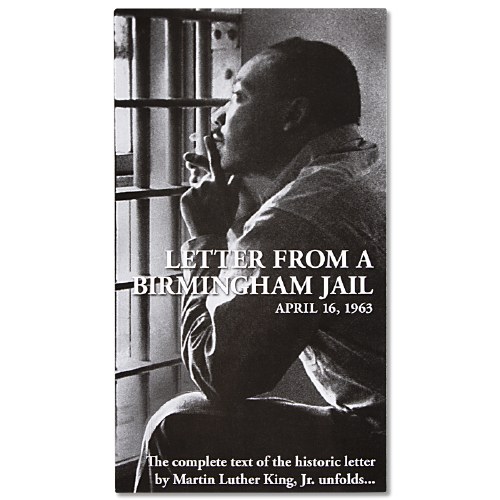
MLK Jr. quotes on Twitter are ubiquitous from the middle of January (MLK Jr.’s birthday) through February (Black History Month). Instead of grabbing decontextualized quotes from the internet, do yourself a huge favor and read “Letter from Birmingham Jail,” which is one of the most powerful pieces for writing in American history.
Here is a link to the original document, which is archived at Stanford:
I’ve been doing a lot of research into active vs. passive learning lately in preparation for my fall teaching.
What is active vs. passive learning?
Active learning simply means that students literally take an action while learning, more formally it means that students take an active role in the learning process. But what does that look like in the classroom? In an active learning classroom, the students are not just taking notes, but are taking guided notes, are stopping to discuss and reflect, and are working collaboratively to learn concepts and solve problems. When students are learning passively, they are simply present and listening to a lecture.
Active Learning and Graphic Organizers
One strategy that helps with promoting active learning is the use of graphic organizers. Here is a great YouTube video with explains what graphic organizers are and how they promote active learning:
Here is resource on active learning from the University of Minnesota:
Some people prefer to call it ERT, or Emergency Remote Teaching, so as not to normalize the lack of preparation and training many teachers have been given for teaching online this past spring and this fall during a global pandemic. Like many of you, my institution decided to switch to “remote learning” at the last minute, after a summer of promising and preparing to be in-person.
I have some experience teaching online courses and I enjoy it under normal circumstances, but I’ve been exploring different options for course delivery this fall, which includes things like remote synchronous (teaching “live” during scheduled class time), asynchronous (most traditionally online courses are delivered this way) and HyFlex (a combination of three delivery methods when and if in-person instruction is also available). I will be using this post to provide a curated list of resources and links to all three approaches. In helping other teachers, I believe in simplicity, so instead of including an exhaustive and comprehensive list of resources, I’ve included the three I find most helpful. I will also be writing up a few posts about the approach as I plan my fall classes, and will be making up some free resources (such as active learning graphic organizers) to share. Please follow this blog for more!









 ELA Source
You must be logged in to post a comment.