

Welcome to Side-Hustle Sunday! Each week in this weekly round-up I will discuss:
- Current updates and metrics across all platforms
- A review of the platform I focused on for the previous week (I will skip this the first week and instead provide a brief overview of all of the platforms I post on).
- What I accomplished
- Lessons learned
- Next week’s platform + goals
Platforms:
For several years now, I’ve been exploring and building on a variety of platforms in an attempt to build and audience and establish a consisten income stream.
Each of these platforms have different strengths, audiences, and content types. Here’s a quick tour of where I’m posting and why:
Teachers Pay Teachers (TpT)
What it is: An online marketplace where educators sell lesson plans, activities, assessments, and classroom resources.
Why I use it: I can turn my existing teaching materials into income by sharing them with other educators.
Best for: Teachers, tutors, and curriculum creators in K–12 or higher ed.
Etsy
What it is: A creative marketplace for handmade goods, vintage finds, and—more recently—digital downloads like planners, journals, and printables.
Why I use it: It’s great for selling beautiful, useful products with a strong visual or aesthetic appeal.
Best for: Printables, digital planners, classroom decor, wall art, and niche kits.
What it is: A visual-first social media platform used for branding, marketing, and community building.
Why I use it: It’s a great place to showcase behind-the-scenes content, quick tips, and build connections with other creators.
Best for: Growing your audience, cross-promoting products, and showing personality.
WordPress (My Blog)
What it is: A blogging and website platform that lets you publish long-form content, tutorials, and updates.
Why I use it: It’s my content home base—great for SEO, in-depth posts, and linking to my products.
Best for: Evergreen content, long-form tutorials, and resource roundups.
What it is: A visual discovery engine where users save and share ideas—especially for education, crafts, home, and DIY.
Why I use it: My blog and products can gain long-term traffic through visually appealing pins.
Best for: Teachers, creatives, and anyone with visually-driven content or tutorials.
Royal Road + KDP (Self-Publishing)
Royal Road: A free web serial platform where you can publish your fiction one chapter at a time.
KDP (Kindle Direct Publishing): Amazon’s self-publishing service for eBooks and print books.
Why I use them: Royal Road is great for building a reader base, while KDP allows me to sell completed books or journals.
Best for: Writers of fiction, fanfic, low-content books, and serial storytellers.
YouTube
What it is: A video-sharing platform used for tutorials, vlogs, reviews, and educational content.
Why I use it: YouTube lets me reach visual learners and build trust through face-to-face (or voice-to-voice) content.
Best for: Teaching, documenting your journey, and creating content with long-term value.
Course Platforms (Udemy, Gumroad, etc.)
Udemy: A structured, student-facing course platform where you upload video lessons and reach learners through Udemy’s marketplace.
Gumroad: A flexible storefront where you can sell mini-courses, ebooks, templates, and more—directly to your audience.
Why I use them: These platforms help me turn knowledge into income by packaging what I know into teachable, sellable formats.
Best for: Creators with teachable skills or digital products.
My Current Metrics:
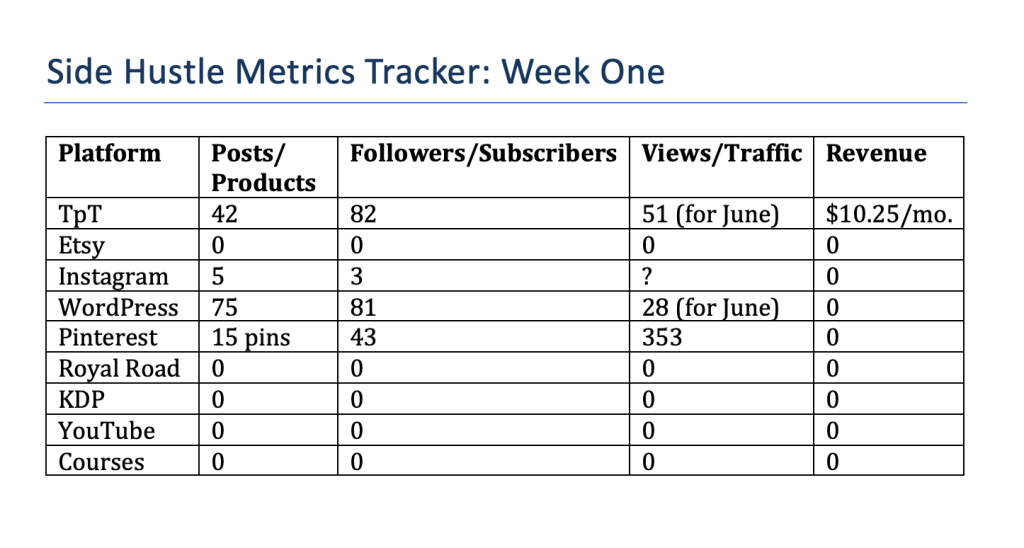
Below is a table with all of the platforms I intend to publish on (I won’t be focusing on all of these during the six week challenge, but will update this table every week). As you can see, for some platforms, like Etsy and YouTube, I haven’t started posting products and videos yet, nor have I created any courses, but I’m including them in these metrics because I want you to have a real-time record of my progoress.
Week One: TpT (Teachers Pay Teachers)
This week, I’ll be focusing on Teachers Pay Teachers (TpT), which is a platform designed for educators to buy, sell, and share classroom resources. If you’re a teacher, tutor, or curriculum creator, TpT is a fantastic way to turn your hard work into passive income by listing the lessons, activities, and worksheets you already use in your classroom. It’s beginner-friendly, especially if you start with free tools like Google Slides or Canva to design your products.
My goal for the week is to create one product from scratch and take steps to improve my overall metrics, while at the same time walking you through the process of how I create products using free tools and how I improve my metrics and build my audience.


 ELA Source
You must be logged in to post a comment.