From Classroom to TpT: Free Tools for Creating Teacher Resources


As part of the the Six-Week Creator Challenge, I promised to share free tools that I use to create and sell digital products online. This week focuses on TpT (Teachers Pay Teachers), but even teachers who don’t plan to sell on TpT will find these tools useful.

If youโ€™re a teacher or educator looking to turn your classroom resources into digital products, you donโ€™t need expensive design software to get started. In fact, some of the most popular products on Teachers Pay Teachers (TpT) are created with tools you already know and love, such Google Docs and Google Slides. For those of you who don’t like Google products, I will be addressing other free tools, such as Canva and MS Office tools, in future posts.

However, I love Google’s free suite of tools, especially Docs and Slides. Whether you’re building engaging graphic organizers, editable writing prompts, or classroom decor, Google tools can help you create polished, professional-looking products with ease. Hereโ€™s how to get started.


Step 1: Choose the Right Tool for Your Product

Google Docs is perfect for:

  • Printable worksheets
  • Reading passages
  • Lesson plans or unit outlines
  • Instructional guides or templates

Google Slides is great for:

  • Interactive lessons
  • Task cards or flashcards
  • Anchor charts
  • Student activities that require visual organization
  • Editable classroom signs or posters

The best part is that you can also combine both toolsโ€”use Docs for written instruction and Slides for visuals.


Step 2: Set Up Your Document or Slides for TpT Use

  • Page Setup:
    • For printable products, change the slide/page size to standard 8.5 x 11 inches (File > Page Setup > Custom).
    • Use landscape or portrait depending on your design needs.
  • Branding & Design:
    • Use consistent fonts, colors, and a simple logo or footer with your name/store link.
    • Add a cover page, directions page, and credit page to your product.
    • Include terms of use and citation for any graphics or fonts used.
  • Make it Editable (Optional):
    • Create editable text boxes in Slides so teachers can customize parts of the product.
    • In Docs, use tables or comments to guide users where they can modify content.

Step 3: Export, Bundle, and Upload

  • When your product is complete:
    • Export as a PDF for secure, print-ready versions.
    • If offering an editable version, include the Google Docs or Slides link using a force-copy URL.
    • Bundle PDFs and editable versions in a ZIP file if needed.
  • Upload your product to TpT:
    • Write a clear, keyword-rich product title and description.
    • Include preview images (screenshots of your Doc/Slides).
    • Tag relevant grade levels and standards.

Final Tips for Success

  • Start with resources you already use in class. If it worked for your students, chances are other teachers will find it valuable too.
  • Keep your formatting simple and classroom-tested.
  • Reuse templates! Save time by reusing Docs/Slides layouts across multiple products.

Creating high-quality TpT products doesnโ€™t require fancy design software. With Google Docs and Slides, you can create resources that are clean, customizable, and totally teacher-friendly.

Short Story Analysis Tool-Kit

I created the product below, in my TpT store, using Google Docs + Canva (for the cover)
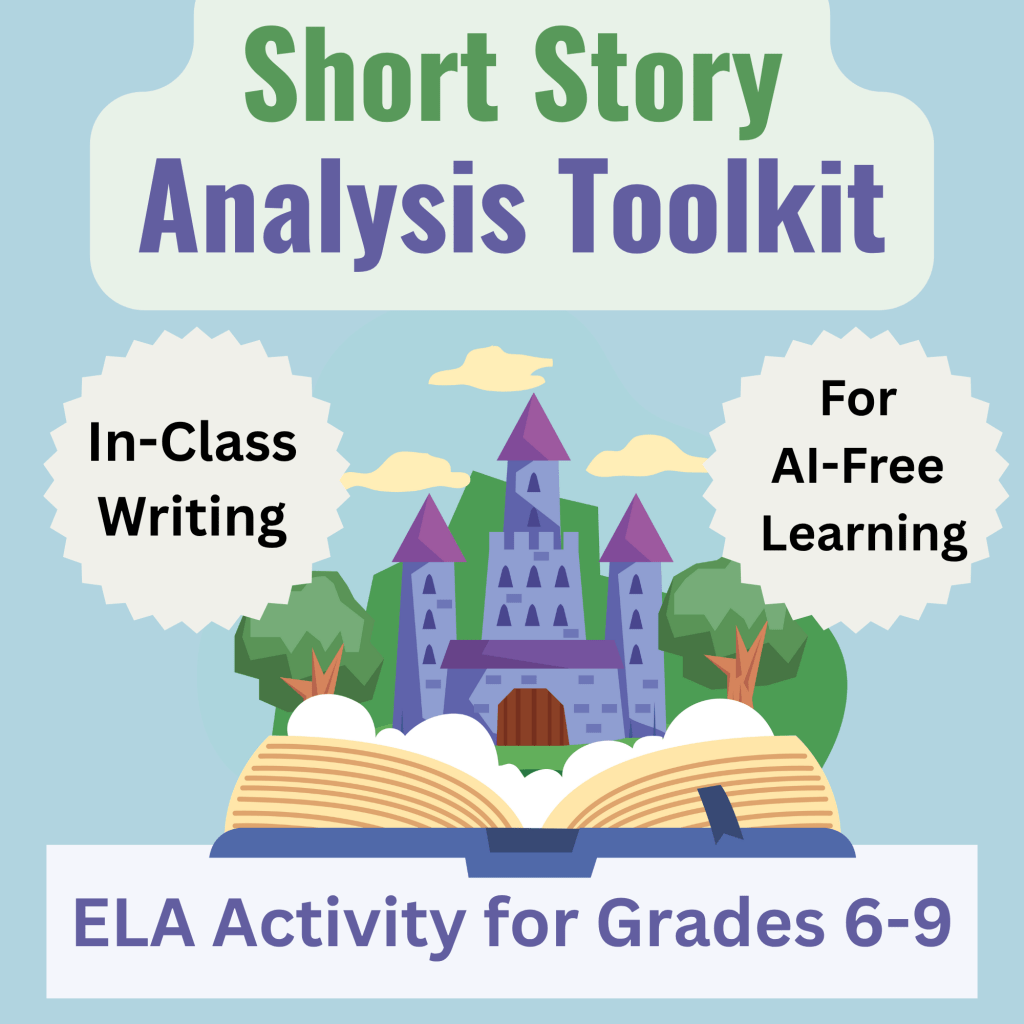
Short Story Analysis Toolkit (link to TpT)

Know Your Audience


This week is all about teachers! For Week One of the Six-Week Creator Challenge I will focus on Teachers Pay Teachers (which is now called TpT), which is a platform for creating and sharing lesson plans and teaching materials.

When creating the Six-Week Creator Challenge I decided to focus on ONE platform per week, to help me stay focused, and to force me to start creating content for that platform. I will then continue to create content for that platform consistently (at least once per week) once I move on to explore the other platforms. As I mentioned in Sunday’s post, I will then share my progress and metrics each week, as well as discuss the pros and cons of each platform. At the end of the six weeks I’ll do a big write up about my overall impressions and progress.

I’m not going to write about how to get started on Teachers Pay Teachers, you can read about that in this post. Instead, I’m going to share details about my overall process, as well as steps I will take to improve growth and engagement on that platform (and hopefully revenue!).

I’ve been on TpT for several years now, but have never put much time into it, nor approached it with a coherent strategy. One of the reasons I created this challenge to was to learn about each platform and make an intentional effort to improve by creating content consistently and getting to know the ins and outs of the platform’s (and my niche’s) audiences and algorithms.

Why Knowing Your Audience is So Important

Knowing your audience is essential when creating content for online platforms because it allows you to tailor your message, tone, and delivery to meet the specific needs, interests, and expectations of the people you’re trying to reach. Understanding who your audience is helps you choose the right format, language, and content strategy to engage them effectively. It also increases the likelihood that your content will resonate, be shared, and achieve its intended purpose, whether that’s to inform, entertain, inspire, or drive action. Without a clear understanding of your audience, even the most well-crafted content can fall flat.

Find a Problem to Solve

One key factor in thinking about your audience is to help them solve a problem by offering a product, tutorial, or solution that meets their needs. And to go above and beyond! (“Take my money!”). For TpT, this involves thinking about teachers in my niche, which is creating ELA (English Language Arts) content (hence the title of this blog: ELA Source).

Luckily for me, ELA teachers have a lot of problems to solve, ha ha. From worrying about plagiarism and AI, to struggling with student behavior and enagement (what to do about phones?), to finding resources on the best ways to teach reading, writing, and grammar.

Find Your Niche: Play to Your Strengths

By focusing on this audience and this niche, I’m playing to my strengths. I have a BA in English, an MA in Literature, and a Doctorate in Curriculum Design. I’ve also been a teacher at the middle school, high school, and college levels for 30 years.

Goals for this Week

This week I’m going to focus on creating products that help teachers avoid plagiarism and AI by engaging them in the research and writing process in the classroom, which I feel very strongly is the solution to avoiding AI (more on this in another blog post).

Tomorrow I will post about how I use free online tools to create and sell digital content and I’ll give you a peek at the resource I’m creating for TpT. Be sure to subscribe if you’d like to follow along for this challenge. Itโ€™s free to subscribe and I donโ€™t share your emails with anyone. ๐Ÿ™‚

Side-Hustle Sunday


Welcome to Side-Hustle Sunday! Each week in this weekly round-up I will discuss:

  1. Current updates and metrics across all platforms
  2. A review of the platform I focused on for the previous week (I will skip this the first week and instead provide a brief overview of all of the platforms I post on).
  3. What I accomplished
  4. Lessons learned
  5. Next weekโ€™s platform + goals

Platforms:

For several years now, I’ve been exploring and building on a variety of platforms in an attempt to build and audience and establish a consisten income stream.

Each of these platforms have different strengths, audiences, and content types. Hereโ€™s a quick tour of where Iโ€™m posting and why:


Teachers Pay Teachers (TpT)

What it is: An online marketplace where educators sell lesson plans, activities, assessments, and classroom resources.
Why I use it: I can turn my existing teaching materials into income by sharing them with other educators.
Best for: Teachers, tutors, and curriculum creators in Kโ€“12 or higher ed.


Etsy

What it is: A creative marketplace for handmade goods, vintage finds, andโ€”more recentlyโ€”digital downloads like planners, journals, and printables.
Why I use it: Itโ€™s great for selling beautiful, useful products with a strong visual or aesthetic appeal.
Best for: Printables, digital planners, classroom decor, wall art, and niche kits.


Instagram

What it is: A visual-first social media platform used for branding, marketing, and community building.
Why I use it: Itโ€™s a great place to showcase behind-the-scenes content, quick tips, and build connections with other creators.
Best for: Growing your audience, cross-promoting products, and showing personality.


WordPress (My Blog)

What it is: A blogging and website platform that lets you publish long-form content, tutorials, and updates.
Why I use it: Itโ€™s my content home baseโ€”great for SEO, in-depth posts, and linking to my products.
Best for: Evergreen content, long-form tutorials, and resource roundups.


Pinterest

What it is: A visual discovery engine where users save and share ideasโ€”especially for education, crafts, home, and DIY.
Why I use it: My blog and products can gain long-term traffic through visually appealing pins.
Best for: Teachers, creatives, and anyone with visually-driven content or tutorials.


Royal Road + KDP (Self-Publishing)

Royal Road: A free web serial platform where you can publish your fiction one chapter at a time.
KDP (Kindle Direct Publishing): Amazonโ€™s self-publishing service for eBooks and print books.
Why I use them: Royal Road is great for building a reader base, while KDP allows me to sell completed books or journals.
Best for: Writers of fiction, fanfic, low-content books, and serial storytellers.


YouTube

What it is: A video-sharing platform used for tutorials, vlogs, reviews, and educational content.
Why I use it: YouTube lets me reach visual learners and build trust through face-to-face (or voice-to-voice) content.
Best for: Teaching, documenting your journey, and creating content with long-term value.


Course Platforms (Udemy, Gumroad, etc.)

Udemy: A structured, student-facing course platform where you upload video lessons and reach learners through Udemyโ€™s marketplace.
Gumroad: A flexible storefront where you can sell mini-courses, ebooks, templates, and moreโ€”directly to your audience.
Why I use them: These platforms help me turn knowledge into income by packaging what I know into teachable, sellable formats.
Best for: Creators with teachable skills or digital products.


My Current Metrics:

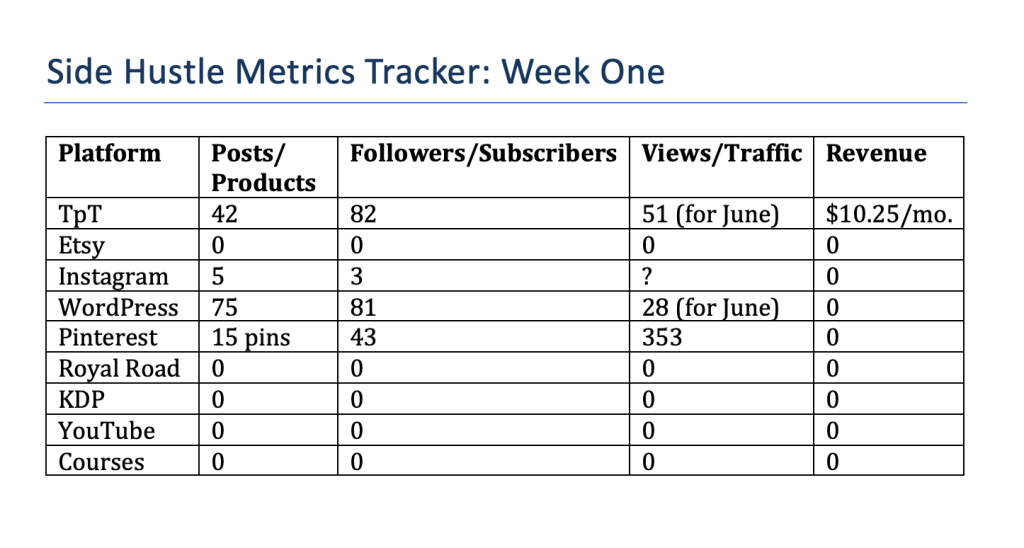
Below is a table with all of the platforms I intend to publish on (I won’t be focusing on all of these during the six week challenge, but will update this table every week). As you can see, for some platforms, like Etsy and YouTube, I haven’t started posting products and videos yet, nor have I created any courses, but I’m including them in these metrics because I want you to have a real-time record of my progoress.

Week One: TpT (Teachers Pay Teachers)

This week, Iโ€™ll be focusing on Teachers Pay Teachers (TpT), which is a platform designed for educators to buy, sell, and share classroom resources. If youโ€™re a teacher, tutor, or curriculum creator, TpT is a fantastic way to turn your hard work into passive income by listing the lessons, activities, and worksheets you already use in your classroom. Itโ€™s beginner-friendly, especially if you start with free tools like Google Slides or Canva to design your products.

My goal for the week is to create one product from scratch and take steps to improve my overall metrics, while at the same time walking you through the process of how I create products using free tools and how I improve my metrics and build my audience.

Discovery Writing & the Art of Process


As writers, we often think of our craft as a means to an end. Whether itโ€™s finishing a novel, completing a research paper, or submitting a blog post, the focus is usually on the final product. But writing is so much more than the polished piece we send out into the world. Itโ€™s an act of discovery, reflection, and growth. Writing isnโ€™t just about what we produceโ€”itโ€™s about the journey we take to get there.

This idea of writing to discover is at the heart of what makes the creative process so fulfilling. When we sit down with a blank page or screen, we may have only the faintest glimmer of an idea. Itโ€™s through the act of writingโ€”the messy, circuitous, sometimes frustrating actโ€”that we find clarity, have epiphanies, and learn not only about our subject but also about ourselves.

Writing as a Tool for Learning and Reflection

Writing is one of the most powerful tools we have for learning and reflection. When we write, weโ€™re forced to slow down and engage deeply with our thoughts. This deliberate act allows us to explore ideas, connect seemingly unrelated concepts, and arrive at insights we might not have discovered otherwise.

For students, this process is especially valuable. In an age where instant answers are just a Google search away, writing teaches patience and critical thinking. It encourages them to wrestle with complex ideas and come to their own conclusions, fostering a deeper understanding of the material. Writing to learn isnโ€™t about regurgitating facts; itโ€™s about grappling with them until they become meaningful.

Embracing the Struggle

Letโ€™s be honest: writing is hard. Itโ€™s messy, itโ€™s unpredictable, and it rarely goes as planned. But thatโ€™s exactly why itโ€™s so valuable. The struggle is where growth happens. When weโ€™re stuck, when we donโ€™t know what to say, when our ideas feel like an incoherent jumbleโ€”those are the moments when weโ€™re forced to dig deep and push through. And in doing so, we often discover something unexpected and profound.

As teachers, itโ€™s crucial to help students embrace this struggle. Too often, students are focused solely on the end result: the grade, the word count, the โ€œperfectโ€ essay. But if we can shift their mindset to see writing as a process of discovery, we can help them find joy and meaning in the act itself. The best writing doesnโ€™t come from avoiding the struggle; it comes from working through it.

Why Shortcuts Undermine the Process

In todayโ€™s world, shortcuts are everywhere. AI tools can generate essays, rephrase sentences, and even mimic a writerโ€™s voice. While these technologies can be helpful in certain contexts, they also risk undermining the very essence of writing. When we rely too heavily on shortcuts, we cheat ourselves out of the opportunity to think deeply, to wrestle with our ideas, and to grow as writers.

This isnโ€™t to say that AI tools have no place in the writing process. Used thoughtfully, they can assist with tasks like brainstorming or editing. But they should never replace the creative act of writing itself. For students especially, itโ€™s important to resist the temptation to outsource their thinking. Writing is about more than producing words on a page; itโ€™s about learning, reflecting, and discovering who they are as thinkers and creators.

Writing to Have Epiphanies

Some of the most rewarding moments in writing come when we have a sudden epiphanyโ€”when an idea clicks into place or we see a connection we hadnโ€™t noticed before. These moments canโ€™t be forced, and they certainly canโ€™t be generated by a machine. They arise organically, often when weโ€™re deep in the flow of writing, fully engaged with our thoughts.

For me, these moments are a reminder of why I write. Theyโ€™re a testament to the power of the processโ€”a process that is often messy, frustrating, and slow but ultimately transformative. And itโ€™s this transformative power that we, as teachers and writers, must nurture in ourselves and our students.

Encouraging Discovery Writing in the Classroom

So how can we foster this mindset of writing to discover in our classrooms? Here are a few strategies:

  1. Emphasize Process Over Product: Build time for brainstorming, drafting, and revising into your assignments. Celebrate progress and effort, not just the final submission.

  2. Incorporate Reflective Writing: Use journals, freewrites, and personal reflections to encourage students to explore their thoughts without worrying about perfection.

  3. Teach Writing as Thinking: Frame writing as a way to work through ideas, solve problems, and make connections. Encourage students to write even when theyโ€™re unsure of what they want to say.

  4. Model the Struggle: Share your own experiences with the challenges of writing. Let students see that struggle is a normal and necessary part of the process.

  5. Discuss the Role of AI Thoughtfully: Help students understand both the potential and the limitations of AI tools. Teach them to use technology as a support, not a substitute, for their own thinking and creativity.

Writing is a journey, not a destination. Itโ€™s about the process of discovering, learning, and growingโ€”a process that is deeply human and profoundly rewarding. As writers and teachers, we have the privilege of engaging with this process and helping others do the same. So letโ€™s embrace the messiness, celebrate the struggle, and remind ourselves that the true value of writing lies not in the product but in the act itself.

The Profound Benefits of Prioritizing the Learning Process over the Final Product


In a world driven by outcomes and results, there is a growing need to shift our perspective from the end goal to the journey itself. Focusing on the process of learning or creation, rather than fixating solely on the final product, brings about a multitude of benefits. This shift not only fosters a healthier learning environment but also helps to mitigate issues such as cheating, plagiarism, overreliance on AI, anxiety, and procrastination.

  1. Encourages Genuine Understanding: Prioritizing the learning process promotes a deeper and more genuine understanding of the subject matter. Instead of seeking shortcuts to achieve a polished final product, individuals engage with the material, grapple with challenges, and develop a comprehensive comprehension that goes beyond mere surface-level knowledge.

  2. Cultivates Critical Thinking Skills: The journey of learning involves navigating through complexities, problem-solving, and critical thinking. Focusing on the process encourages individuals to analyze information, connect concepts, and apply their knowledge in real-world scenarios. This cultivation of critical thinking skills is essential for personal and professional growth.

  3. Reduces the Temptation of Cheating and Plagiarism: When emphasis is placed on the process, the need for shortcuts diminishes. Cheating and plagiarism often stem from a fixation on the final product, pushing individuals to cut corners to meet deadlines or expectations. By valuing the journey, the pressure to resort to unethical practices decreases, promoting academic integrity.

  4. Mitigates Overreliance on AI: While AI, such as ChatGPT, can be a valuable tool, an overreliance on it can hinder individual cognitive development. Focusing on the learning process allows individuals to grapple with challenges independently, enhancing their problem-solving skills and reducing dependency on external sources.

  5. Alleviates Anxiety: The pursuit of perfection in the final product can lead to heightened anxiety. Shifting the focus to the process eases the burden of unrealistic expectations, allowing individuals to embrace mistakes as opportunities for learning. This shift in mindset fosters a healthier relationship with learning and creativity.

  6. Combats Procrastination: The overwhelming pressure associated with producing a flawless final product can often lead to procrastination. By breaking down tasks into manageable steps and valuing the learning process, individuals are more likely to approach their work with a sense of curiosity and enthusiasm, reducing procrastination tendencies.

  7. Fosters a Growth Mindset: Emphasizing the learning process aligns with the principles of a growth mindset. Individuals with a growth mindset view challenges as opportunities for growth rather than insurmountable obstacles. This mindset shift promotes resilience, adaptability, and a positive attitude towards learning and creativity.

In a society that often prioritizes outcomes, it is crucial to recognize the profound benefits of focusing on the process of learning or creation. By embracing the journey, individuals can develop a deeper understanding, cultivate critical thinking skills, and mitigate issues such as cheating, plagiarism, overreliance on AI, anxiety, and procrastination. This shift not only enhances individual development but also contributes to the creation of a more ethical, resilient, and creative society.