Teaching “Letter from Birmingham Jail”

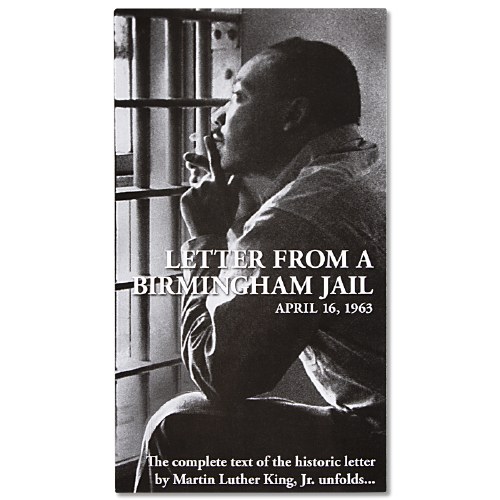
MLK Jr. quotes on Twitter are ubiquitous from the middle of January (MLK Jr.’s birthday) through February (Black History Month). Instead of grabbing decontextualized quotes from the internet, do yourself a huge favor and read “Letter from Birmingham Jail,” which is one of the most powerful pieces for writing in American history.

Here is a link to the original document, which is archived at Stanford:

Free resources for teaching “Letter from Birmingham Jail”

Lesson Plan: Letter from Birmingham Jail. The Power of Nonviolent Direct Action
https://kinginstitute.stanford.edu/liberation-curriculum/lesson-plans/martin-luther-king-jrs-letter-birmingham-jail-power-nonviolent

A Unit for Teaching “Letter from Birmingham Jail” from SAGE publisher
http://www.stclair.k12.il.us/ccore/ELAShifts/documents/Text%20Complexity/61682_Our_Unit_for_Teaching_Letter_from_Birmingham_Jail.pdf

PBS Learning: Close Reading of “Letter from Birmingham Jail”
https://az.pbslearningmedia.org/resource/engny.pd.ccvs.ela10/close-reading-of-text-mlk-letter-from-birmingham-jail

Using Graphic Organizers

I’ve been doing a lot of research into active vs. passive learning lately in preparation for my fall teaching.

What is active vs. passive learning?

Active learning simply means that students literally take an action while learning, more formally it means that students take an active role in the learning process. But what does that look like in the classroom? In an active learning classroom, the students are not just taking notes, but are taking guided notes, are stopping to discuss and reflect, and are working collaboratively to learn concepts and solve problems. When students are learning passively, they are simply present and listening to a lecture.

Active Learning and Graphic Organizers

One strategy that helps with promoting active learning is the use of graphic organizers. Here is a great YouTube video with explains what graphic organizers are and how they promote active learning:

Here is resource on active learning from the University of Minnesota:

https://cei.umn.edu/active-learning

For more on active vs. passive learning and graphic organizers, be sure to follow the blog.


Remote Teaching: Options and Strategies

remote-teaching

Some people prefer to call it ERT, or Emergency Remote Teaching, so as not to normalize the lack of preparation and training many teachers have been given for teaching online this past spring and this fall during a global pandemic. Like many of you, my institution decided to switch to “remote learning” at the last minute, after a summer of promising and preparing to be in-person.

I have some experience teaching online courses and I enjoy it under normal circumstances, but I’ve been exploring different options for course delivery this fall, which includes things like remote synchronous (teaching “live” during scheduled class time), asynchronous (most traditionally online courses are delivered this way) and HyFlex (a combination of three delivery methods when and if in-person instruction is also available). I will be using this post to provide a curated list of resources and links to all three approaches. In helping other teachers, I believe in simplicity, so instead of including an exhaustive and comprehensive list of resources, I’ve included the three I find most helpful. I will also be writing up a few posts about the approach as I plan my fall classes, and will be making up some free resources (such as active learning graphic organizers) to share. Please follow this blog for more! 

HyFlex Course Model

Hybrid Flexible Course Design by Brian Beatty

“Student Choice, Instructor Flexibility: Moving Beyond the Blended Instructional Model”

A Closer Look at Hybrid Flexible Course Design

To follow this blog for more on remote teaching type your email in the sidebar  →
(I will never spam you or share your email with anyone)

Sorting through Endless Educational Resources

school-2051712_1280

If you’re like me you’ve been inundated with free resources, too many to look at, too many to count. I realized that university and classroom teachers, as well as homeschooling parents, are probably overwhelmed by the options, so I spent some time curating and pulling together a streamlined list of which resources do what and how well they do it.

First, I have a few rules for choosing resources:

Choose only resources that are always free

So many companies are offering their resources “free” to teachers who are impacted by the Coronavirus. But a closer look often reveals that these are only the standard free trials that most companies offer. Also, I don’t want to get comfortable using software or a subscription that I will have to pay big bucks for in a month or two or even a year. Now, if you have the resources and desire to pay for software and subscriptions, that’s fine, but I’m focusing this guide on stuff that’s always free, or always has a free level of membership available.

Focus on your learning goals and objectives

At one I found myself printing out skill and drill worksheets for my kids at home, and then I realized that these are at odds with my teaching philosophy, which is a more holistic approach to language. No worksheets needed! We read out loud and silently, talk about our reading, and write about our reading. For skills assessment I do have my kids copy unfamiliar vocabulary and spelling words from their own reading and writing and we do “drill” these through practice and quizzes.

Prioritize sources that fit your needs

I don’t know how to teach math and science, so I’ve focused my hunt for homeschooling resources on math and science. My kids’ schools have provided access to Reflex math and Zearn, and I’m also allowing my students to create self-directed projects in science and social studies, so I’m creating little resource banks for them in Google Documents that they can use to create their own educational slide shows.

The Five Best Science and Social Studies Resources:

NASA Spaceplace (NASA Science for kids)
https://spaceplace.nasa.gov

PBS Learning Media
https://pbslearningmedia.org

PBS Kids
https://pbskids.org

National Geographic Classroom Resources
https://www.nationalgeographic.org/education/classroom-resources

National Geographic Kids
https://kids.nationalgeographic.com

Best General Resources & Learning Platforms:

Your public library for ebooks

Google Documents and Google Slides for creating projects

Education.com for free printables and worksheets

YouTube for finding educational videos

Teachers Pay Teachers has a lot of free resources and independent work packets


Self-Determination Theory in Education

Self-Determination-Theory-Visual_1

I’m working a series about teaching, motivation, and game design; but I want to begin by giving you some information about Self-Determination Theory, because it’s really the key to motivation, and one of the overriding psychological reasons that games are so satisfying.

Self-determination theory is a behavioral theory focused on motivation and personality. It is a basic human need and the foundation of motivation. It arises from research done on intrinsic and extrinsic motivation.

To fulfill our sense of self-worth and well-being, to be self-motivated to complete tasks, as human beings we need the following:

  • Competence
  • Autonomy
  • Relatedness

Let’s look at these one at a time and think about how they apply in teaching and learning.

  1. Competence: In order for students to learn and to feel a sense of self-worth, in order for them to be motivated, students need to feel that they can master the task with which they are presented. Not that they are already experts, and this part is VERY important, NOT THAT THE TASK IS EASY (more on this later), but that the task CAN BE MASTERED. In other words, if I watched a video on how to cook a pie, I could probably master the instructions, but if I started taking a class in advanced calculus, I would feel so out of my element that I couldn’t succeed in that class.
  2. Autonomy: For human beings to be motivated to complete a task, they have to feel like they are in control of their circumstances and that completing the task is something they want to do. That doesn’t mean students can’t feel this way about required work, but in no situation does coercion (through punishment, intimidation, or fear) lead to learning.
  3. Relatedness: Some people interpret this as relevance, which is also important, but not necessarily a key to learning, In other words, the students’ actual experiences and interests do not have to line up with the curriculum. Rather, this point is about how students can connect with both the teacher and the learning experiences. Relatedness can be achieved through universal experiences such as love, loss, fear, anger, loneliness, etc.. It can also be achieved through simply caring about the students and recognizing their individual differences and strengths.

What does this have to do with learning?

There are two kinds of motivation: external or extrinsic, and internal or intrinsic. Extrinsic motivation is when behavior is externally regulated through incentives or punishments. In other words, students will complete a task because they believe they will receive a monetary reward, or an unpleasant punishment.

Intrinsic motivation is when students are driven to complete a task because it is inherently satisfying. This can occur because the task is in itself enjoyable, because it aligns with a students’ goals or values, or because the student achieves a sense of satisfaction from completing a difficult task, such as solving a difficult math problem, completing a homework assignment, or cleaning their room. Although these types of tasks can be difficult and even filled with anxiety and dread, completing leaves us feeling competent and accomplished.

Approaching a learning task with a sense of self determination (competence, autonomy, and relatedness) can give students a deeper sense of intrinsic motivation, which studies have shown leads to significant long-term retention and transfer.

For more on this topic, check out my post on Self-Determination Theory and Student Motivation.

For more posts on ways to faciliate student autonomy, improve competence and confidence, and foster relatedness and connectedness in your classroom and curriculum. Be sure to follow my blog to receive updates in your inbox.

The Passport Project

Last summer my husband and I started touring nearby National Parks since our then nine-year-old was beginning fourth grade and had free passes to all National Parks as part of the Every Kid in a Park program. My son loves workbooks and packets and son, inspired by the passport activity book they sell at various gift shops for collecting National Parks stickers and stamps, I created the Passport Project. My kids loved this project, so I decided to add it to my Teachers Pay Teachers store, and has been a surprising bestseller.

This project contains an editable passport template to be used a graphic organizer for all types of ELA, Social Studies, Geography, History, and Literature Lessons. I made this Passport Project for my kids while doing a geography homeschooling unit. This download contains a PDF and Power Point of the Passport Project I’ve been using with my kids (to great success–they love making them!) So far we’ve done Ancient Egypt, Japan, and the Colorado Plateau. Contains a variety of handouts and graphic organizers in addition to FULLY EDITABLE Passport Template (make this idea your own!)

Enjoy!
~Sandy at ELAsource

How Teachers Can Make Money Online

If you are a teacher and you want to make money online, for any reason, you absolutely can. Normally, I am skeptical of get rich quick schemes, and for a long time I was of the mindset that there was no way to make money blogging–that ship had sailed. I’ve recently learned that I was dead wrong. Not only can teachers make money online, but there are now more ways than ever to make almost any amount, from lunch money to creating a second income.

An article from Forbes Magazine lists 12 ways to make money online, but I’ve narrowed this down to the ways that are most relevant for teachers, and I will be writing in-depth articles on these in the weeks to come, along with my experiences.

Here are some ways teachers can make money online:

  • Blogging: This method can still earn money through advertising, affiliate marketing, and sponsored posts
  • Creating and selling products on Teachers Pay Teachers
  • Creating a newsletter or podcast
  • Writing and selling ebooks
  • Consulting
  • Webinars or Courses: These can be managed using sites like Udemy or Teachable

The Forbes article goes into much more depth about each of these methods (except Teachers Pay Teachers), but as I said, I will be exploring each method in greater detail on this site, with how-to-get-started guides and helpful links, along with reflections on my own experiences.

A New Model for Writing Instruction

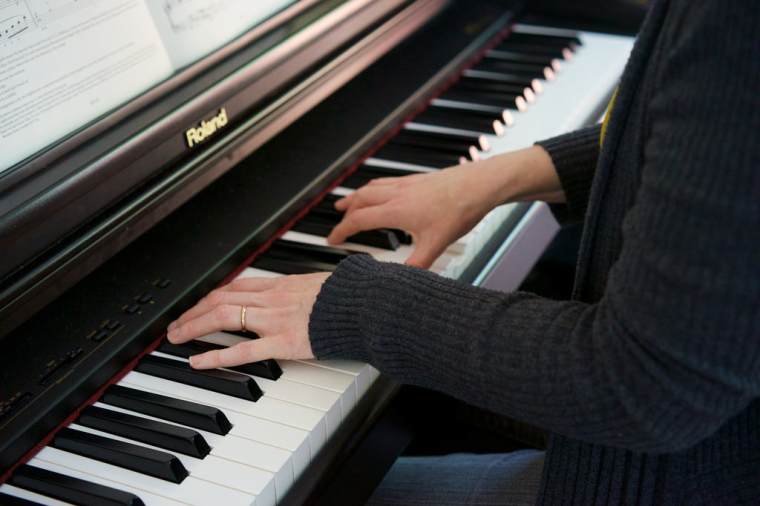
Good writing is not just correct writing. If that were true our jobs as writing teachers would be must easier. Writing is composing. We don’t expect a budding musician to pick up an instrument and begin composing. First, a new musician has to learn how to read music and play the instrument.

This takes years.

We expect it to take years. The new musician has to listen to and learn to play dozens, even hundreds of already existing pieces, while receiving immediate feedback and constant corrections during the process. Corrections in posture, hand position, pacing, etc..  Only after mastering this process can a musician being to learn how to compose small pieces.

Also, even the most experienced musicians have teachers and coaches who provide feedback. Musicians are constantly honing their technique. They expect and even desire feedback.

None of this happens in writing instruction.

Often times we expect students to master the essay form, a beautiful and complex form in its own right, after just one lesson. Sometimes after no instruction at all, just a prompt and a list of requirements.

With writing, we expect students to master writing after one school year, or one semester, or even after one or two assignments, often with minimal feedback from their teachers. Teachers can get angry if they have to tell a student more than once how to use a comma, when a piano teacher knows she will stand by her student and correct her hand position constantly. This is even true of experienced musicians.

I propose a new model of writing instruction, one that focuses more on long-term mastery, teaching specific techniques (such as the selective use of detail or dialogue) rather than assigning one essay after another, providing on-going low-stakes feedback (low-stakes meaning their grade does not depend on it), and creating a culture in our writing classrooms in which students rely on and desire feedback from their instructors and peers.

To find out more about what this technique looks like in the classroom, please follow this blog as I explore this idea in more depth in future posts and provide lessons and resources to implement this new model in the classroom.

Increase Your Productivity with the Pomodoro Technique


A quick way to boost your productivity and get things done is to experiment with the Pomodoro Technique. The Pomodoro Technique is a type of work sprint developed by Francesco Cirillo in the late 1980s based on the tomato-shaped kitchen timer used by Cirillo as a university student.

Five steps to implementing the Pomodoro Technique:

  1. Decide on the task that needs to be done. This can be done right before the Pomodoro or while making a to-do list in the morning or before bed.
  2. Set a timer. You do not have to use a fancy little tomato timer–I use the one on my iPhone. A traditional Pomodoro is 25 minutes, but sometimes I’ll do 10-30 minute work sprints depending on my available time.
  3. Work on the task. Try to be as focused as possible by turning off notifications.
  4. When the timer goes off, stop and take a 3-5 minute break.
  5. Ideally, complete four Pomodoros in a row and then take a longer break of 15-30 minutes. However, if you only have a short time to work, do one Pomodoro or even a 10-minute

How to be a Better Writer in One Day

Reading Like a Writer

If you want to dramatically improve your writing ability the best way to take your writing to the next level is through the process of Reading Like a Writer.

I didn’t learn the concept of Reading Like a Writer until the second year of my MA program. My writing improved dramatically in one hour.

The basic concept of Reading Like a Writer is to read exemplars of the type of writing you want to do. In the MA class I was taking the professor pointed out that many writers and writing teachers don’t understand the concept of sentence variation and the importance of not only using a variety of sentence types and lengths, but tailoring your sentences using rhetorical decision making.

For example, a long, complex sentence followed by a short, punctuating sentence can have a greater rhetorical impact than two complex sentences back-to-back, in which the point of the first sentence is lost in the complexity of the second sentence. A short sentence can reinforce the point of the long sentence.

See what I mean?

The best part of Reading Like a Writer is that it’s simple and doesn’t require expensive books, curriculum, training, or materials. Simply find an example of what you want to write (an essay, a poem, an argument, a short story, etc.) and read it multiple times to analyze it, dissect it, and study it. In other words, figure out what make the writing tick.

What are it’s strengths? How does it capture and hold your attention? What specific  techniques does the writer use?

Tips for Reading Like a Writer:

1. Read often. Read widely.

Pay particular attention to the types of writing you are required to do in school or the types of writing you want to excel at. If you want to write excellent essays, read the best essays.

2. Practice close reading.

Close reading involves looking for techniques and patterns and analyzing. WHAT does the writer do? HOW and WHEN does the writer do it? WHY does the writer do it and what impact does it have on the reader?

3. Annotate and take notes, and discuss your findings.

Have everyone in your writing group (teachers can do this with peer groups) read the same piece and discuss the writing techniques in depth. This can be an excellent way to model and practice writing critiques in a peer workshop setting.

4. Practice the Techniques

This is the most important part. When you learn a new technique for introducing an essay, adding punchy dialogue, writing vivid description, using sentence variation, add more effective transitions, etc.; you must then practice them in your own writing. Not only does this allow you to practice and study the effectiveness of the technique, it also reinforces the concept and cements it in your long-term memory.

5. Get Feedback

After practicing, get feedback from your writing group or peer workshop group on how well you are mastering the technique and what you can do to improve.