
Creator Mindset vs. Worker Mindset


Your beliefs shape your reality: if you hold too many negative ones, youโ€™ll see them reflected in your life. Reality always confirms what you expect. If you believe you canโ€™t create what you desire, your experience will prove you right. It’s important to remember that the biggest block to manifesting your ideal life is the belief that you canโ€™t.

The Worker Mindset

Most of us are conditioned into a worker mindset: the idea that results come only through effort, struggle, and long hours. Society trained us to suppress any dream that doesnโ€™t come with a clear action plan. Hard work has value, but itโ€™s not the driving force behind creation, itโ€™s just one small piece.

People who rely only on effort are often trying to earn worthiness. Their reality mirrors their belief that โ€œnothing worthwhile comes easy.โ€ But when you enjoy what you do, it doesnโ€™t feel like struggle, it feels like flow. True freedom is realizing you donโ€™t have to force what doesnโ€™t inspire you.

As Henry Ford said, โ€œWhether you think you can or you canโ€™t, youโ€™re right.โ€ Your reality mirrors your mindset. Believe that life must be hard, and it will be. Believe that ease and alignment can create results, and that too will be true. The creator mindset works with belief first, not grind. If hard work alone brought abundance, every laborer would be wealthy. The secret is inspired action, the kind that feels natural and energizing, not forced motion that drains your energy.


Limiting Beliefs: The Hidden Barriers

The worker mindset is one of the strongest limiting beliefs there is, but any belief that contradicts your desires holds you back. Worse, limiting beliefs donโ€™t just block your goals; they limit your imagination itself. They narrow your sense of whatโ€™s possible.

When you release a limiting belief, your desires evolve. They deepen and expand. For instance, if you believe you must stay in a job you dislike to pay the bills, youโ€™ll never open yourself to opportunities that combine joy and stability.

Changing beliefs takes time because theyโ€™re wired into your brain through repetition and evidence. Thatโ€™s why calming your mental โ€œmomentumโ€ is key; a quiet mind can question its own stories. Begin by staying open to new perspectives. Ask, โ€œWhat if life could be easier?โ€ Simply entertaining that thought begins to loosen resistance.

A big trap of the worker mindset is obsessing over how things will happen. Your mind only knows what itโ€™s experienced before; it canโ€™t predict new paths from old data. But your creative intelligence, your โ€œlife-streamโ€ can. When you focus on belief and alignment rather than control, you allow fresh ideas and opportunities to flow in.


Attributes of a Creator Mindset

A person with a creator mindset:

  • Aligns their thoughts with the reality they desire and releases resistance.
  • Refuses to force actions that feel heavy or joyless, trusting that true action will arise naturally.
  • Honors divine timing, recognizing that intuition has a broader view than impatience or fear.
  • Accepts othersโ€™ paths without judgment or the urge to โ€œfixโ€ them.
  • Values rest as much as action, understanding that both are vital to creation.
  • Lets go of attachment and scarcity, trusting that whatโ€™s needed will appear when needed.
  • Believes that every desire is matched by the resources to fulfill it.
  • Guards attention carefully, focusing only on what supports growth.
  • Chooses inspiration over struggle.
  • Takes full responsibility for their current reality, knowing that blaming others only gives away their power.

The Essence of the Creator Mindset

The creator mindset is about working with your thoughts, not against them. You allow life to guide inspired action instead of forcing outcomes through resistance. Your higher intelligence, the part of you connected to the whole, has a far wider view than your analytical brain ever could.

Your job isnโ€™t to micromanage the universe. Itโ€™s to stay conscious of your beliefs, let go of the ones that donโ€™t serve you, and trust your creative flow. When you do, action becomes effortless, timing feels perfect, and reality begins to respond to your alignment, not your struggle.

Welcome to Spooky Season


Happy Fall Season Everyone!

Rainy season has begun, after a long, hot summer. I went shopping yesterday with my teenage daughter for Halloween costume supplies (I’ve always sewn my children’s halloween costumes, and this year my daughter wants to learn how to sew). We call this “spooky season,” and it’s a time to embrace the best qualities of fall, like the colors and cozy settings.

I did not get as much writing done this summer as I would have liked, and I’m working on trying to create a writing habit. I’ve done a lot of research and reading about the writing process (I also teach writing process at the university so this wasn’t a total waste of time, ha ha), and I plan to not only put these ideas into practice, but share them with my readers.

Strategies to get “unstuck” are useful for writers, teachers, and content creators. These include the usual strategies such as setting micro-goals and doing Pomodoros and word sprints, but also some new strategies I’ve learned such as changing up your environment (perfect for ppooky season), and also, something called “scaffolding your writing” which means writing ABOUT what you want to write, which takes the pressure off and helps build momentum.

Try these three tips for getting out of a writing rut:

  1. Change the context: this can mean changing your location (try writing in the library, in a different room, sitting on the floor or in bed if you usually write at a desk, or sitting at the kitchen table if you usually write on the couch, OR try a coffee shop or library.

    You can also change the context by writing in a different medium. Try writing long hand, or even writing on index cards or post-it notes. Buy a fun notebook for this purpose! ๐Ÿ™‚

  2. Write about your writing: try sitting down and writing out what you want to write about. For example, I’m currently stuck on a scene that takes place in Ancient Greece, and I’m intimidated by the research required to get this right, so for now I’m going to write about how I want the scene to feel.

  3. Set a micro-goal. I need to write 2,000 words, but I’m going to start by just encouraging myself to write 250 words this weekend. You can even so smaller. Write a paragraph, or a sentence! Or, set a timer just 5 minutes and tell yourself you can stop writing after that.

Have a wonderful weekend and enjoy all that the fall season has to offer.

Short Summer Blog Break


After giving it some thought I’ve decided to take brief hiatus from this blog, but will be back in late August. I am planning to reboot the Six Week Creator Challenge at that time, for a number of reasons. First of all, I’ve come to the hard realization that, as usual, I have WAY TOO MUCH on my plate. Or, to mix metaphors, too many plates in the air. I’m trying to work on this challenge, create products for TpT to get ready for the Back-to-School season on TpT, revise a novel, start a new novel, finish up some work on Fiverr, which I plan to eventually cancel (more on that in August), and get my kids ready to go back to school.

I forgot how crazy this time can be, with back-to-school shopping, doctors apppointments, and trying to squeeze out a few more summer memories with my kids. It was completely foolish of me to try to a new challenge at this time.

I also want to rethink the challenge, and one reader gave me the idea that I should create it as a free course, along with some worksheets or a workbook, to give readers a concrete way to follow along and to have a resource as a takeway.

So, in conclusion, I’ve decided to spend the remainder of July hanging out with my kids and getting organized for the fall, and spend August focusing my efforts on creating content BEFORE I start posting again. One of the biggest struggles I have as a creator is FOCUS, and I’m also trying out new ideas and spreading myself too thin.

Be sure to subscribe so you’ll get an email when I return, because I’m going to have some amazing free offers at that time. Meanwhile, enjoy the rest of the summer season!

From Classroom to TpT: Free Tools for Creating Teacher Resources


As part of the the Six-Week Creator Challenge, I promised to share free tools that I use to create and sell digital products online. This week focuses on TpT (Teachers Pay Teachers), but even teachers who don’t plan to sell on TpT will find these tools useful.

If youโ€™re a teacher or educator looking to turn your classroom resources into digital products, you donโ€™t need expensive design software to get started. In fact, some of the most popular products on Teachers Pay Teachers (TpT) are created with tools you already know and love, such Google Docs and Google Slides. For those of you who don’t like Google products, I will be addressing other free tools, such as Canva and MS Office tools, in future posts.

However, I love Google’s free suite of tools, especially Docs and Slides. Whether you’re building engaging graphic organizers, editable writing prompts, or classroom decor, Google tools can help you create polished, professional-looking products with ease. Hereโ€™s how to get started.


Step 1: Choose the Right Tool for Your Product

Google Docs is perfect for:

  • Printable worksheets
  • Reading passages
  • Lesson plans or unit outlines
  • Instructional guides or templates

Google Slides is great for:

  • Interactive lessons
  • Task cards or flashcards
  • Anchor charts
  • Student activities that require visual organization
  • Editable classroom signs or posters

The best part is that you can also combine both toolsโ€”use Docs for written instruction and Slides for visuals.


Step 2: Set Up Your Document or Slides for TpT Use

  • Page Setup:
    • For printable products, change the slide/page size to standard 8.5 x 11 inches (File > Page Setup > Custom).
    • Use landscape or portrait depending on your design needs.
  • Branding & Design:
    • Use consistent fonts, colors, and a simple logo or footer with your name/store link.
    • Add a cover page, directions page, and credit page to your product.
    • Include terms of use and citation for any graphics or fonts used.
  • Make it Editable (Optional):
    • Create editable text boxes in Slides so teachers can customize parts of the product.
    • In Docs, use tables or comments to guide users where they can modify content.

Step 3: Export, Bundle, and Upload

  • When your product is complete:
    • Export as a PDF for secure, print-ready versions.
    • If offering an editable version, include the Google Docs or Slides link using a force-copy URL.
    • Bundle PDFs and editable versions in a ZIP file if needed.
  • Upload your product to TpT:
    • Write a clear, keyword-rich product title and description.
    • Include preview images (screenshots of your Doc/Slides).
    • Tag relevant grade levels and standards.

Final Tips for Success

  • Start with resources you already use in class. If it worked for your students, chances are other teachers will find it valuable too.
  • Keep your formatting simple and classroom-tested.
  • Reuse templates! Save time by reusing Docs/Slides layouts across multiple products.

Creating high-quality TpT products doesnโ€™t require fancy design software. With Google Docs and Slides, you can create resources that are clean, customizable, and totally teacher-friendly.

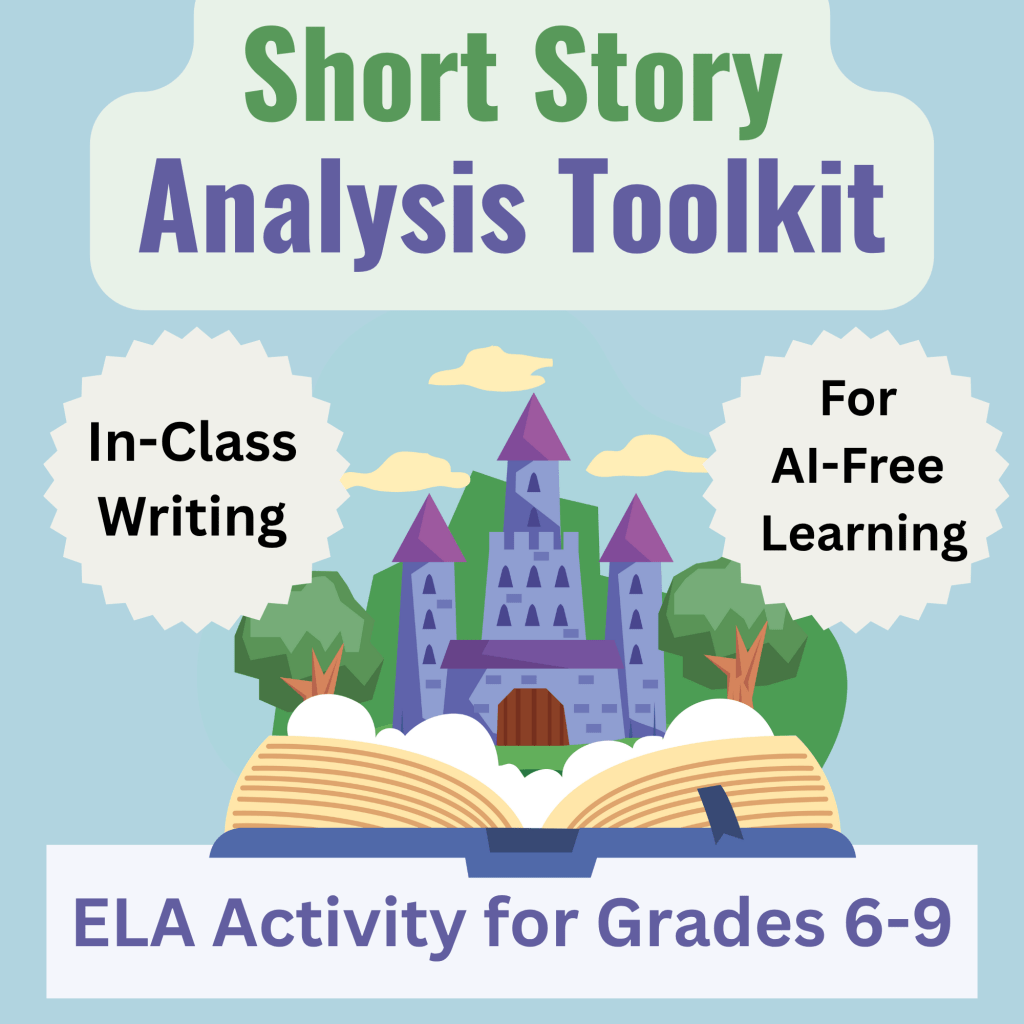
Short Story Analysis Tool-Kit

I created the product below, in my TpT store, using Google Docs + Canva (for the cover)

Short Story Analysis Toolkit (link to TpT)

Know Your Audience


This week is all about teachers! For Week One of the Six-Week Creator Challenge I will focus on Teachers Pay Teachers (which is now called TpT), which is a platform for creating and sharing lesson plans and teaching materials.

When creating the Six-Week Creator Challenge I decided to focus on ONE platform per week, to help me stay focused, and to force me to start creating content for that platform. I will then continue to create content for that platform consistently (at least once per week) once I move on to explore the other platforms. As I mentioned in Sunday’s post, I will then share my progress and metrics each week, as well as discuss the pros and cons of each platform. At the end of the six weeks I’ll do a big write up about my overall impressions and progress.

I’m not going to write about how to get started on Teachers Pay Teachers, you can read about that in this post. Instead, I’m going to share details about my overall process, as well as steps I will take to improve growth and engagement on that platform (and hopefully revenue!).

I’ve been on TpT for several years now, but have never put much time into it, nor approached it with a coherent strategy. One of the reasons I created this challenge to was to learn about each platform and make an intentional effort to improve by creating content consistently and getting to know the ins and outs of the platform’s (and my niche’s) audiences and algorithms.

Why Knowing Your Audience is So Important

Knowing your audience is essential when creating content for online platforms because it allows you to tailor your message, tone, and delivery to meet the specific needs, interests, and expectations of the people you’re trying to reach. Understanding who your audience is helps you choose the right format, language, and content strategy to engage them effectively. It also increases the likelihood that your content will resonate, be shared, and achieve its intended purpose, whether that’s to inform, entertain, inspire, or drive action. Without a clear understanding of your audience, even the most well-crafted content can fall flat.

Find a Problem to Solve

One key factor in thinking about your audience is to help them solve a problem by offering a product, tutorial, or solution that meets their needs. And to go above and beyond! (“Take my money!”). For TpT, this involves thinking about teachers in my niche, which is creating ELA (English Language Arts) content (hence the title of this blog: ELA Source).

Luckily for me, ELA teachers have a lot of problems to solve, ha ha. From worrying about plagiarism and AI, to struggling with student behavior and enagement (what to do about phones?), to finding resources on the best ways to teach reading, writing, and grammar.

Find Your Niche: Play to Your Strengths

By focusing on this audience and this niche, I’m playing to my strengths. I have a BA in English, an MA in Literature, and a Doctorate in Curriculum Design. I’ve also been a teacher at the middle school, high school, and college levels for 30 years.

Goals for this Week

This week I’m going to focus on creating products that help teachers avoid plagiarism and AI by engaging them in the research and writing process in the classroom, which I feel very strongly is the solution to avoiding AI (more on this in another blog post).

Tomorrow I will post about how I use free online tools to create and sell digital content and I’ll give you a peek at the resource I’m creating for TpT. Be sure to subscribe if you’d like to follow along for this challenge. Itโ€™s free to subscribe and I donโ€™t share your emails with anyone. ๐Ÿ™‚

Side-Hustle Sunday


Welcome to Side-Hustle Sunday! Each week in this weekly round-up I will discuss:

  1. Current updates and metrics across all platforms
  2. A review of the platform I focused on for the previous week (I will skip this the first week and instead provide a brief overview of all of the platforms I post on).
  3. What I accomplished
  4. Lessons learned
  5. Next weekโ€™s platform + goals

Platforms:

For several years now, I’ve been exploring and building on a variety of platforms in an attempt to build and audience and establish a consisten income stream.

Each of these platforms have different strengths, audiences, and content types. Hereโ€™s a quick tour of where Iโ€™m posting and why:


Teachers Pay Teachers (TpT)

What it is: An online marketplace where educators sell lesson plans, activities, assessments, and classroom resources.
Why I use it: I can turn my existing teaching materials into income by sharing them with other educators.
Best for: Teachers, tutors, and curriculum creators in Kโ€“12 or higher ed.


Etsy

What it is: A creative marketplace for handmade goods, vintage finds, andโ€”more recentlyโ€”digital downloads like planners, journals, and printables.
Why I use it: Itโ€™s great for selling beautiful, useful products with a strong visual or aesthetic appeal.
Best for: Printables, digital planners, classroom decor, wall art, and niche kits.


Instagram

What it is: A visual-first social media platform used for branding, marketing, and community building.
Why I use it: Itโ€™s a great place to showcase behind-the-scenes content, quick tips, and build connections with other creators.
Best for: Growing your audience, cross-promoting products, and showing personality.


WordPress (My Blog)

What it is: A blogging and website platform that lets you publish long-form content, tutorials, and updates.
Why I use it: Itโ€™s my content home baseโ€”great for SEO, in-depth posts, and linking to my products.
Best for: Evergreen content, long-form tutorials, and resource roundups.


Pinterest

What it is: A visual discovery engine where users save and share ideasโ€”especially for education, crafts, home, and DIY.
Why I use it: My blog and products can gain long-term traffic through visually appealing pins.
Best for: Teachers, creatives, and anyone with visually-driven content or tutorials.


Royal Road + KDP (Self-Publishing)

Royal Road: A free web serial platform where you can publish your fiction one chapter at a time.
KDP (Kindle Direct Publishing): Amazonโ€™s self-publishing service for eBooks and print books.
Why I use them: Royal Road is great for building a reader base, while KDP allows me to sell completed books or journals.
Best for: Writers of fiction, fanfic, low-content books, and serial storytellers.


YouTube

What it is: A video-sharing platform used for tutorials, vlogs, reviews, and educational content.
Why I use it: YouTube lets me reach visual learners and build trust through face-to-face (or voice-to-voice) content.
Best for: Teaching, documenting your journey, and creating content with long-term value.


Course Platforms (Udemy, Gumroad, etc.)

Udemy: A structured, student-facing course platform where you upload video lessons and reach learners through Udemyโ€™s marketplace.
Gumroad: A flexible storefront where you can sell mini-courses, ebooks, templates, and moreโ€”directly to your audience.
Why I use them: These platforms help me turn knowledge into income by packaging what I know into teachable, sellable formats.
Best for: Creators with teachable skills or digital products.


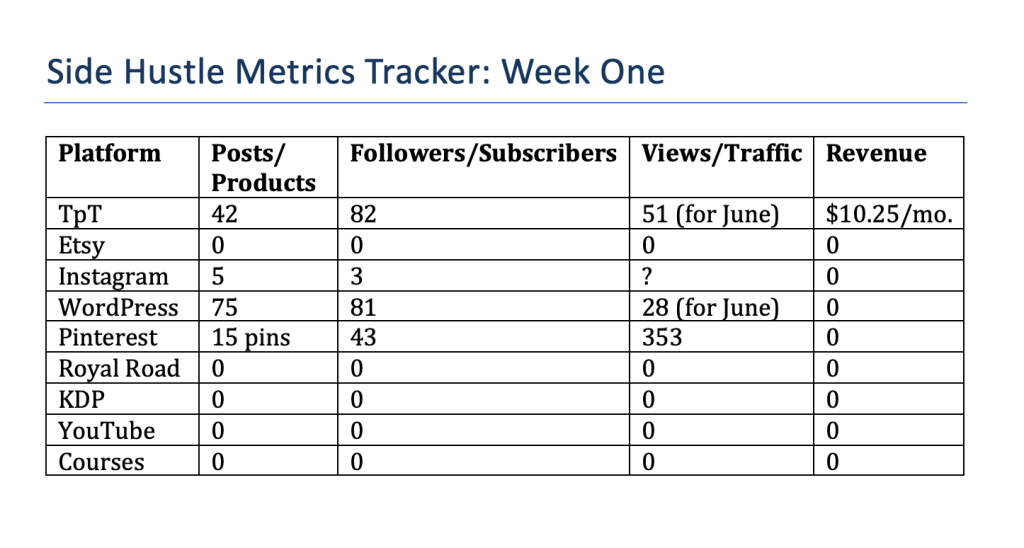
My Current Metrics:

Below is a table with all of the platforms I intend to publish on (I won’t be focusing on all of these during the six week challenge, but will update this table every week). As you can see, for some platforms, like Etsy and YouTube, I haven’t started posting products and videos yet, nor have I created any courses, but I’m including them in these metrics because I want you to have a real-time record of my progoress.

Week One: TpT (Teachers Pay Teachers)

This week, Iโ€™ll be focusing on Teachers Pay Teachers (TpT), which is a platform designed for educators to buy, sell, and share classroom resources. If youโ€™re a teacher, tutor, or curriculum creator, TpT is a fantastic way to turn your hard work into passive income by listing the lessons, activities, and worksheets you already use in your classroom. Itโ€™s beginner-friendly, especially if you start with free tools like Google Slides or Canva to design your products.

My goal for the week is to create one product from scratch and take steps to improve my overall metrics, while at the same time walking you through the process of how I create products using free tools and how I improve my metrics and build my audience.

The Quest to Improve My Focus


Well, it’s been a minute since I posted here, and although I was very busy at the end of the spring semester (I’m a full-time college professor and mother of two teenagers), I honestly can’t say that I don’t have the time to write, because I spend an inordinate amount of time WASTING my time. Although I successfully quit and deleted Facebook and Instagram in 2019, and haven’t looked at Twitter/X in over a year (I NEVER got into Tik Tok), I’m still hopelessly addicted to doomscrolling on Reddit. After getting into Cal Newport’s books and videos and exploring the concept of Deep Work, I’ve decided to work on improving my ability to focus.

Here are some tips adapted from several sources. I will be putting this into practice over the next month (includuing going cold turkey from reading Reddit) and will check back in on how it’s working for me.

  1. Improve the QUALITY and reduce the quantity of information you consume (instead of getting your news from social media sites):
  • Daily: Have one daily or even weekly โ€œnews roundupโ€ source such as a newsletter, news podcast, or physical newspaper (daily or weekly)
  • Monthly: Read 3-5 long-form magazine articles (New Yorker, etc.)
  • Yearly: Read books about topics that interest you

2. Increase your comfort level with boredom:

  • Practice driving, walking, running errands, and doing chores with your phone or without external stimulation (listening to music and podcasts).

3. Cultivate your ability to pay attention

    • Use a timer or stopwatch to practice interval training (increasing the amount of time you are able to focus on a single target)

    4. Create specific environments and rituals to help you get into deep work focus mode (a place to write, to read, to work difficult tasks).

        6. Practice being an intellectual (seek out nuance and uncertainty)

          • Pair primary and secondary sources (More on this soon! I’m thinking of making a video about this concept).

          Discovery Writing & the Art of Process


          As writers, we often think of our craft as a means to an end. Whether itโ€™s finishing a novel, completing a research paper, or submitting a blog post, the focus is usually on the final product. But writing is so much more than the polished piece we send out into the world. Itโ€™s an act of discovery, reflection, and growth. Writing isnโ€™t just about what we produceโ€”itโ€™s about the journey we take to get there.

          This idea of writing to discover is at the heart of what makes the creative process so fulfilling. When we sit down with a blank page or screen, we may have only the faintest glimmer of an idea. Itโ€™s through the act of writingโ€”the messy, circuitous, sometimes frustrating actโ€”that we find clarity, have epiphanies, and learn not only about our subject but also about ourselves.

          Writing as a Tool for Learning and Reflection

          Writing is one of the most powerful tools we have for learning and reflection. When we write, weโ€™re forced to slow down and engage deeply with our thoughts. This deliberate act allows us to explore ideas, connect seemingly unrelated concepts, and arrive at insights we might not have discovered otherwise.

          For students, this process is especially valuable. In an age where instant answers are just a Google search away, writing teaches patience and critical thinking. It encourages them to wrestle with complex ideas and come to their own conclusions, fostering a deeper understanding of the material. Writing to learn isnโ€™t about regurgitating facts; itโ€™s about grappling with them until they become meaningful.

          Embracing the Struggle

          Letโ€™s be honest: writing is hard. Itโ€™s messy, itโ€™s unpredictable, and it rarely goes as planned. But thatโ€™s exactly why itโ€™s so valuable. The struggle is where growth happens. When weโ€™re stuck, when we donโ€™t know what to say, when our ideas feel like an incoherent jumbleโ€”those are the moments when weโ€™re forced to dig deep and push through. And in doing so, we often discover something unexpected and profound.

          As teachers, itโ€™s crucial to help students embrace this struggle. Too often, students are focused solely on the end result: the grade, the word count, the โ€œperfectโ€ essay. But if we can shift their mindset to see writing as a process of discovery, we can help them find joy and meaning in the act itself. The best writing doesnโ€™t come from avoiding the struggle; it comes from working through it.

          Why Shortcuts Undermine the Process

          In todayโ€™s world, shortcuts are everywhere. AI tools can generate essays, rephrase sentences, and even mimic a writerโ€™s voice. While these technologies can be helpful in certain contexts, they also risk undermining the very essence of writing. When we rely too heavily on shortcuts, we cheat ourselves out of the opportunity to think deeply, to wrestle with our ideas, and to grow as writers.

          This isnโ€™t to say that AI tools have no place in the writing process. Used thoughtfully, they can assist with tasks like brainstorming or editing. But they should never replace the creative act of writing itself. For students especially, itโ€™s important to resist the temptation to outsource their thinking. Writing is about more than producing words on a page; itโ€™s about learning, reflecting, and discovering who they are as thinkers and creators.

          Writing to Have Epiphanies

          Some of the most rewarding moments in writing come when we have a sudden epiphanyโ€”when an idea clicks into place or we see a connection we hadnโ€™t noticed before. These moments canโ€™t be forced, and they certainly canโ€™t be generated by a machine. They arise organically, often when weโ€™re deep in the flow of writing, fully engaged with our thoughts.

          For me, these moments are a reminder of why I write. Theyโ€™re a testament to the power of the processโ€”a process that is often messy, frustrating, and slow but ultimately transformative. And itโ€™s this transformative power that we, as teachers and writers, must nurture in ourselves and our students.

          Encouraging Discovery Writing in the Classroom

          So how can we foster this mindset of writing to discover in our classrooms? Here are a few strategies:

          1. Emphasize Process Over Product: Build time for brainstorming, drafting, and revising into your assignments. Celebrate progress and effort, not just the final submission.

          2. Incorporate Reflective Writing: Use journals, freewrites, and personal reflections to encourage students to explore their thoughts without worrying about perfection.

          3. Teach Writing as Thinking: Frame writing as a way to work through ideas, solve problems, and make connections. Encourage students to write even when theyโ€™re unsure of what they want to say.

          4. Model the Struggle: Share your own experiences with the challenges of writing. Let students see that struggle is a normal and necessary part of the process.

          5. Discuss the Role of AI Thoughtfully: Help students understand both the potential and the limitations of AI tools. Teach them to use technology as a support, not a substitute, for their own thinking and creativity.

          Writing is a journey, not a destination. Itโ€™s about the process of discovering, learning, and growingโ€”a process that is deeply human and profoundly rewarding. As writers and teachers, we have the privilege of engaging with this process and helping others do the same. So letโ€™s embrace the messiness, celebrate the struggle, and remind ourselves that the true value of writing lies not in the product but in the act itself.

          What to Do When You Have Too Many Project Ideas


          List Your Projects:

          Write down all your projects and ideas.

          Evaluate Importance and Urgency:

          Determine which projects are most important and time-sensitive.

          Focus on One Major Project at a Time:

          Choose one major project to focus on, such as finishing your novel or expanding your blog, and dedicate specific time to it each week.

          Set Realistic Goals and Deadlines:

          Break Down Large Tasks: Divide large projects into smaller, manageable tasks.

          Set Specific, Achievable Deadlines: Assign deadlines to each task to create a sense of urgency and structure.

          Create a Schedule:

          Allocate Dedicated Time Slots: Set aside specific times each day or week for different projects.

          Use a Planner or Digital Calendar: Keep track of your schedule and deadlines to stay organized.

          Overcoming Procrastination

          Address Self-Doubt:

          Acknowledge Your Accomplishments: Remind yourself of your successes and the progress youโ€™ve made.

          Seek Feedback: Share your work with trusted colleagues or friends for constructive feedback to boost your confidence.

          Minimize Distractions:

          Create a Productive Workspace:

          Find a quiet, organized space to work on your projects.

          Limit Social Media and Unnecessary Interruptions: Use apps or tools to block distracting websites during your work sessions.

          Use Productivity Techniques:

          Pomodoro Technique: Work for 25 minutes, then take a 5-minute break. Repeat this cycle to maintain focus and avoid burnout.

          Time Blocking: Dedicate specific blocks of time to different tasks throughout the day.

          Consistency and Motivation

          Establish Routines:

          Morning or Evening Routines: Incorporate your projects into your daily routines, whether itโ€™s early in the morning or after your workday.

          Daily Writing Habit: Set a specific time each day for writing or working on your blog.

          Stay Accountable:

          Find an Accountability Partner: Share your goals with a friend or colleague who can check in on your progress.

          Join Writing or Project Groups: Participate in groups or forums related to your interests for support and motivation.

          Reward Yourself:

          Celebrate Small Wins: Reward yourself for completing tasks and reaching milestones.

          Balance Work and Personal Life: Ensure you have time for relaxation and activities you enjoy to avoid burnout.

          By prioritizing your projects, setting realistic goals, and creating a structured schedule, you can manage your workload more effectively and make consistent progress. Remember to be kind to yourself and acknowledge your achievements along the way.

          Embracing Winter Productivity: Overcoming Burnout and Distraction


          I will admit, I really struggle with productivity in winter. This winter, especially, I’ve been dealing with an ongoing feeling of exhaustion and a lack of focus. The cold weather and shorter days take a toll on my energy levels and motivation, leaving me feeling drained and unproductive. From talking to my fellow teachers, writers, and parents, I know I’m not alone.

          However, I have many goals I want to accomplish and projects I need to get started, so I realize I need to kick things into gear and try to get more done. I’ve been doing a lot of reading, research, and experimentation in this area and having finally found a few strategies that are working well for me.

          1. Create a Comfortable Workspace (THIS ONE IS HUGE FOR ME): Your environment plays a significant role in your productivity levels. Create a workspace that is conducive to focus and concentration, free from distractions and clutter. Surround yourself with elements that inspire and uplift you, whether it’s a scented candle, a favorite plant, or soothing instrumental music. By curating a comfortable and inviting space, you can enhance your productivity and motivation, even on the dreariest of days.

          2. Embrace the Season: Rather than resisting the winter blues, embrace the unique opportunities it offers. Winter is a time for introspection and self-care. Take advantage of the cozy ambiance to indulge in activities that nourish your mind and body, such as reading by the fireplace, enjoying warm cups of tea, or taking long walks in the snow-covered landscapes. Cultivate a mindset of acceptance towards the season, recognizing it as a time for rest and renewal.

          3. Set Realistic Goals: In the midst of fatigue and burnout, it’s essential to set realistic and manageable goals for yourself. Break down your tasks into smaller, achievable milestones, and prioritize them based on importance and urgency. By setting clear objectives, you can avoid feeling overwhelmed and maintain a sense of progress, no matter how small.

          4. Practice Self-Care: Self-care is crucial for maintaining overall well-being, especially during the winter months. Prioritize activities that rejuvenate your body and mind, such as getting enough sleep, eating nourishing foods, and engaging in regular exercise. Take breaks throughout the day to stretch, meditate, or simply breathe deeply. By prioritizing self-care, you can replenish your energy reserves and combat the effects of burnout.

          5. Manage Your Energy: Recognize that your energy levels fluctuate throughout the day, and plan your tasks accordingly. Identify your peak hours of productivity and tackle your most demanding tasks during these times. Break up your workday with periodic breaks to prevent fatigue and maintain focus. Experiment with different productivity techniques, such as the Pomodoro Technique or time-blocking, to find what works best for you.

          6. Practice Mindfulness: Mindfulness is a powerful tool for combating distraction and enhancing focus. Take a few moments each day to practice mindfulness meditation, focusing your attention on the present moment and observing your thoughts without judgment. Cultivate a mindset of mindfulness in your daily activities, whether it’s savoring a warm cup of cocoa or engaging fully in a work task. By practicing mindfulness, you can train your mind to stay present and attentive, even amidst the winter doldrums.

          7. Seek Support: I really struggle with this and I have to admit that I don’t really follow it as often as I should. However, this strategy comes highly recommended from almost every source I read. So don’t hesitate to reach out for support when you’re feeling overwhelmed or burnt out. Whether it’s talking to a trusted friend, seeking guidance from a mentor, or consulting a mental health professional, reaching out for support can provide valuable perspective and assistance. Remember that you’re not alone in facing the challenges of productivity and burnout, and there are resources available to help you navigate through them.

          Keep in mind that even the smallest amount of progress is cumulative, so be kind to yourself. I hope this season be a time of transformation and resilience for all of us!