From Classroom to TpT: Free Tools for Creating Teacher Resources


As part of the the Six-Week Creator Challenge, I promised to share free tools that I use to create and sell digital products online. This week focuses on TpT (Teachers Pay Teachers), but even teachers who don’t plan to sell on TpT will find these tools useful.

If youโ€™re a teacher or educator looking to turn your classroom resources into digital products, you donโ€™t need expensive design software to get started. In fact, some of the most popular products on Teachers Pay Teachers (TpT) are created with tools you already know and love, such Google Docs and Google Slides. For those of you who don’t like Google products, I will be addressing other free tools, such as Canva and MS Office tools, in future posts.

However, I love Google’s free suite of tools, especially Docs and Slides. Whether you’re building engaging graphic organizers, editable writing prompts, or classroom decor, Google tools can help you create polished, professional-looking products with ease. Hereโ€™s how to get started.


Step 1: Choose the Right Tool for Your Product

Google Docs is perfect for:

  • Printable worksheets
  • Reading passages
  • Lesson plans or unit outlines
  • Instructional guides or templates

Google Slides is great for:

  • Interactive lessons
  • Task cards or flashcards
  • Anchor charts
  • Student activities that require visual organization
  • Editable classroom signs or posters

The best part is that you can also combine both toolsโ€”use Docs for written instruction and Slides for visuals.


Step 2: Set Up Your Document or Slides for TpT Use

  • Page Setup:
    • For printable products, change the slide/page size to standard 8.5 x 11 inches (File > Page Setup > Custom).
    • Use landscape or portrait depending on your design needs.
  • Branding & Design:
    • Use consistent fonts, colors, and a simple logo or footer with your name/store link.
    • Add a cover page, directions page, and credit page to your product.
    • Include terms of use and citation for any graphics or fonts used.
  • Make it Editable (Optional):
    • Create editable text boxes in Slides so teachers can customize parts of the product.
    • In Docs, use tables or comments to guide users where they can modify content.

Step 3: Export, Bundle, and Upload

  • When your product is complete:
    • Export as a PDF for secure, print-ready versions.
    • If offering an editable version, include the Google Docs or Slides link using a force-copy URL.
    • Bundle PDFs and editable versions in a ZIP file if needed.
  • Upload your product to TpT:
    • Write a clear, keyword-rich product title and description.
    • Include preview images (screenshots of your Doc/Slides).
    • Tag relevant grade levels and standards.

Final Tips for Success

  • Start with resources you already use in class. If it worked for your students, chances are other teachers will find it valuable too.
  • Keep your formatting simple and classroom-tested.
  • Reuse templates! Save time by reusing Docs/Slides layouts across multiple products.

Creating high-quality TpT products doesnโ€™t require fancy design software. With Google Docs and Slides, you can create resources that are clean, customizable, and totally teacher-friendly.

Short Story Analysis Tool-Kit

I created the product below, in my TpT store, using Google Docs + Canva (for the cover)
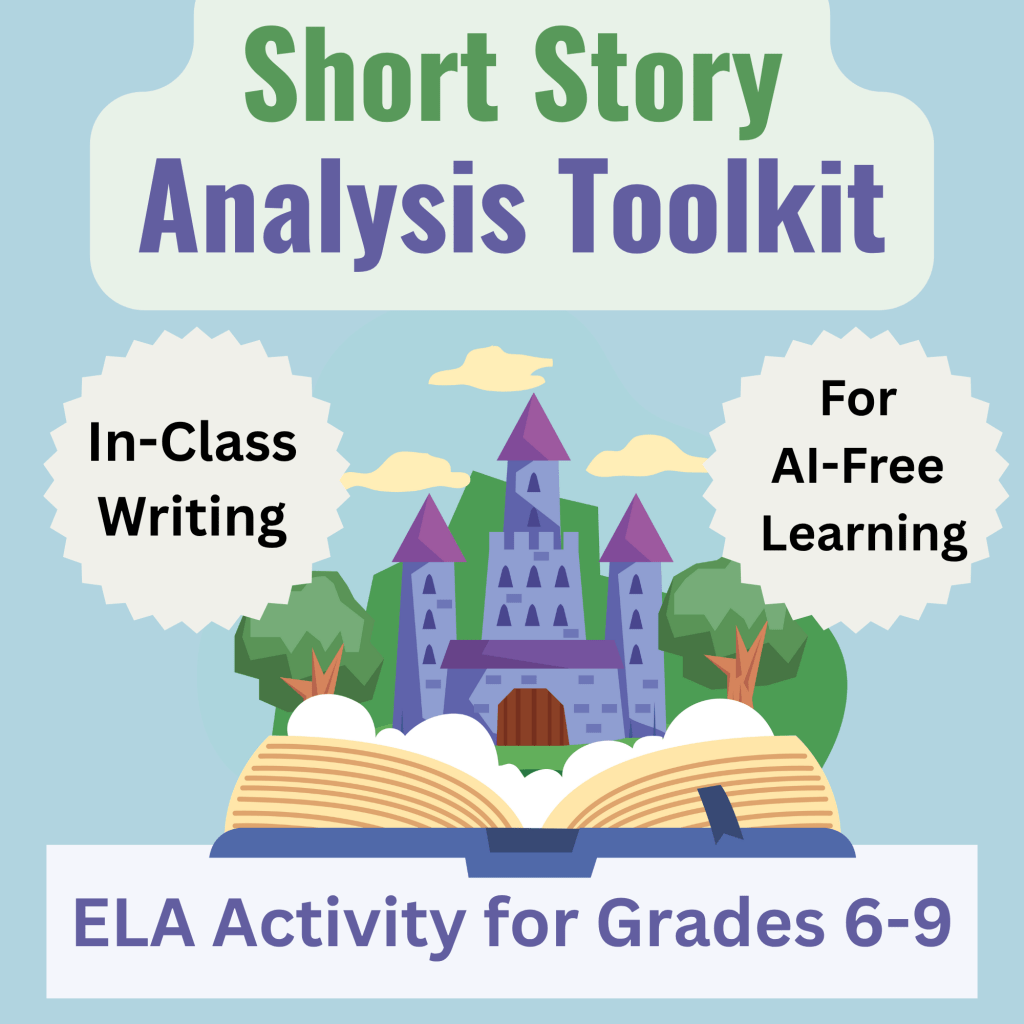
Short Story Analysis Toolkit (link to TpT)
3 Tips for Improving Sales on TpT


If you’re just getting started on Teachers Pay Teachers, you might be frustrated with slow sales. It can sometimes take months to make your first sale, especially if you start your store during slow times. Luckily, this is one the busiest times on Teachers Pay Teachers, and I’ve seen great results in my store from making the following changes:

  1. Make more products! If you following other TpT creators or participate in TpT forums, you’ll hear this advice again and again, but it really works! When you post your first 5-10 products, it can be easy to give up if you’re not getting sales, but remember that your competing agains thousands of stores and millions of products. However, I have found that as I increase my product numbers, my sales go up consistently. I’ve heard that 50 products is that magic number, and that’s my current goal. Some stores have hundreds of products. Each new product you create increases your changes of having your products show up in search.

  2. Learn how to write long-tail search terms and create long titles. Keep in mind that the title that you list for search does NOT have to be the same as the title that’s on your cover (similar to creating searchable titles on YouTube vs. clickable thumbnails). One of my most popular products, the Passport Project, increased in sales when I changed the title from Passport Project to Passport Project: Editable Passport Template and Maps for Teaching Geography.

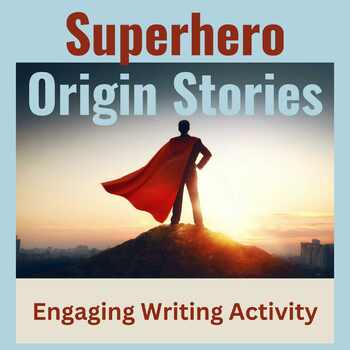
  3. Make the text on your covers as large as possible. Do NOT try to put information about your product on the cover. If you get the buyer’s attention with your cover, they will click on it and read the description. My tip is after you create your cover to look at it on your phone. Many teachers shop on TpT on their phones, and if you can’t read your product title on your cover, it’s too small. Here is an example of a cover that I use on a very successful product, Superhero Origin Stories.

I was astonished at how quickly my sales picked up after I implemented these three simple tips for improving my store.

Click here if you’re interested in following my store on Teachers Pay Teachers.

Leveraging Language Models for Effective Communication: A Guide for Teachers and Content Creators

Language models have revolutionized the way we interact with text and information. Models like Chat GPT and Bard, though freely available, possess immense potential for educators, content creators, and anyone seeking accurate and insightful responses to their inquiries. It’s important to learn how to to maximize the utility of language models, focusing on writing effective prompts to extract the most valuable and nuanced information.

Understanding the “Stochastic Parrot” Mental Model

Before delving into the nuances of utilizing language models effectively, it’s crucial to grasp the “stochastic parrot” mental model. Language models generate responses based on patterns learned from the data they were trained on. They don’t possess personal opinions, beliefs, or creativity. Hence, the output is a variation or amalgamation of existing content in response to a given prompt.

To optimize the use of language models, it’s essential to frame prompts that align with this understanding. Instead of seeking personal opinions, it’s better to request objective information, best practices, or consensus on a particular topic.

Writing Effective Prompts: A Paradigm Shift

Consider the scenario where you seek advice on managing a common parenting issue: a baby struggling with sleep. Employing the “stochastic parrot” mental model, we can redefine the prompt to extract comprehensive and comparative information.

Example:

Original Prompt: “My baby has a hard time sleeping. What do you think about the cry it out method?”

Revised Prompt: “My baby has a hard time sleeping. Give me a list of reasonable solutions. Compare and contrast each to the cry it out method.”

Breaking Down the Revised Prompt

The revised prompt encourages the language model to provide a list of potential solutions for the baby’s sleep issue. It explicitly requests a comparison of each solution with the cry it out method. This structured approach yields a more informative and balanced response, showcasing different perspectives and options.

Another Example

Another example is to think about how to use a tool like ChatGPT to best learning new strategies for teaching and content creation.

For example, instead of asking: How can I stop students from talking and distrupting class?

Ask: What are some effective classroom management techniques that can be used in different contexts?

Utilizing LLM Responses Wisely

When you receive responses from the language model, it’s crucial to assess and verify the information for accuracy and relevance. Cross-reference the generated content with reputable sources, consider various viewpoints, and use your judgment to arrive at well-informed decisions or conclusions.

Summary

Effectively leveraging language models involves understanding their inherent limitations and aligning our expectations accordingly. The “stochastic parrot” mental model underscores the importance of framing prompts that aim for objective information and consensus rather than personal opinions.

By adopting this mindset and structuring prompts to encourage comparative analysis, educators, content creators, and individuals at large can harness the power of language models like Chat GPT and Bard to access valuable insights and information on a myriad of topics. Remember, language models are tools to aid and enhance our understanding, not arbiters of truth or creativity.

The Case for Rubrics in the Writing Classroom


As educators, we understand the importance of providing constructive feedback to help our students grow academically and develop essential skills. One powerful tool that can significantly enhance the writing assessment process is the use of rubrics. Rubrics offer a structured and transparent way to evaluate student writing, providing both teachers and learners with numerous benefits. In this blog post, we will explore the advantages of using rubrics to evaluate writing and how they can lead to improved student outcomes.

  1. Clarity and Consistency

Rubrics provide teachers with clear criteria and expectations for evaluating writing assignments. By defining specific elements like content, organization, language use, and mechanics, rubrics ensure that all students are evaluated based on the same set of standards. This consistency eliminates ambiguity and allows students to understand precisely what is expected of them, setting them up for success.

  1. Targeted Feedback

One of the most significant advantages of rubrics is their ability to guide teachers in giving targeted feedback. Rather than merely providing a final grade, rubrics break down the assessment into different categories, enabling instructors to pinpoint areas of strength and weakness in a student’s writing. This targeted feedback empowers students to focus on specific aspects of their writing that need improvement, fostering a growth mindset and a desire for continuous learning.

  1. Student Engagement and Self-Assessment

When students are aware of the criteria by which their writing will be evaluated, they become more engaged in the writing process. Rubrics enable them to self-assess their work before submission, allowing for revisions and self-reflection. Students are encouraged to take ownership of their learning, as they can measure their progress against the rubric’s standards and identify areas for improvement independently.

  1. Facilitating Peer Review

Using rubrics in the classroom also enhances the effectiveness of peer review sessions. When students evaluate each other’s writing using a common rubric, they gain a better understanding of the assessment criteria and learn to provide constructive feedback to their peers. Peer review becomes a collaborative learning experience, as students exchange ideas, strategies, and suggestions for improvement.

  1. Time Efficiency

For teachers, grading numerous writing assignments can be time-consuming. However, rubrics streamline the evaluation process, making it more efficient. With clearly outlined criteria, teachers can quickly identify and assess each aspect of a student’s writing without the need for prolonged deliberation. This time efficiency allows educators to dedicate more attention to providing detailed feedback, fostering a stronger teacher-student connection.

Conclusion

Incorporating rubrics into the writing assessment process can significantly benefit both teachers and students. By providing clarity, consistency, and targeted feedback, rubrics enhance student engagement, self-assessment, and peer collaboration. Furthermore, their use promotes a growth mindset and a more efficient grading process for teachers. As we strive to nurture our students’ writing skills and overall academic development, rubrics prove to be a valuable tool in achieving these goals. Let us embrace the power of rubrics in the classroom and witness the positive impact they can have on our students’ writing journey.

My rubric-creation resource is now only $1 on TpT! It contains a fully-editable rubric template in MS Word, along with a sample ELA rubric, guide to creating rubrics, and sample rubric criteria. Check it out:

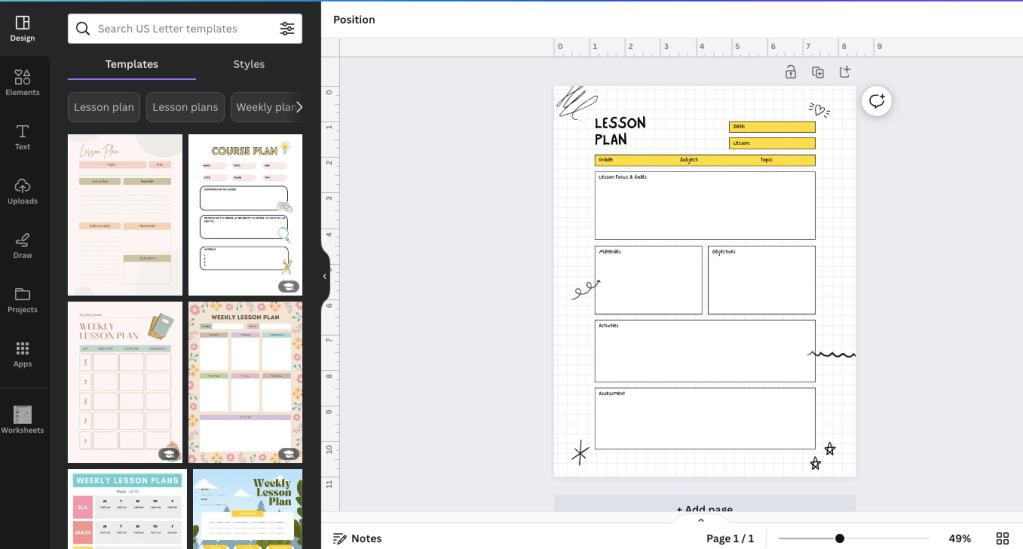
Creating Teaching Materials with Canva


If you haven’t already started using it, Canva is a great tool for educators, and it’s free! You can create lesson plans, reading guides, handouts, printables, graphic organizers, posters, and presentations.

It has some limited funtionality and is best used to create resources that you will print out or that students will read. I prefer Google Docs and other Google programs for documents that I want students to edit or directly interact with.

When creating resources for teaching, as well as for Teachers Pay Teachers, I prefer a mix of MS Word, Google Docs and Forms, and Canva.

The best thing about Canva is their HUGE inventory of clip art and stock photography, which can really improve the overall look and appeal of your handouts, posters, and presentations.

By the way, this is NOT as sponosored post. I wish, ha ha! ๐Ÿ™‚

Getting Started on TpT: Subject Areas


For those you who read my post Tips for Getting Started on Teachers Pay Teachers (TpT), I’ve decided to write more posts on creating for TpT, starting with choosing a subject area for your store to focus on.

You DO NOT have to stick with one type of resource, but it helps to have a general focus. For example, my store is focused on English Language Arts resources.

English Language Arts is a popular, in-demand topic for TpT, and can include:

Balanced literacy, close reading, creative writing, EFL โ€“ ESL- ELD, ELA test prep, grammar, informational text, literature, phonics, poetry, reading, reading strategies, short stories, spelling, vocabulary, writing, writing essays, writing expository, other (ELA)

Here are some other K-12 subject areas and topics you might consider creating resources for:

Arts

Art history, cooking, dance, drama, graphic arts, instrumental music, music, music composition, visual arts, vocal music, other (arts), other (music)

Holidays/Seasonal

Autumn, back to school, black history month, Christmas/Chanukah/Kwanza, earth day, Easter, end of year, Halloween, Martin Luther King Day, Presidentsโ€™ Day, spring, St. Patrickโ€™s Day, summer, Thanksgiving, The New Year, Valentineโ€™s Day, winter, womenโ€™s history month

Math

Algebra, algebra 2, applied math, arithmetic, basic operations, calculus, decimals, fractions, geometry, graphing, math test prep, measurement, mental math, numbers, order of operations, place value, statistics, trigonometry, word problems, other (math)

Science

Aanatomy, archaeology, astronomy, basic principles, biology, chemistry, earth sciences, engineering, environment, forensics, general science, physical science, physics, other (science)

Social Studies

African history, ancient history, Asian studies, Australian history, British history, Canadian history, civics, criminal justice โ€“ law, economics, elections โ€“ voting, European history, geography, government, middle ages, native americans, psychology, U.S. history, world history, other (social studies)

Specialty

Career and technical education, character education, child care, classroom community, classroom management, coaching, computer science โ€“ technology, critical thinking, early intervention, family consumer science, for administrators, for all subjects, gifted and talented, handwriting, health, instructional technology, international baccalaureate, library skills, life skills, occupational therapy, oral communication, physical education, physical therapy, problem solving, products for TpT sellers, professional development, religion, robotics, school counseling, school psychology, special education, speech therapy, student council, study skills, test preparation, tools for common core, vocational education, other (specialty)

World Language

American sign language, Arabic, Chinese, en Francais, Gaeilge, German, Hebrew, Italian, Japanese, Latin, Portuguese, Russian, Spanish, other (world language)

For all subject areas

For educators who are not K-12 teachers, you will select either university discipline or adult education that is appropriate for your skill set. The next question is about the grade level you teach which has selections for preschool, higher education, K-12, homeschoolers, etc.

In the coming week I’ll write more about how to create resources that will sell!

If you’re not already following this blog, enter your email below to subscribe. I’ll be doing a subscriber giveway at the end of the month.

Make Money Online


You should have a side hustle.

There are many reasons for this, which I list below. First of all, if you are a teacher, it’s okay to fantasize about leaving your profession. Teachers are not paid well or treated well, and there is no shame in leaving YOU are not the problem.

And even if you keep teaching, having a side hustle will make a you better teacher. This has been the case for me. In trying out and creating several different side hustles (mainly TpT and Fiverr), I have learned a lot about myself as a teacher, and a lot about creating engaging content. As a result, my lessons, assessments, and overall approach to teaching have gotten better, which has been a benefit to both me and my students.

Teaching is undoubtedly a noble profession that plays a crucial role in shaping the minds and futures of young individuals. However, the demands of the job can sometimes leave teachers with limited time and financial resources. In recent years, many teachers have turned to side hustles as a way to supplement their income, pursue their passions, and gain valuable experiences outside the classroom. In this blog post, we will explore why teachers should consider having a side hustle and how it can bring numerous benefits to their personal and professional lives.

If you’re here as a writer, someone in another profession, or as a stay-at-home mom, finding a side hustle and creating content will change your life for the better.

I’m going to help you get started.

What creating content and making money online can provide:

  1. Financial Stability and Flexibility

While teaching is rewarding in many ways, it’s no secret that the pay scale for educators may not always reflect the hard work and dedication they put into their profession. A side hustle can provide an additional source of income, allowing teachers to better meet their financial needs and alleviate any financial stress they may experience. Whether it’s tutoring, freelance writing, or offering online courses, a side hustle can contribute to greater financial stability and flexibility.

  1. Pursuing Passions and Talents

Teaching is a multifaceted profession, and educators possess a wide range of skills and talents beyond their classroom expertise. A side hustle presents an opportunity for teachers to explore and monetize their passions. Whether it’s photography, graphic design, crafting, or playing a musical instrument, a side hustle can serve as a platform to showcase and develop these skills. Not only does this enhance personal fulfillment, but it can also inspire creativity and bring a renewed sense of purpose to teaching.

  1. Professional Growth and Skill Enhancement

Engaging in a side hustle outside of the teaching realm can lead to professional growth and skill enhancement. It allows teachers to gain valuable experiences that can be applied in the classroom, fostering innovation and fresh perspectives in their teaching practices. For instance, starting a blog or YouTube channel can hone communication and technology skills, while running a small business can develop entrepreneurial acumen. These transferable skills can ultimately enhance the quality of education provided to students.

  1. Networking and Building Connections

Side hustles often require teachers to interact with a diverse range of individuals and communities. This presents an excellent opportunity to expand their network and build connections outside of the education sector. Networking can lead to collaborations, mentorships, and new career possibilities. Moreover, connecting with professionals from different fields can expose teachers to alternative perspectives and innovative ideas, enriching their teaching methods and broadening their horizons.

  1. Work-Life Balance

Balancing work responsibilities with personal life can be a challenge for many teachers. Engaging in a side hustle can actually contribute to a healthier work-life balance. While it may seem counterintuitive to take on additional work, a side hustle that aligns with personal interests and allows for flexible scheduling can provide a welcome break from the demands of the classroom. By dedicating time to their passions outside of teaching, educators can rejuvenate their energy and bring fresh enthusiasm back into their classrooms.

Conclusion

As we all continue to face financial constraints and seek personal and professional fulfillment, having a side hustle has become an appealing option. Whether for financial stability, pursuing passions, professional growth, networking, or achieving a better work-life balance, anyone can benefit greatly from the diverse opportunities and experiences that a side hustle offers. By embracing a side hustle, educators can enhance their well-being, broaden their horizons, and ultimately become even more effective and fulfilled in their role as teachers.

I am creating guides to start making money right away on Teachers Pay Teachers, Fiverr, Udemy, and Twitter. Let me know in the comments what you need and what you’re most interested in learning about.

FREE Curriculum Planning Template for a Unit or Online Course


I’ve recently started working on prep for a free online course (Coming Soon!) and for my fall classes, and I wasn’t happy with most of the course planning or unit planning guides I found online, so I created my own. I’ve included it here as a printable PDF and also a fully editable MS Word Document. Feel free to take this and use it any way you like!

MS Word Version:

PDF Version w/preview:

Lesson Planning with Bloom’s Taxonomy

Bloom’s Taxonomy is a tool that you can use to help determine the levels of thinking you’re asking students to do, from simply remembering to understanding to applying and creating. This can give you insight into how to assess student learning and how to push students in higher-order thinking. Building upon each level in your lesson plans will guide students to think in increasingly more sophisticated ways.

I’ve used Bloom’s Taxonomy for years and have always found it helpful, but when I went looking for resources to share with my students I was surprised at how many videos and articles implied that teachers should include every level of Bloom’s Taxonomy in all of their lesson plans.

NOT TRUE!

How should you use Bloom’s Taxonomy in lesson planning?

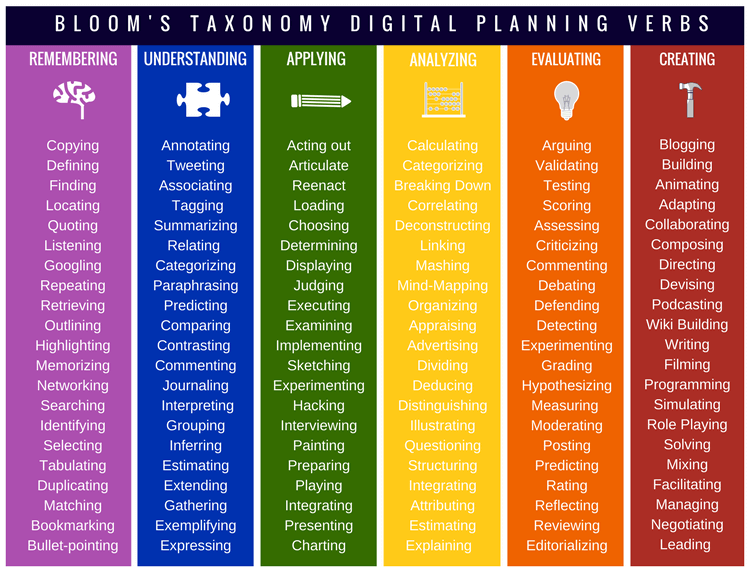
One way is to think about the learning objectives for your lesson. What are you asking students to do, and what do you want them to be able to do at the end of the lesson? It can be helpful to see how your learning objectives align with Bloom’s Taxonomy by looking at the planning verbs below, NOT to make sure you’re hitting every level (not every skill needs to be taught and assessed at every level), but to help make you aware of what level of the taxonomy your lesson is hitting.

For example, if you are always asking students to identify and define key terms, you might want to think about ways to help them learn to apply those terms. Students may be able to define the parts of speech, but are they then able to use them in a sentence? Students may be able to identify examples of characterization and setting in a piece of literature, but are they able to create their own characters and describe the setting in their stories?

I’ve included a table of helpful planning verbs below. You can also download a free planning table HERE.

Teach with Puzzles: 5 Free Puzzle Creation Tools for Teachers

Most teachers have used puzzles in their classroom at one time or another, but did you know that puzzles are not only engaging, but beneficial learning tools?

Puzzles strengthen the connections between brain cells, and create new connections for improved cognitive speed. 

Puzzles require students to see things simultaneously in terms of parts and wholes. They require both logic and creativity. As different regions of the brain work together to achieve the best results, the brain trains itself to integrate different types of thinking for long-term benefits.

The following free tools and resources can help teachers make their own puzzles, from word search and crossword puzzles to jigsaw puzzles and secret codes.

Discovery Education Puzzle Maker

https://puzzlemaker.discoveryeducation.com

Instant Online Puzzle Maker

https://www.puzzle-maker.com

Crossword Puzzle Maker for Teachers

https://worksheets.theteacherscorner.net/make-your-own/crossword

Free Puzzle Piece Template at Teachers Pay Teachers

https://www.teacherspayteachers.com/Product/Free-Puzzle-Piece-Templates-Creative-Clips-Digital-Clipart-707940

Free Puzzle Decoder Wheel

https://www.teacherspayteachers.com/Product/FREE-Puzzle-Decoder-Template-Set-Zip-A-Dee-Doo-Dah-Designs-3434484