Embracing Winter Productivity: Overcoming Burnout and Distraction


I will admit, I really struggle with productivity in winter. This winter, especially, I’ve been dealing with an ongoing feeling of exhaustion and a lack of focus. The cold weather and shorter days take a toll on my energy levels and motivation, leaving me feeling drained and unproductive. From talking to my fellow teachers, writers, and parents, I know I’m not alone.

However, I have many goals I want to accomplish and projects I need to get started, so I realize I need to kick things into gear and try to get more done. I’ve been doing a lot of reading, research, and experimentation in this area and having finally found a few strategies that are working well for me.

  1. Create a Comfortable Workspace (THIS ONE IS HUGE FOR ME): Your environment plays a significant role in your productivity levels. Create a workspace that is conducive to focus and concentration, free from distractions and clutter. Surround yourself with elements that inspire and uplift you, whether it’s a scented candle, a favorite plant, or soothing instrumental music. By curating a comfortable and inviting space, you can enhance your productivity and motivation, even on the dreariest of days.

  2. Embrace the Season: Rather than resisting the winter blues, embrace the unique opportunities it offers. Winter is a time for introspection and self-care. Take advantage of the cozy ambiance to indulge in activities that nourish your mind and body, such as reading by the fireplace, enjoying warm cups of tea, or taking long walks in the snow-covered landscapes. Cultivate a mindset of acceptance towards the season, recognizing it as a time for rest and renewal.

  3. Set Realistic Goals: In the midst of fatigue and burnout, it’s essential to set realistic and manageable goals for yourself. Break down your tasks into smaller, achievable milestones, and prioritize them based on importance and urgency. By setting clear objectives, you can avoid feeling overwhelmed and maintain a sense of progress, no matter how small.

  4. Practice Self-Care: Self-care is crucial for maintaining overall well-being, especially during the winter months. Prioritize activities that rejuvenate your body and mind, such as getting enough sleep, eating nourishing foods, and engaging in regular exercise. Take breaks throughout the day to stretch, meditate, or simply breathe deeply. By prioritizing self-care, you can replenish your energy reserves and combat the effects of burnout.

  5. Manage Your Energy: Recognize that your energy levels fluctuate throughout the day, and plan your tasks accordingly. Identify your peak hours of productivity and tackle your most demanding tasks during these times. Break up your workday with periodic breaks to prevent fatigue and maintain focus. Experiment with different productivity techniques, such as the Pomodoro Technique or time-blocking, to find what works best for you.

  6. Practice Mindfulness: Mindfulness is a powerful tool for combating distraction and enhancing focus. Take a few moments each day to practice mindfulness meditation, focusing your attention on the present moment and observing your thoughts without judgment. Cultivate a mindset of mindfulness in your daily activities, whether it’s savoring a warm cup of cocoa or engaging fully in a work task. By practicing mindfulness, you can train your mind to stay present and attentive, even amidst the winter doldrums.

  7. Seek Support: I really struggle with this and I have to admit that I don’t really follow it as often as I should. However, this strategy comes highly recommended from almost every source I read. So don’t hesitate to reach out for support when you’re feeling overwhelmed or burnt out. Whether it’s talking to a trusted friend, seeking guidance from a mentor, or consulting a mental health professional, reaching out for support can provide valuable perspective and assistance. Remember that you’re not alone in facing the challenges of productivity and burnout, and there are resources available to help you navigate through them.

Keep in mind that even the smallest amount of progress is cumulative, so be kind to yourself. I hope this season be a time of transformation and resilience for all of us!


Choosing a Word of the Year for 2024


Happy New Year! I hope you are having a restful holiday and I wish you all the best for the new year.

I’ve recently discovered a simple practice that has the potential to shape the entire yearโ€”choosing a Word of the Year.

The idea is elegantly straightforward: select a single word that encapsulates the essence of what you want to manifest in the coming year. This word becomes your guiding light, a beacon that directs your focus, shapes your priorities, and fuels your journey. Some examples include: Renewal, Growth, Resilience, Balance, Harmony, or Transformation, but the posibilities are endless. You could even brainstorm by making lists or a word web before settling on your word.

The benefits of this practice are far-reaching. At the end of this post I’ll share the word I’ve chosen, why I’ve chosen it, and how I plan to use it to focus my goals. I will also invite you to share your word.

Here are some examples of how a single word might impact your year:

Renewal: A Fresh Start

“Every morning brings new potential, but only if you take the first step.”

Choosing ‘Renewal’ as your Word of the Year is an invitation to embrace fresh beginnings. It’s a commitment to shedding the old, obsolete layers and stepping into a revitalized version of yourself. This year, make it your mission to approach each day with a renewed sense of purpose and energy.

Growth: Cultivating Your Potential

“Like a tree, your growth is not defined by imperfections, but by the strength to keep reaching for the sun.”

Opting for ‘Growth’ signifies an unwavering commitment to personal and professional development. It’s about expanding your horizons, stepping out of your comfort zone, and allowing yourself the space to flourish. Cultivate the mindset of a lifelong learner, and watch as your world expands in ways you never thought possible.

Resilience: Bouncing Back Stronger

“In the face of adversity, resilience is your greatest ally.”

Resilience, your chosen word, becomes a source of strength when faced with challenges. Life is unpredictable, but your response to adversity is within your control. This year, let ‘Resilience’ be your armor, helping you bounce back from setbacks and emerge stronger than ever before.

Balance: Nurturing Harmony Within Chaos

“In the dance of life, find your rhythm and savor the harmony.”

‘Balance’ is a powerful word that resonates with the need to harmonize the various facets of your life. Juggling work, relationships, and personal well-being can be challenging, but by choosing ‘Balance,’ you commit to finding equilibrium. Strive to allocate time and energy to each aspect of your life, creating a symphony of fulfillment.

Harmony: Creating Synchronicity

“In the orchestra of life, let harmony be the melody that guides your actions.”

Selecting ‘Harmony’ is an acknowledgment of the interconnectedness of your goals and values. It’s about aligning your actions with your beliefs, fostering positive relationships, and creating a cohesive narrative for your life. Allow ‘Harmony’ to guide your decisions, bringing a sense of unity to your journey.

Transformation: Embracing Evolution

“To transform is to evolve; embrace the journey of becoming who you are meant to be.”

‘Transformation’ is a bold choice, representing the profound shifts you aspire to make. This word calls for embracing change, challenging the status quo, and evolving into the best version of yourself. Let ‘Transformation’ be the catalyst for growth and the driving force behind your pursuit of excellence.

How to Harness the Power of Your Word:

  1. Reflect: Take a moment to reflect on the past yearโ€”its triumphs, challenges, and the lessons learned. Identify the themes or aspirations that resonate with where you are now and where you want to go.
  2. Choose with Intention: Select your Word of the Year with purpose. It should be a word that inspires you, resonates with your goals, and encapsulates the essence of what you want to achieve. Trust your instincts; the right word will find you.
  3. Visualize: Create a visual representation of your word. This could be a vision board, a piece of art, or simply a written statement. Place it where you’ll see it daily, serving as a constant reminder of your focus and aspirations.
  4. Incorporate into Goal Setting: Align your goals with your chosen word. If ‘Growth’ is your word, set specific objectives that contribute to your personal and professional development. Let your word inform the direction of your goals.
  5. Check-In Regularly: Regularly revisit your Word of the Year. Consider how it’s influencing your decisions, actions, and overall mindset. Use it as a touchstone to ensure alignment with your aspirations.
  6. Celebrate Progress: Acknowledge and celebrate the progress you make throughout the year. Small victories are stepping stones to more significant achievements. Celebrate your journey and the person you are becoming.

Embrace the power of your chosen word, and watch as it transforms your year into a masterpiece of growth, resilience, balance, harmony, and, ultimately, transformation. This is your yearโ€”empower it with intention, purpose, and the transformative energy of your chosen word.

For my word of the year, I’ve chosen ABUNDANCE. For the past two years I’ve felt the constant constriction of LACK. Lack of time, lack of energy, lack of money. I’m determined this year to focus on what I WANT, not what don’t want.

Abundance means and abudance of time, energy, happiness, money, contentment, ideas, creativity, memories, and love.

If you share your word in the comments, I will create a custom blog post in the next week based on your word, sharing images, thoughts, ideas, and resources based on your word. I will also spend time each month revisiting my word and how it is impacting my year.

Failing to Plan is Planning to Fail


You may have noticed that I’ve missed a few days here and there this month. My 30-day challenge has had a few blips, but I don’t consider it a failure, and still plan to keep going and post my stats at the end of this month and every month.

Instead, I see those blips as a learning experience. I’ve left too much up to chance with my blogging, and I’ve failed to devlelop a cohesive plan for the month of September. As a teacher, I realize the importance of planning–I couldn’t live without structured lesson planning, but it’s also important for writers and content creators.

I’m publishing this on Saturday night because Sundays are my favorite days to plan. Tomorrow I will share some ideas for you about effective planning, and the best planning strategies that work for me, from the pros and cons to paper vs. digital planners, to whether or not you should do daily, weekly, or month planning layouts.

Planning is also a form of self-care for me, because it helps me feel more in control of my time, helps keep anxiety at bay, and reduces the nasty surprises and panicked Monday mornings when I’ve gotten behind on my tasks.

Getting Ready for the School Year: How to Manage Anxiety and Stress


I haven’t blogged here in a while, mainly because I’ve been getting my kids ready for their school year (I have one in middle school and one in high school) and I’ve also been working with new teachers to help them prepare for the coming year. This can indeed be a stressful and anxiety-inducing time for teachers.. Here are some strategies both new and experienced teachers can use to overcome and prepare for the beginning of the school year anxiety and stress:

  1. Set Realistic Expectations: Understand that the beginning of the school year can be overwhelming, but it’s important to set realistic expectations for yourself and your students. Rome wasn’t built in a day, and it’s okay if everything isn’t perfect from the very start.
  2. Plan Ahead: Create a detailed plan for the first few weeks, including lesson plans, classroom setup, and administrative tasks. Having a clear roadmap can help alleviate anxiety by giving you a sense of control and direction.
  3. Organize Your Space: A well-organized classroom can significantly reduce stress. Take time to arrange desks, materials, and resources in a way that is conducive to learning and easy to navigate.
  4. Connect with Colleagues: Reach out to fellow teachers, both experienced and new, to share ideas, tips, and experiences. Collaborating with others can provide a sense of camaraderie and the opportunity to learn from one another.
  5. Self-Care: Prioritize self-care and well-being. Make sure you’re getting enough rest, eating healthily, staying hydrated, and engaging in activities you enjoy outside of work. Taking care of your physical and mental health is essential.
  6. Set Boundaries: It’s easy for teachers to overwork themselves, especially during the start of the year. Set clear boundaries between work and personal time to prevent burnout.
  7. Practice Mindfulness: Incorporate mindfulness techniques into your routine, such as deep breathing, meditation, or yoga. These practices can help you stay centered and reduce stress.
  8. Celebrate Small Wins: Acknowledge and celebrate even the smallest accomplishments during the beginning of the school year. Each step forward is a reason to be proud.
  9. Reflect and Adjust: Regularly reflect on your progress and adjust your plans as needed. This ongoing assessment can help you stay on track and make necessary improvements.
  10. Seek Support: If your anxiety and stress become overwhelming, don’t hesitate to seek support from a counselor, therapist, or support group. Your mental well-being is a priority.

What are your favorite go-to strategies for getting ready for the new year? Or, if you’re not a teacher, some strategies you use to manage stress or plan your week.

4 Life-Changing Habits


  1. Set a daily intention

    Setting a daily intention gives focus to your day. I recommend keeping a journal, which also gives you the opportunity to reflect on where you’ve been and where you’re going. It helps to priortize your day and not let the day get away. Your daily intention should be both small and specific, like “I will read for twenty minutes,” or “I will drink 24 oz. of water.”

  2. Read books

    Reading improves your focus and memory, and it also gives you a window (or doorway!) to another world, and insight into another person’s experiences. It can not just make you more knowledgable, it can also make your more empathetic.

    More importantly, I find reading to be highly motivating. Whenever I’m learning a new topic or need to accomplish a difficult task, the first thing I do is look for books about it. When I’m depressed, anxious, or struggling with something, a visit to the library or bookstore is motivating and renewing for me. Just smelling books makes me happy.

    While I adore my Kindle (I have the e-reader that is a single use device, rather than a tablet) and buy more books than I’d like to admit on Amazon, nothing makes me happier than a visit to a bookstore with a coffee shop. If you’ve never done this, or haven’t done it in a long time, please make time to enjoy a coffee or tea while browsing for books. OR, just as good, buy a new book in a bookstore or get a fresh book from the library, and take it to a coffee shop.

  3. Keep a to-do list

    This summer, I’ve really noticed how much my productivity suffers and my anxiety skyrockets when I don’t keep a to-list. For me, the best way to conquer anxiety is to write down everything I have to do. I usually do a brain dump, followed by a big master to-do list, followed by scheduling the week’s priorities in my planning calendar. I’ve also seen people use post-its, or programs like Trello to keep and organize their to-do lists. I’d love to hear about your favorite method!

  4. Practice gratitude

    I was always dubious about this one until I started practicing it regularly. For me, I write down five things I’m grateful for every night before I go to bed. I really helps me shift my focus before going to sleep, and it has allowed me to see more positives than negatives in my life and in the world around me. For people who believe in manifesting, it can also be a way to manifest more positive events. Try for it at least a week and I promise you’ll see results.

Weekly Planning


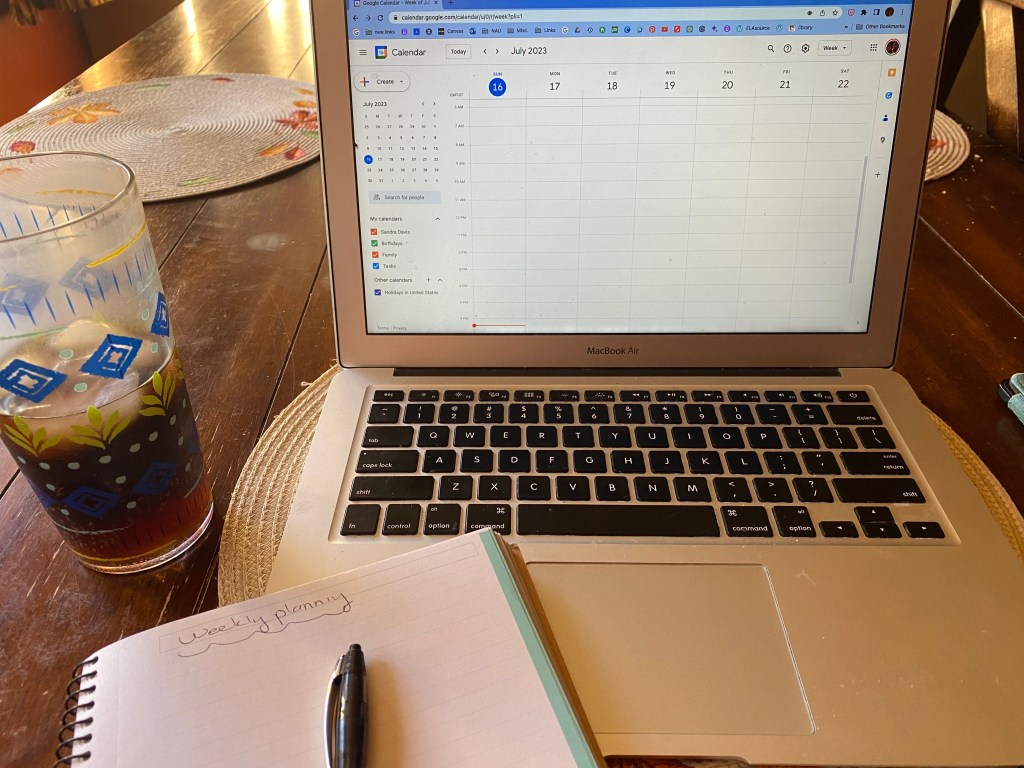
It’s Sunday night! Time to plan the week ahead.

I discovered a few months ago that the cure for the Sunday Scaries (Sunday night anxiety) is to plan for the coming week. I’m usually too anxious to enjoy Sunday afternoons anyway, and this gives me an outlet for my restlessness and allows me to sleep better on Sunday night. It also makes the work week go much more smoothly.

Right now I’m on summer vacation, but I’ve realized that the first week of school will be here before I know it (sorry), and I want to get a jump on planning for the coming year. I also have personal projects that I want to complete before my semester begins (mainly my novel), so I’ve decided that since we’re done traveling for the summer I’m going to try to give my days a bit more structure by creating a very loose schedule and writing down some goals.

Research shows that people who WRITE DOWN THEIR GOALS and MAKE A PLAN, are much more likely to accomplish those goals.

I’ve been reading some productivity books and blogs, and one of the number one recommendations is to put your to-list into your calendar. SCHEDULE YOUR TO-DO LIST. Although I’ve always kept a paper calendar, I’ve decided to give Google Calendar a try. Before creating my schedule, I’m going to a brain dump. I’ll write more on doing a brain dump tomorrow, since that turns out to also be the first step in creating an online course.

Happy Sunday night and happy planning! Here’s to a great week.

Just Do The Thing


In the last few days online (I’ve been on vacation and completing vegging), I’ve discovered an amazing array of talented people who vary widely in terms of abilties, age, privilege, and attractiveness. They have all gone “viral” in some way or another and have all been wildly succesful in terms of getting attention and making money (if either of those are your thing).

They include:

A woman who just published her first book at age 58 and is rewarding herself with a solo trip to the Galapagos islands.

A woman in her 60s who is brand new at cycling and just cycled 250 miles with her son.

A woman who creates Tik Tok livestreams in which she acts like an NPC and pops corn using a hair straightener.

A woman who is not conventally attractive or rich or privilged (bascially a nobody) who has a wildly successful podcast in which she interviews celebrities. She has only posted 9 episodes! Her unique approach is to be really, really bad at interviewing. People love her!

A little old man who livestreams himself eating his lunch.

WHY have I included these examples?

Because you can do anything you want.

I repeat: YOU CAN DO ANYTHING YOU WANT!

I grew up in the 70s and 80s and was an adult in the 90s. It was a time when gatekeepers had all the power. I was told I couldn’t be a writer, a photographer, or a playwright. Back then, when there was no internet, you bascially had to be independently wealthy to pursue those dreams. Instead, I became an English teacher, which I LOVE, and since then, with the rise of the internet, then Web 2.0 and interactive digital media, social media, and creative sharing sites like YouTube, you can do anything and be anything.

IT DOES NOT MATTER:

How old you are.

How much you weigh.

How attractive you are.

Where you starting from.

Right now, I want you to spend a few minutes thinking about and reflecting on what you’d like to do and who you’d like to be, WITH NO LIMITS.

I’ll start first. I’m 52 years old and I’m writing my first novel. I want to finish it (it’s HARD work) and I want to sell it. I want it to become a best seller and I want to make a ton of money off of it. This is actually possible, and if I don’t sell it, I will publish it myself on Amazon, which writers can now do for free.

Making the Most of Your Summer


I’ll be honest, in the summer I tend to fluctuate between wanting to do nothing but sit on the couch watching Netflix and eating Taco Bell, to wanting to work on projects that I never have time for (like writing my novel), to wanting to do some prep for the coming school year.

It’s important to rest and recharge, but I also find that I get more out of summer, and have a less stressful school year, when I plan to do a little work on projects and prep. I make it fun, by working in a coffee shop or preparing a snack to eat while I work, and I stick to being producting only a few days a week, while the rest of the week I do things with my kids.

Here are some suggestions for things to do to prepare for the coming school year:

  1. Reflect on the previous year: THIS IS SO IMPORTANT. Take time to reflect on the previous school year, identifying both successes and areas for improvement. Consider what worked well and what changes you want to implement in the upcoming year.

  2. Set goals: Establish clear and achievable goals for the upcoming school year. These can be related to student achievement, personal growth, or professional development. Setting goals will give you a sense of direction and purpose.

  3. Create or update resources: Take the time to create or update teaching resources, such as lesson plans, worksheets, and presentations. Consider incorporating new instructional strategies, technologies, or resources that can enhance student learning.

  4. Explore new teaching strategies: Stay up to date with the latest educational research and pedagogical approaches. Explore new teaching strategies that align with your goals and the needs of your students. Look for professional development opportunities or online courses that can expand your teaching toolkit.

  5. Read educational literature: Read books, articles, or research papers related to education and teaching. Explore topics that interest you, such as classroom management, instructional strategies, or social-emotional learning. These readings can deepen your understanding and inform your practice.

  6. Refresh your knowledge: Review content knowledge in your subject area. Brush up on topics you might be teaching and ensure you are up to date with any changes in your field. This will boost your confidence and help you deliver accurate and meaningful instruction.

  7. Take care of yourself: Remember to prioritize self-care during the summer break. Engage in activities that recharge you mentally, emotionally, and physically. Take time for hobbies, relaxation, and spending quality time with loved ones. A well-rested and rejuvenated teacher can bring more energy and enthusiasm to the classroom.

  8. Plan for classroom management: Reflect on your classroom management strategies and consider any necessary adjustments. Plan for establishing routines, rules, and procedures at the beginning of the school year to create a positive and structured learning environment.

By engaging in some of these activities, we can start the school year feeling prepared and inspired.

Self-Care During the Winter Months


It’s completely normal to feel a bit down during the winter months, when the days are shorter and the weather is colder. But there are things you can do to avoid feeling depressed and maintain your mental well-being. Here are some suggestions for stayting positive during the winter months:

1. Enjoy the season. Winter has its own beauty and charm. Take time to appreciate the holiday lights and the coziness of being inside on a cold day.

2. Get some sunlight. Natural sunlight can help boost your mood and energy levels, so try to get outside for at least a few minutes each day, even if it’s just to take a quick walk around the block.

3. Move your body. Exercise has been shown to improve mood and reduce stress, so try to incorporate some form of physical activity into your daily routine. This could be as simple as taking a walk, doing some yoga, or going to the gym.

4. Stay connected. It’s easy to feel isolated during the winter months, but staying connected with friends, family, and loved ones can help boost your mood and prevent feelings of loneliness. Consider hosting a game night, going to a movie, or inviting friends over for dinner.

5. Take care of yourself. Winter can be a busy time, but it’s important to make time for self-care. This could include taking a relaxing bath, getting a massage, or simply curling up with a good book

Remember, it’s okay to feel a bit down during the winter, but there are things you can do to avoid feeling depressed. By incorporating these suggestions into your daily routine, you can maintain your mental well-being and enjoy the winter months.