Side-Hustle Sunday


Welcome to Side-Hustle Sunday! Each week in this weekly round-up I will discuss:

  1. Current updates and metrics across all platforms
  2. A review of the platform I focused on for the previous week (I will skip this the first week and instead provide a brief overview of all of the platforms I post on).
  3. What I accomplished
  4. Lessons learned
  5. Next weekโ€™s platform + goals

Platforms:

For several years now, I’ve been exploring and building on a variety of platforms in an attempt to build and audience and establish a consisten income stream.

Each of these platforms have different strengths, audiences, and content types. Hereโ€™s a quick tour of where Iโ€™m posting and why:


Teachers Pay Teachers (TpT)

What it is: An online marketplace where educators sell lesson plans, activities, assessments, and classroom resources.
Why I use it: I can turn my existing teaching materials into income by sharing them with other educators.
Best for: Teachers, tutors, and curriculum creators in Kโ€“12 or higher ed.


Etsy

What it is: A creative marketplace for handmade goods, vintage finds, andโ€”more recentlyโ€”digital downloads like planners, journals, and printables.
Why I use it: Itโ€™s great for selling beautiful, useful products with a strong visual or aesthetic appeal.
Best for: Printables, digital planners, classroom decor, wall art, and niche kits.


Instagram

What it is: A visual-first social media platform used for branding, marketing, and community building.
Why I use it: Itโ€™s a great place to showcase behind-the-scenes content, quick tips, and build connections with other creators.
Best for: Growing your audience, cross-promoting products, and showing personality.


WordPress (My Blog)

What it is: A blogging and website platform that lets you publish long-form content, tutorials, and updates.
Why I use it: Itโ€™s my content home baseโ€”great for SEO, in-depth posts, and linking to my products.
Best for: Evergreen content, long-form tutorials, and resource roundups.


Pinterest

What it is: A visual discovery engine where users save and share ideasโ€”especially for education, crafts, home, and DIY.
Why I use it: My blog and products can gain long-term traffic through visually appealing pins.
Best for: Teachers, creatives, and anyone with visually-driven content or tutorials.


Royal Road + KDP (Self-Publishing)

Royal Road: A free web serial platform where you can publish your fiction one chapter at a time.
KDP (Kindle Direct Publishing): Amazonโ€™s self-publishing service for eBooks and print books.
Why I use them: Royal Road is great for building a reader base, while KDP allows me to sell completed books or journals.
Best for: Writers of fiction, fanfic, low-content books, and serial storytellers.


YouTube

What it is: A video-sharing platform used for tutorials, vlogs, reviews, and educational content.
Why I use it: YouTube lets me reach visual learners and build trust through face-to-face (or voice-to-voice) content.
Best for: Teaching, documenting your journey, and creating content with long-term value.


Course Platforms (Udemy, Gumroad, etc.)

Udemy: A structured, student-facing course platform where you upload video lessons and reach learners through Udemyโ€™s marketplace.
Gumroad: A flexible storefront where you can sell mini-courses, ebooks, templates, and moreโ€”directly to your audience.
Why I use them: These platforms help me turn knowledge into income by packaging what I know into teachable, sellable formats.
Best for: Creators with teachable skills or digital products.


My Current Metrics:

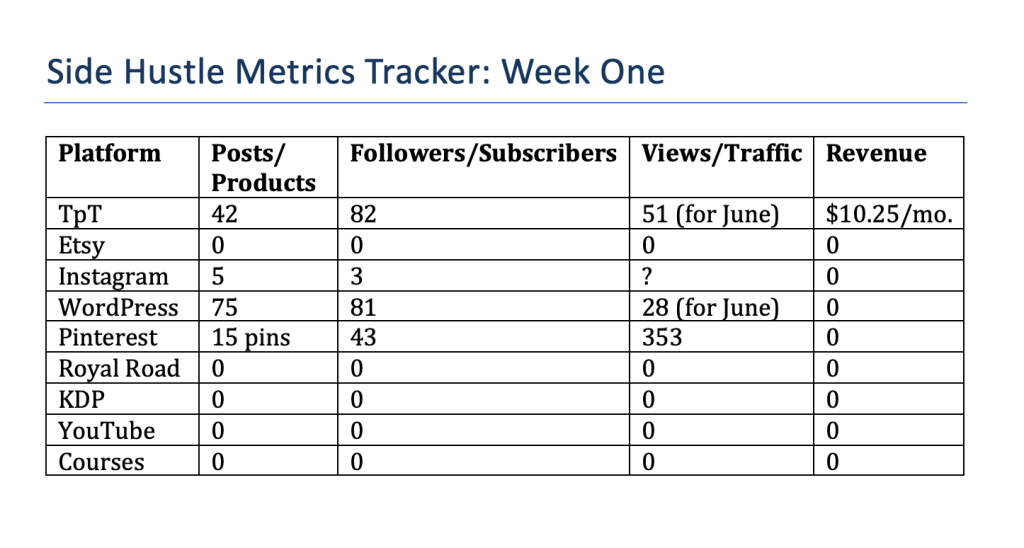
Below is a table with all of the platforms I intend to publish on (I won’t be focusing on all of these during the six week challenge, but will update this table every week). As you can see, for some platforms, like Etsy and YouTube, I haven’t started posting products and videos yet, nor have I created any courses, but I’m including them in these metrics because I want you to have a real-time record of my progoress.
Week One: TpT (Teachers Pay Teachers)
This week, Iโ€™ll be focusing on Teachers Pay Teachers (TpT), which is a platform designed for educators to buy, sell, and share classroom resources. If youโ€™re a teacher, tutor, or curriculum creator, TpT is a fantastic way to turn your hard work into passive income by listing the lessons, activities, and worksheets you already use in your classroom. Itโ€™s beginner-friendly, especially if you start with free tools like Google Slides or Canva to design your products.

My goal for the week is to create one product from scratch and take steps to improve my overall metrics, while at the same time walking you through the process of how I create products using free tools and how I improve my metrics and build my audience.

The Six Week Creator Challenge


I’m starting two new features on my blog. One is Side Hustle Sunday in which I discuss my attempts at content creation and post updates and metrics for each of the platforms I use. I will start tomorrow by providing metrics for each of the following platforms:

  1. TpT (Teachers Pay Teachers)
  2. Etsy
  3. Instagram
  4. Royal Road (web serials) and KDP (Amazon Self-Publishing)
  5. YouTube
  6. Courses (primarily Gumraod and Udemy)

These are all of the platforms I plan to explore as a content creator, my niche being teaching materials and ELA curriculum, plus resources for writers along with my own fiction. I haven’t “niched down” very far yet (ELA and writing content and resources is still pretty broad), but I may do that once I find my footing on these sites and get a sense for how much time and effort it takes to create content for these sites, as well as how much success I have with different types of content. But for the next six weeks I will NOT stray from the content focus areas of ELA Curriculum and Writing, except for this blog, which will feature posts that will be a meta exploration of HOW I create my content and how well my digital products sell online.

Each week will include:

  • A featured platform
  • Free tools to get started
  • A personal goal/task
  • Daily posts: tips, tutorials, check-ins
  • Sunday roundup: updates + metrics

The “Sunday Side-Hustle” Roundup Posts will include:

  1. A review of the platform I focused on for the previous week
  2. What I accomplished
  3. Metrics: views, followers, sales, posts
  4. Lessons learned
  5. Next weekโ€™s platform + prep goals

I’m excited to get started on this journey and share with you what I’ve learned! Be sure to subsribe below so you don’t miss a post! It’s free to subscribe and I don’t share your emails with anyone ๐Ÿ™‚

The Creator Mindset Course


I have been giving a lot of thought to the idea of mindsets and why they are so important.

A mindset refers to a set of beliefs, attitudes, and assumptions that shape the way an individual perceives and interprets the world around them. It is essentially a mental framework or lens through which people view situations, make decisions, and respond to challenges. Mindsets can influence various aspects of life, including how individuals approach learning, handle setbacks, pursue goals, and interact with others.

For example, I was recently reading advice about fitness and nutrition, and it recommended visualing yourself as a fit, healthy person when making choices about what to eat. In other words, instead of thinking about having a list of restrictions (“I can’t have these french fries.”), think of yourself as a fit, healthy person who doesn’t eat french fries (“I don’t eat french fries.”) This may seem like silly semantics, or word games, but research shows it really works.

One of my most popular posts is The Creator Mindset, in which I discuss what it means to think like a content creator and develop a creator mindset. I’ve become convinced that changing your mindset is the most effective way to achieve your goals. Here is why mindsets are more important than goals.

A Creator Mindset:

Improves Resilience: Having the right mindset helps build resilience by encouraging you to see challenges and setbacks as opportunities for learning and improvement. Instead of being discouraged by obstacles, those with a growth mindset are more likely to persevere and find solutions.

Embraces Learning and Development: A mindset shift towards growth fosters a love for learning. Instead of fearing failure, individuals with a growth mindset view it as a natural part of the learning process. This mindset encourages continuous improvement and development over time.

Increases Motivation and Effort: A belief that effort leads to improvement is a core aspect of a growth mindset. This perspective can increase motivation and effort, as individuals understand that their actions have a direct impact on their abilities and success.

Adapts to Change: In a rapidly changing world, adaptability is a valuable trait. A growth mindset facilitates adaptability by promoting openness to new ideas, experiences, and challenges. It allows individuals to see change as an opportunity for growth rather than a threat.

Enhances Self-Reflection: Changing your mindset involves becoming more aware of your beliefs and attitudes. This increased self-awareness allows for more effective self-reflection, enabling individuals to identify and challenge limiting beliefs that may be hindering their progress.

Leads to Long-Term Success: While setting goals is important, a fixed mindset can limit one’s ability to achieve those goals. A growth mindset, on the other hand, supports the sustained effort and learning required for long-term success. It’s not just about achieving specific goals but about continuously evolving and reaching new heights.

Over time, I have done a great deal of research into the concept of mindset, beginning with the work I did while earning my doctorate in Education and Curriculum Design, in which I learned how to motivate learners without using the traditional (and ineffective) cycle of punishments and external rewards. Once I realized the impact that developing a resilient mindset had on student motivation, I began turning those tools toward myself, working with a success coach, taking courses, and reading books that provided me with the insight and methods needed to be successful. After putting together a system that worked for me, I decided to develop the Creator Mindset course to share that system with you. I’ll be launching in early January. Here is a sneak peak of the course content:


If you’re already a content-creator or want to be one, this course will catapult you to the next level. If you’re a writer, teacher, or student, you will also find this course helpful for improving your motivation, outlook, and results.

Developing a creator mindset is about creating a foundation for achieving goals more effectively. A positive and growth-oriented mindset can serve as a powerful catalyst for personal and professional development, enabling individuals to navigate challenges, learn from experiences, and achieve sustained success.

If you’re interested in learning more about how developing the right mindset can be a powerful tool for achieving your goals, be sure to subscribe to ELA Source by entering your email below. As always, I NEVER share your email with anyone, and I don’t spam your inbox.

3 Tips for Improving Sales on TpT


If you’re just getting started on Teachers Pay Teachers, you might be frustrated with slow sales. It can sometimes take months to make your first sale, especially if you start your store during slow times. Luckily, this is one the busiest times on Teachers Pay Teachers, and I’ve seen great results in my store from making the following changes:

  1. Make more products! If you following other TpT creators or participate in TpT forums, you’ll hear this advice again and again, but it really works! When you post your first 5-10 products, it can be easy to give up if you’re not getting sales, but remember that your competing agains thousands of stores and millions of products. However, I have found that as I increase my product numbers, my sales go up consistently. I’ve heard that 50 products is that magic number, and that’s my current goal. Some stores have hundreds of products. Each new product you create increases your changes of having your products show up in search.

  2. Learn how to write long-tail search terms and create long titles. Keep in mind that the title that you list for search does NOT have to be the same as the title that’s on your cover (similar to creating searchable titles on YouTube vs. clickable thumbnails). One of my most popular products, the Passport Project, increased in sales when I changed the title from Passport Project to Passport Project: Editable Passport Template and Maps for Teaching Geography.

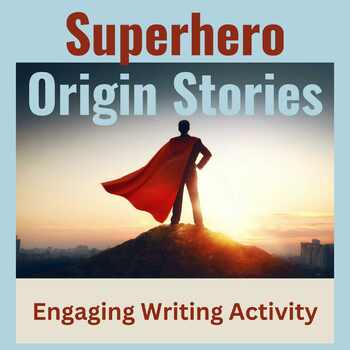
  3. Make the text on your covers as large as possible. Do NOT try to put information about your product on the cover. If you get the buyer’s attention with your cover, they will click on it and read the description. My tip is after you create your cover to look at it on your phone. Many teachers shop on TpT on their phones, and if you can’t read your product title on your cover, it’s too small. Here is an example of a cover that I use on a very successful product, Superhero Origin Stories.

I was astonished at how quickly my sales picked up after I implemented these three simple tips for improving my store.

Click here if you’re interested in following my store on Teachers Pay Teachers.

The Power of Consistency: Unlocking Success in Content Creation


Content creators of all types (blogging, YouTube, social media, etc.) face the ever-evolving challenge of capturing and maintaining their audience’s attention. With countless blogs, videos, and social media posts competing for the spotlight, how can you stand out and build a loyal following? The answer lies in one key principle: consistency.

There are numerous benefits to consistency when creating content, and this should be the cornerstone of your content strategy.

Here’s why. Consistency helps with:

1. Establishing a Brand Identity

Consistency in content creation helps you build a strong brand identity. Whether you’re an individual blogger, a small business, or a large corporation, presenting a consistent image and message to your audience is essential. It creates a sense of trust and reliability. When your audience knows what to expect from you, they are more likely to engage with your content and return for more.

2. Building Trust and Credibility

Consistency goes hand in hand with trust and credibility. When you consistently deliver valuable, high-quality content, your audience begins to see you as an authority in your niche. They trust that you will provide reliable information and insights, which can lead to increased brand loyalty and customer retention.

3. Retaining and Growing Your Audience

Imagine tuning in to your favorite TV show, only to find it airs at irregular and unpredictable times. Frustrating, right? The same principle applies to content creation. Consistency in posting schedules, whether it’s daily, weekly, or monthly, keeps your audience engaged and coming back for more. It also makes it easier for new followers to discover and join your community.

4. Enhancing SEO and Discoverability

Search engines love fresh, consistent content. When you regularly update your blog or website with relevant content, search engines like Google are more likely to rank your site higher in search results. This, in turn, makes it easier for people searching for topics in your niche to find your content.

5. Content Planning and Efficiency

Consistency in content creation encourages you to plan ahead and stay organized. You’ll be more likely to create content calendars, set deadlines, and streamline your content creation process. This efficiency not only saves time but also ensures that your content aligns with your long-term goals and messaging.

6. Engaging Your Audience

Consistency extends beyond the frequency of your posts. It also relates to the style, tone, and voice of your content. When your audience becomes familiar with your unique voice and style, they feel a deeper connection to your content. This connection can lead to more meaningful interactions and discussions in comments and social media.

7. Monetization Opportunities

If you’re looking to monetize your content through advertising, sponsorships, or affiliate marketing, consistency is key. Brands and advertisers are more likely to partner with content creators who consistently produce high-quality content and have an engaged audience. Your reliability and track record can open doors to lucrative opportunities.

Conclusion

In the world of content creation, consistency is a powerful tool that can propel your success to new heights. It builds trust, fosters audience growth, and enhances your overall brand image. Whether you’re a seasoned content creator or just starting out, make consistency a priority in your content strategy. The benefits it brings will be well worth the effort, helping you achieve your goals and connect with your audience on a deeper level. So, stay consistent, stay true to your voice, and watch your content thrive.

The Creator Mindset


The Creator Mindset is the embodiment of innovation, curiosity, and boundless potential. It is an approach to life that nurtures the belief that we are not passive bystanders, but active creators of our reality. When we embrace this mindset, we tap into our full potential and find a limitless well of possibilities awaiting us.

1. Embrace Curiosity and Continuous Learning

At the heart of the Creator Mindset lies an insatiable curiosity. Creators are always eager to explore, discover, and learn new things. They don’t shy away from challenges but see them as opportunities for growth and expansion. Every setback is viewed as a chance to gain valuable insights, not as a sign of failure. This curiosity-driven approach opens doors to unexplored territories and fuels the drive to seek knowledge beyond conventional boundaries.

2. Embrace Failure as a Stepping Stone

Creators understand that failure is an integral part of the journey toward success. They see it as a stepping stone, not a stumbling block. Instead of being discouraged by setbacks, they learn from them, iterate, and improve. This resilience allows creators to push the boundaries of what is possible and brings them closer to breakthroughs that could transform their lives and the world around them.

3. Cultivate Imagination and Vision

Imagination is the key that unlocks the doors of innovation. Creators dare to dream big, envisioning possibilities beyond the current state of affairs. They don’t limit themselves to what is readily visible; rather, they paint vivid pictures of what they wish to create. This clarity of vision acts as a guiding star, illuminating their path and motivating them to manifest their dreams into reality.

4. Collaborate and Empower Others

Creators understand that they don’t have to go it alone. Collaboration with like-minded individuals amplifies their creativity and multiplies the impact of their endeavors. They foster an environment where ideas are shared freely, and constructive feedback is welcomed. In doing so, they empower others to embrace their own creator mindset and create a collective force of innovation and change.

5. Take Inspired Action

While imagination and vision are essential, the Creator Mindset doesn’t dwell solely in the realm of ideas. Creators take inspired action to turn their dreams into tangible results. They understand that an idea without action remains just that – an idea. By taking the first step, no matter how small, they set in motion a chain reaction that can lead to astonishing accomplishments.

6. Embrace Adaptability and Evolution

The world is ever-changing, and creators are not afraid to adapt and evolve along with it. They understand that clinging to the status quo may hinder progress and limit potential. Embracing change allows creators to stay at the forefront of innovation and ride the waves of transformation, rather than being swept away by them.

7. Find Joy in the Process

Finally, the Creator Mindset thrives on finding joy in the journey, not just the destination. Creators relish the process of creation itself, enjoying the challenges, the ups and downs, and the continuous growth. It is the journey that shapes them and allows them to savor every moment along the way.

In conclusion, the Creator Mindset is not reserved for a select few; it is within the grasp of each one of us. By embracing curiosity, learning from failures, cultivating imagination, collaborating with others, taking action, and adapting to change, we can unlock the creative forces within ourselves. So, let’s dare to be dreamers, innovators, and creators – for it is with this mindset that we can leave an indelible mark on the world and inspire others to do the same.

Edit: This post has been so popular that I’ve created a Creator Mindset Course to be launched in January 2024.

Getting Started on TpT: Subject Areas


For those you who read my post Tips for Getting Started on Teachers Pay Teachers (TpT), I’ve decided to write more posts on creating for TpT, starting with choosing a subject area for your store to focus on.

You DO NOT have to stick with one type of resource, but it helps to have a general focus. For example, my store is focused on English Language Arts resources.

English Language Arts is a popular, in-demand topic for TpT, and can include:

Balanced literacy, close reading, creative writing, EFL โ€“ ESL- ELD, ELA test prep, grammar, informational text, literature, phonics, poetry, reading, reading strategies, short stories, spelling, vocabulary, writing, writing essays, writing expository, other (ELA)

Here are some other K-12 subject areas and topics you might consider creating resources for:

Arts

Art history, cooking, dance, drama, graphic arts, instrumental music, music, music composition, visual arts, vocal music, other (arts), other (music)

Holidays/Seasonal

Autumn, back to school, black history month, Christmas/Chanukah/Kwanza, earth day, Easter, end of year, Halloween, Martin Luther King Day, Presidentsโ€™ Day, spring, St. Patrickโ€™s Day, summer, Thanksgiving, The New Year, Valentineโ€™s Day, winter, womenโ€™s history month

Math

Algebra, algebra 2, applied math, arithmetic, basic operations, calculus, decimals, fractions, geometry, graphing, math test prep, measurement, mental math, numbers, order of operations, place value, statistics, trigonometry, word problems, other (math)

Science

Aanatomy, archaeology, astronomy, basic principles, biology, chemistry, earth sciences, engineering, environment, forensics, general science, physical science, physics, other (science)

Social Studies

African history, ancient history, Asian studies, Australian history, British history, Canadian history, civics, criminal justice โ€“ law, economics, elections โ€“ voting, European history, geography, government, middle ages, native americans, psychology, U.S. history, world history, other (social studies)

Specialty

Career and technical education, character education, child care, classroom community, classroom management, coaching, computer science โ€“ technology, critical thinking, early intervention, family consumer science, for administrators, for all subjects, gifted and talented, handwriting, health, instructional technology, international baccalaureate, library skills, life skills, occupational therapy, oral communication, physical education, physical therapy, problem solving, products for TpT sellers, professional development, religion, robotics, school counseling, school psychology, special education, speech therapy, student council, study skills, test preparation, tools for common core, vocational education, other (specialty)

World Language

American sign language, Arabic, Chinese, en Francais, Gaeilge, German, Hebrew, Italian, Japanese, Latin, Portuguese, Russian, Spanish, other (world language)

For all subject areas

For educators who are not K-12 teachers, you will select either university discipline or adult education that is appropriate for your skill set. The next question is about the grade level you teach which has selections for preschool, higher education, K-12, homeschoolers, etc.

In the coming week I’ll write more about how to create resources that will sell!

If you’re not already following this blog, enter your email below to subscribe. I’ll be doing a subscriber giveway at the end of the month.

Ideas for Online Courses or Content Creation


If you’re thinking of becoming a content creator or looking into creating an online course, it can be difficult to know where to begin. Here are some fun and interesting niches that have been shown to be both fun and lucrative.

  1. Effective Communication Skills: Teach techniques for enhancing interpersonal communication, public speaking, and effective writing.

  2. Effective Time Management: Provide strategies and techniques for maximizing productivity, setting goals, prioritizing tasks, and overcoming procrastination.

  3. Introduction to Creative Writing: Foster creativity and teach the fundamentals of storytelling, character development, and narrative structure.

  4. Introduction to Mindfulness and Meditation: Provide guidance on mindfulness practices, meditation techniques, and stress reduction methods.

  5. Practical Personal Finance: Offer lessons on budgeting, saving, investing, and financial planning to help individuals improve their financial well-being.

  6. Introduction to Coding and Computer Programming: Introduce the basics of coding languages and computer programming, catering to beginners with no prior experience.

  7. Nutrition and Healthy Eating: Educate participants about balanced diets, nutritional guidelines, meal planning, and healthy cooking techniques.

  8. Introduction to Entrepreneurship: Guide aspiring entrepreneurs on developing business ideas, conducting market research, creating business plans, and understanding startup essentials.

  9. Introduction to Psychology: Explore fundamental concepts of psychology, including human behavior, cognition, motivation, and mental health.

  10. Introduction to Graphic Design: Teach the basics of graphic design principles, tools, and software to help participants create visually appealing designs.

  11. Introduction to Photography: Help participants improve their photography skills by covering topics such as composition, lighting, and post-processing techniques.

  12. Introduction to DIY Home Improvement: Teach practical skills for basic home repairs, maintenance, and improvement projects.

  13. Introduction to Yoga and Flexibility: Introduce different yoga poses, stretching exercises, and routines to enhance flexibility, strength, and overall well-being.

  14. Introduction to Art History: Take participants on a journey through different artistic movements, exploring famous artworks and their cultural significance.

  15. Introduction to Sustainable Living: Educate individuals about sustainable practices, eco-friendly living, waste reduction, and renewable energy sources.

Creating in Real Time


I’m in the process of learning how to create online courses for the general public. I’m currently taking a Udemy course called “How to Create In-Demand Online Courses.” This is to learn how the nuts and bolts of creating an online course, but will also benefit me in my professional life, since as a professors I also teach an online course. I’m hoping to both improve as a teacher and a content creator, but also pass along that knowledge to you.

As a full-time college professor, former middle school and high school teacher, and someone who has a doctorate in curriculum design and is in the process of learning game design and digital marketing (as fun hobbies, lol), I feel uniquely qualified to help you on your journey to becoming a better teacher or content creator, or to get started on a side-hustle.

One of my biggest frustrations as a newbie content-creator is that so many of the resources out there are loaded with generic bullshit, click bait, and useless platitudes. For example, many of these resources will tell you to “choose a niche” or “know your audience” without really giving you the nitty gritty details of HOW to do that.

That’s why I’m doing a fun experiment and bringing you along for the ride. I’m going to explore several different types of content creation, from blogging to YouTube to TpT (Teachers Pay Teachers) to Fiverr and walk you through the step-by-step details of EXACTLY what I’m doing, how it’s going, what’s working and not working, and how to see results.

In addition to doing 30 days of blogging (which I’ll report on soon), I’m also learning how to create a course and then I’m going to create a post a course. Today I’m going to learn from Udemy and several other online resources, and then tomorrow I will start creating my course.

I would LOVE to hear suggestions for things you’d like to see me build a course on. Taking into consideration my experience and expertise, some options are:

How to improve student engagement

How to improve student writing

How to be a better writer

Reading like a writer

Game design in the classroom

How to sell on Teachers Pay Teachers

How to sell on Fiverr

Make Money Online


You should have a side hustle.

There are many reasons for this, which I list below. First of all, if you are a teacher, it’s okay to fantasize about leaving your profession. Teachers are not paid well or treated well, and there is no shame in leaving YOU are not the problem.

And even if you keep teaching, having a side hustle will make a you better teacher. This has been the case for me. In trying out and creating several different side hustles (mainly TpT and Fiverr), I have learned a lot about myself as a teacher, and a lot about creating engaging content. As a result, my lessons, assessments, and overall approach to teaching have gotten better, which has been a benefit to both me and my students.

Teaching is undoubtedly a noble profession that plays a crucial role in shaping the minds and futures of young individuals. However, the demands of the job can sometimes leave teachers with limited time and financial resources. In recent years, many teachers have turned to side hustles as a way to supplement their income, pursue their passions, and gain valuable experiences outside the classroom. In this blog post, we will explore why teachers should consider having a side hustle and how it can bring numerous benefits to their personal and professional lives.

If you’re here as a writer, someone in another profession, or as a stay-at-home mom, finding a side hustle and creating content will change your life for the better.

I’m going to help you get started.

What creating content and making money online can provide:

  1. Financial Stability and Flexibility

While teaching is rewarding in many ways, it’s no secret that the pay scale for educators may not always reflect the hard work and dedication they put into their profession. A side hustle can provide an additional source of income, allowing teachers to better meet their financial needs and alleviate any financial stress they may experience. Whether it’s tutoring, freelance writing, or offering online courses, a side hustle can contribute to greater financial stability and flexibility.

  1. Pursuing Passions and Talents

Teaching is a multifaceted profession, and educators possess a wide range of skills and talents beyond their classroom expertise. A side hustle presents an opportunity for teachers to explore and monetize their passions. Whether it’s photography, graphic design, crafting, or playing a musical instrument, a side hustle can serve as a platform to showcase and develop these skills. Not only does this enhance personal fulfillment, but it can also inspire creativity and bring a renewed sense of purpose to teaching.

  1. Professional Growth and Skill Enhancement

Engaging in a side hustle outside of the teaching realm can lead to professional growth and skill enhancement. It allows teachers to gain valuable experiences that can be applied in the classroom, fostering innovation and fresh perspectives in their teaching practices. For instance, starting a blog or YouTube channel can hone communication and technology skills, while running a small business can develop entrepreneurial acumen. These transferable skills can ultimately enhance the quality of education provided to students.

  1. Networking and Building Connections

Side hustles often require teachers to interact with a diverse range of individuals and communities. This presents an excellent opportunity to expand their network and build connections outside of the education sector. Networking can lead to collaborations, mentorships, and new career possibilities. Moreover, connecting with professionals from different fields can expose teachers to alternative perspectives and innovative ideas, enriching their teaching methods and broadening their horizons.

  1. Work-Life Balance

Balancing work responsibilities with personal life can be a challenge for many teachers. Engaging in a side hustle can actually contribute to a healthier work-life balance. While it may seem counterintuitive to take on additional work, a side hustle that aligns with personal interests and allows for flexible scheduling can provide a welcome break from the demands of the classroom. By dedicating time to their passions outside of teaching, educators can rejuvenate their energy and bring fresh enthusiasm back into their classrooms.

Conclusion

As we all continue to face financial constraints and seek personal and professional fulfillment, having a side hustle has become an appealing option. Whether for financial stability, pursuing passions, professional growth, networking, or achieving a better work-life balance, anyone can benefit greatly from the diverse opportunities and experiences that a side hustle offers. By embracing a side hustle, educators can enhance their well-being, broaden their horizons, and ultimately become even more effective and fulfilled in their role as teachers.

I am creating guides to start making money right away on Teachers Pay Teachers, Fiverr, Udemy, and Twitter. Let me know in the comments what you need and what you’re most interested in learning about.