Side-Hustle Sunday


Welcome to Side-Hustle Sunday! Each week in this weekly round-up I will discuss:

  1. Current updates and metrics across all platforms
  2. A review of the platform I focused on for the previous week (I will skip this the first week and instead provide a brief overview of all of the platforms I post on).
  3. What I accomplished
  4. Lessons learned
  5. Next weekโ€™s platform + goals

Platforms:

For several years now, I’ve been exploring and building on a variety of platforms in an attempt to build and audience and establish a consisten income stream.

Each of these platforms have different strengths, audiences, and content types. Hereโ€™s a quick tour of where Iโ€™m posting and why:


Teachers Pay Teachers (TpT)

What it is: An online marketplace where educators sell lesson plans, activities, assessments, and classroom resources.
Why I use it: I can turn my existing teaching materials into income by sharing them with other educators.
Best for: Teachers, tutors, and curriculum creators in Kโ€“12 or higher ed.


Etsy

What it is: A creative marketplace for handmade goods, vintage finds, andโ€”more recentlyโ€”digital downloads like planners, journals, and printables.
Why I use it: Itโ€™s great for selling beautiful, useful products with a strong visual or aesthetic appeal.
Best for: Printables, digital planners, classroom decor, wall art, and niche kits.


Instagram

What it is: A visual-first social media platform used for branding, marketing, and community building.
Why I use it: Itโ€™s a great place to showcase behind-the-scenes content, quick tips, and build connections with other creators.
Best for: Growing your audience, cross-promoting products, and showing personality.


WordPress (My Blog)

What it is: A blogging and website platform that lets you publish long-form content, tutorials, and updates.
Why I use it: Itโ€™s my content home baseโ€”great for SEO, in-depth posts, and linking to my products.
Best for: Evergreen content, long-form tutorials, and resource roundups.


Pinterest

What it is: A visual discovery engine where users save and share ideasโ€”especially for education, crafts, home, and DIY.
Why I use it: My blog and products can gain long-term traffic through visually appealing pins.
Best for: Teachers, creatives, and anyone with visually-driven content or tutorials.


Royal Road + KDP (Self-Publishing)

Royal Road: A free web serial platform where you can publish your fiction one chapter at a time.
KDP (Kindle Direct Publishing): Amazonโ€™s self-publishing service for eBooks and print books.
Why I use them: Royal Road is great for building a reader base, while KDP allows me to sell completed books or journals.
Best for: Writers of fiction, fanfic, low-content books, and serial storytellers.


YouTube

What it is: A video-sharing platform used for tutorials, vlogs, reviews, and educational content.
Why I use it: YouTube lets me reach visual learners and build trust through face-to-face (or voice-to-voice) content.
Best for: Teaching, documenting your journey, and creating content with long-term value.


Course Platforms (Udemy, Gumroad, etc.)

Udemy: A structured, student-facing course platform where you upload video lessons and reach learners through Udemyโ€™s marketplace.
Gumroad: A flexible storefront where you can sell mini-courses, ebooks, templates, and moreโ€”directly to your audience.
Why I use them: These platforms help me turn knowledge into income by packaging what I know into teachable, sellable formats.
Best for: Creators with teachable skills or digital products.


My Current Metrics:

Below is a table with all of the platforms I intend to publish on (I won’t be focusing on all of these during the six week challenge, but will update this table every week). As you can see, for some platforms, like Etsy and YouTube, I haven’t started posting products and videos yet, nor have I created any courses, but I’m including them in these metrics because I want you to have a real-time record of my progoress.
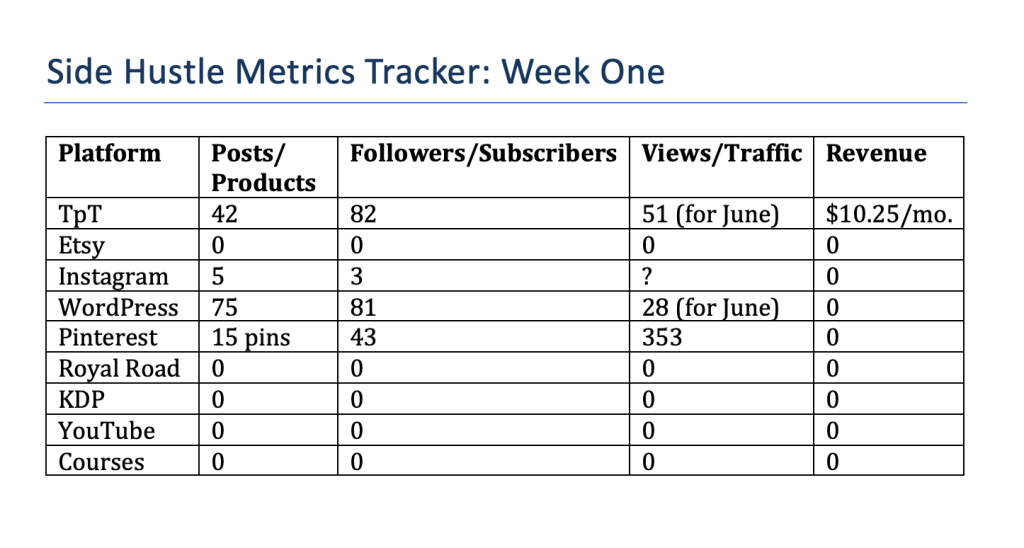
Week One: TpT (Teachers Pay Teachers)
This week, Iโ€™ll be focusing on Teachers Pay Teachers (TpT), which is a platform designed for educators to buy, sell, and share classroom resources. If youโ€™re a teacher, tutor, or curriculum creator, TpT is a fantastic way to turn your hard work into passive income by listing the lessons, activities, and worksheets you already use in your classroom. Itโ€™s beginner-friendly, especially if you start with free tools like Google Slides or Canva to design your products.

My goal for the week is to create one product from scratch and take steps to improve my overall metrics, while at the same time walking you through the process of how I create products using free tools and how I improve my metrics and build my audience.


The Six Week Creator Challenge


I’m starting two new features on my blog. One is Side Hustle Sunday in which I discuss my attempts at content creation and post updates and metrics for each of the platforms I use. I will start tomorrow by providing metrics for each of the following platforms:

  1. TpT (Teachers Pay Teachers)
  2. Etsy
  3. Instagram
  4. Royal Road (web serials) and KDP (Amazon Self-Publishing)
  5. YouTube
  6. Courses (primarily Gumraod and Udemy)

These are all of the platforms I plan to explore as a content creator, my niche being teaching materials and ELA curriculum, plus resources for writers along with my own fiction. I haven’t “niched down” very far yet (ELA and writing content and resources is still pretty broad), but I may do that once I find my footing on these sites and get a sense for how much time and effort it takes to create content for these sites, as well as how much success I have with different types of content. But for the next six weeks I will NOT stray from the content focus areas of ELA Curriculum and Writing, except for this blog, which will feature posts that will be a meta exploration of HOW I create my content and how well my digital products sell online.

Each week will include:

  • A featured platform
  • Free tools to get started
  • A personal goal/task
  • Daily posts: tips, tutorials, check-ins
  • Sunday roundup: updates + metrics

The “Sunday Side-Hustle” Roundup Posts will include:

  1. A review of the platform I focused on for the previous week
  2. What I accomplished
  3. Metrics: views, followers, sales, posts
  4. Lessons learned
  5. Next weekโ€™s platform + prep goals

I’m excited to get started on this journey and share with you what I’ve learned! Be sure to subsribe below so you don’t miss a post! It’s free to subscribe and I don’t share your emails with anyone ๐Ÿ™‚

The Creator Mindset: Create Something You Love


I’ve been a teacher for 25 years, a writer all my life, and a “content creator” since 2021. It has come to my attention the internet if full of massive amounts of low-quality garbage. Too many people are trying too hard to get rich quick. It reminds me of all of the sales scammers of my childhood, the MLMs, the mail-in envelope-stuffing business scams–trying to make a quick buck is a tale as old as time.

I’ve since learned that you have to create something that YOU want. I no longer chase the mythical audience. I’m not sure how to find or describe or anlalyze or understand an audience, I think the whole concept of “audience” is something of a myth. Most people who have created something great were simply creating something they loved.

In the past 3-4 years I’ve had modest success on Fiverr and Teachers Pay Teachers (TpT) and I’ve created a tiny following on this blog (I have 80 subscribers!). My highest month of earnings is about $800 and my lowest is $24. But I’m learning, I’m ready to expand this, and I have ideas for what to do next.

First and foremost, I’m a teacher. One of my most lucrative clients on Fiverr just likes working with me because I know how to teach her things. As a teacher, both at the secondary (middle and high school) and college levels, I’ve learned how to develop high-quality content, how to capture and hold an audience’s attention, and how to assess my abilities. It feels very natural to teach people how to reach their goals and acheive their dreams as well.

Under the Creator Mindset umbrella, I will be creating courses and tutorials on how to create lucrative side-hustle, how to get started selling on Fiverr, Etsy, TpT, and Gumroad, how to use Canva to create templates, how to find a niche and create courses on Udemy and other platforms, how to create long-form content for Medium and YouTube, how to repurpose that content for Instagram and Pinterest, and how to help others and create value.

I’m not the least bit interested in chasing cheap thrills and quick money through casino-washing, credit-card churning, surveys, affiliate marketing, or drop-shipping. All of those things bore the crap out of me.

I’ve decided that I will also be offering most of my stuff for free, giving you access to as much high-quality content and real hands-on tutorials and guidance as I have time to make. Only after I’ve successfully helped a lot of people with my content over the long term will I start bundling it for sale (or offering other ways for people to support my content.

So come along for the ride! I’m a good writer and storyteller with a genuine love of teaching, consulting, and coaching. I have many digital media skills like writing, illustration, photography and editing, teaching and public speaking, coaching, designing effective and engaging learning experiences, and creating sincere and authentic content.

What to Do When You Have Too Many Project Ideas


List Your Projects:

Write down all your projects and ideas.

Evaluate Importance and Urgency:

Determine which projects are most important and time-sensitive.

Focus on One Major Project at a Time:

Choose one major project to focus on, such as finishing your novel or expanding your blog, and dedicate specific time to it each week.

Set Realistic Goals and Deadlines:

Break Down Large Tasks: Divide large projects into smaller, manageable tasks.

Set Specific, Achievable Deadlines: Assign deadlines to each task to create a sense of urgency and structure.

Create a Schedule:

Allocate Dedicated Time Slots: Set aside specific times each day or week for different projects.

Use a Planner or Digital Calendar: Keep track of your schedule and deadlines to stay organized.

Overcoming Procrastination

Address Self-Doubt:

Acknowledge Your Accomplishments: Remind yourself of your successes and the progress youโ€™ve made.

Seek Feedback: Share your work with trusted colleagues or friends for constructive feedback to boost your confidence.

Minimize Distractions:

Create a Productive Workspace:

Find a quiet, organized space to work on your projects.

Limit Social Media and Unnecessary Interruptions: Use apps or tools to block distracting websites during your work sessions.

Use Productivity Techniques:

Pomodoro Technique: Work for 25 minutes, then take a 5-minute break. Repeat this cycle to maintain focus and avoid burnout.

Time Blocking: Dedicate specific blocks of time to different tasks throughout the day.

Consistency and Motivation

Establish Routines:

Morning or Evening Routines: Incorporate your projects into your daily routines, whether itโ€™s early in the morning or after your workday.

Daily Writing Habit: Set a specific time each day for writing or working on your blog.

Stay Accountable:

Find an Accountability Partner: Share your goals with a friend or colleague who can check in on your progress.

Join Writing or Project Groups: Participate in groups or forums related to your interests for support and motivation.

Reward Yourself:

Celebrate Small Wins: Reward yourself for completing tasks and reaching milestones.

Balance Work and Personal Life: Ensure you have time for relaxation and activities you enjoy to avoid burnout.

By prioritizing your projects, setting realistic goals, and creating a structured schedule, you can manage your workload more effectively and make consistent progress. Remember to be kind to yourself and acknowledge your achievements along the way.

The Creator Mindset Course


I have been giving a lot of thought to the idea of mindsets and why they are so important.

A mindset refers to a set of beliefs, attitudes, and assumptions that shape the way an individual perceives and interprets the world around them. It is essentially a mental framework or lens through which people view situations, make decisions, and respond to challenges. Mindsets can influence various aspects of life, including how individuals approach learning, handle setbacks, pursue goals, and interact with others.

For example, I was recently reading advice about fitness and nutrition, and it recommended visualing yourself as a fit, healthy person when making choices about what to eat. In other words, instead of thinking about having a list of restrictions (“I can’t have these french fries.”), think of yourself as a fit, healthy person who doesn’t eat french fries (“I don’t eat french fries.”) This may seem like silly semantics, or word games, but research shows it really works.

One of my most popular posts is The Creator Mindset, in which I discuss what it means to think like a content creator and develop a creator mindset. I’ve become convinced that changing your mindset is the most effective way to achieve your goals. Here is why mindsets are more important than goals.

A Creator Mindset:

Improves Resilience: Having the right mindset helps build resilience by encouraging you to see challenges and setbacks as opportunities for learning and improvement. Instead of being discouraged by obstacles, those with a growth mindset are more likely to persevere and find solutions.

Embraces Learning and Development: A mindset shift towards growth fosters a love for learning. Instead of fearing failure, individuals with a growth mindset view it as a natural part of the learning process. This mindset encourages continuous improvement and development over time.

Increases Motivation and Effort: A belief that effort leads to improvement is a core aspect of a growth mindset. This perspective can increase motivation and effort, as individuals understand that their actions have a direct impact on their abilities and success.

Adapts to Change: In a rapidly changing world, adaptability is a valuable trait. A growth mindset facilitates adaptability by promoting openness to new ideas, experiences, and challenges. It allows individuals to see change as an opportunity for growth rather than a threat.

Enhances Self-Reflection: Changing your mindset involves becoming more aware of your beliefs and attitudes. This increased self-awareness allows for more effective self-reflection, enabling individuals to identify and challenge limiting beliefs that may be hindering their progress.

Leads to Long-Term Success: While setting goals is important, a fixed mindset can limit one’s ability to achieve those goals. A growth mindset, on the other hand, supports the sustained effort and learning required for long-term success. It’s not just about achieving specific goals but about continuously evolving and reaching new heights.

Over time, I have done a great deal of research into the concept of mindset, beginning with the work I did while earning my doctorate in Education and Curriculum Design, in which I learned how to motivate learners without using the traditional (and ineffective) cycle of punishments and external rewards. Once I realized the impact that developing a resilient mindset had on student motivation, I began turning those tools toward myself, working with a success coach, taking courses, and reading books that provided me with the insight and methods needed to be successful. After putting together a system that worked for me, I decided to develop the Creator Mindset course to share that system with you. I’ll be launching in early January. Here is a sneak peak of the course content:


If you’re already a content-creator or want to be one, this course will catapult you to the next level. If you’re a writer, teacher, or student, you will also find this course helpful for improving your motivation, outlook, and results.

Developing a creator mindset is about creating a foundation for achieving goals more effectively. A positive and growth-oriented mindset can serve as a powerful catalyst for personal and professional development, enabling individuals to navigate challenges, learn from experiences, and achieve sustained success.

If you’re interested in learning more about how developing the right mindset can be a powerful tool for achieving your goals, be sure to subscribe to ELA Source by entering your email below. As always, I NEVER share your email with anyone, and I don’t spam your inbox.

The Profound Benefits of Prioritizing the Learning Process over the Final Product


In a world driven by outcomes and results, there is a growing need to shift our perspective from the end goal to the journey itself. Focusing on the process of learning or creation, rather than fixating solely on the final product, brings about a multitude of benefits. This shift not only fosters a healthier learning environment but also helps to mitigate issues such as cheating, plagiarism, overreliance on AI, anxiety, and procrastination.

  1. Encourages Genuine Understanding: Prioritizing the learning process promotes a deeper and more genuine understanding of the subject matter. Instead of seeking shortcuts to achieve a polished final product, individuals engage with the material, grapple with challenges, and develop a comprehensive comprehension that goes beyond mere surface-level knowledge.

  2. Cultivates Critical Thinking Skills: The journey of learning involves navigating through complexities, problem-solving, and critical thinking. Focusing on the process encourages individuals to analyze information, connect concepts, and apply their knowledge in real-world scenarios. This cultivation of critical thinking skills is essential for personal and professional growth.

  3. Reduces the Temptation of Cheating and Plagiarism: When emphasis is placed on the process, the need for shortcuts diminishes. Cheating and plagiarism often stem from a fixation on the final product, pushing individuals to cut corners to meet deadlines or expectations. By valuing the journey, the pressure to resort to unethical practices decreases, promoting academic integrity.

  4. Mitigates Overreliance on AI: While AI, such as ChatGPT, can be a valuable tool, an overreliance on it can hinder individual cognitive development. Focusing on the learning process allows individuals to grapple with challenges independently, enhancing their problem-solving skills and reducing dependency on external sources.

  5. Alleviates Anxiety: The pursuit of perfection in the final product can lead to heightened anxiety. Shifting the focus to the process eases the burden of unrealistic expectations, allowing individuals to embrace mistakes as opportunities for learning. This shift in mindset fosters a healthier relationship with learning and creativity.

  6. Combats Procrastination: The overwhelming pressure associated with producing a flawless final product can often lead to procrastination. By breaking down tasks into manageable steps and valuing the learning process, individuals are more likely to approach their work with a sense of curiosity and enthusiasm, reducing procrastination tendencies.

  7. Fosters a Growth Mindset: Emphasizing the learning process aligns with the principles of a growth mindset. Individuals with a growth mindset view challenges as opportunities for growth rather than insurmountable obstacles. This mindset shift promotes resilience, adaptability, and a positive attitude towards learning and creativity.

In a society that often prioritizes outcomes, it is crucial to recognize the profound benefits of focusing on the process of learning or creation. By embracing the journey, individuals can develop a deeper understanding, cultivate critical thinking skills, and mitigate issues such as cheating, plagiarism, overreliance on AI, anxiety, and procrastination. This shift not only enhances individual development but also contributes to the creation of a more ethical, resilient, and creative society.

3 Tips for Improving Sales on TpT


If you’re just getting started on Teachers Pay Teachers, you might be frustrated with slow sales. It can sometimes take months to make your first sale, especially if you start your store during slow times. Luckily, this is one the busiest times on Teachers Pay Teachers, and I’ve seen great results in my store from making the following changes:

  1. Make more products! If you following other TpT creators or participate in TpT forums, you’ll hear this advice again and again, but it really works! When you post your first 5-10 products, it can be easy to give up if you’re not getting sales, but remember that your competing agains thousands of stores and millions of products. However, I have found that as I increase my product numbers, my sales go up consistently. I’ve heard that 50 products is that magic number, and that’s my current goal. Some stores have hundreds of products. Each new product you create increases your changes of having your products show up in search.

  2. Learn how to write long-tail search terms and create long titles. Keep in mind that the title that you list for search does NOT have to be the same as the title that’s on your cover (similar to creating searchable titles on YouTube vs. clickable thumbnails). One of my most popular products, the Passport Project, increased in sales when I changed the title from Passport Project to Passport Project: Editable Passport Template and Maps for Teaching Geography.

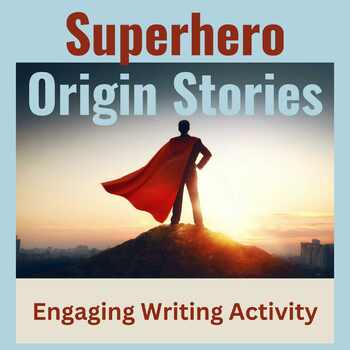
  3. Make the text on your covers as large as possible. Do NOT try to put information about your product on the cover. If you get the buyer’s attention with your cover, they will click on it and read the description. My tip is after you create your cover to look at it on your phone. Many teachers shop on TpT on their phones, and if you can’t read your product title on your cover, it’s too small. Here is an example of a cover that I use on a very successful product, Superhero Origin Stories.

I was astonished at how quickly my sales picked up after I implemented these three simple tips for improving my store.

Click here if you’re interested in following my store on Teachers Pay Teachers.

Leveraging Language Models for Effective Communication: A Guide for Teachers and Content Creators

Language models have revolutionized the way we interact with text and information. Models like Chat GPT and Bard, though freely available, possess immense potential for educators, content creators, and anyone seeking accurate and insightful responses to their inquiries. It’s important to learn how to to maximize the utility of language models, focusing on writing effective prompts to extract the most valuable and nuanced information.

Understanding the “Stochastic Parrot” Mental Model

Before delving into the nuances of utilizing language models effectively, it’s crucial to grasp the “stochastic parrot” mental model. Language models generate responses based on patterns learned from the data they were trained on. They don’t possess personal opinions, beliefs, or creativity. Hence, the output is a variation or amalgamation of existing content in response to a given prompt.

To optimize the use of language models, it’s essential to frame prompts that align with this understanding. Instead of seeking personal opinions, it’s better to request objective information, best practices, or consensus on a particular topic.

Writing Effective Prompts: A Paradigm Shift

Consider the scenario where you seek advice on managing a common parenting issue: a baby struggling with sleep. Employing the “stochastic parrot” mental model, we can redefine the prompt to extract comprehensive and comparative information.

Example:

Original Prompt: “My baby has a hard time sleeping. What do you think about the cry it out method?”

Revised Prompt: “My baby has a hard time sleeping. Give me a list of reasonable solutions. Compare and contrast each to the cry it out method.”

Breaking Down the Revised Prompt

The revised prompt encourages the language model to provide a list of potential solutions for the baby’s sleep issue. It explicitly requests a comparison of each solution with the cry it out method. This structured approach yields a more informative and balanced response, showcasing different perspectives and options.

Another Example

Another example is to think about how to use a tool like ChatGPT to best learning new strategies for teaching and content creation.

For example, instead of asking: How can I stop students from talking and distrupting class?

Ask: What are some effective classroom management techniques that can be used in different contexts?

Utilizing LLM Responses Wisely

When you receive responses from the language model, it’s crucial to assess and verify the information for accuracy and relevance. Cross-reference the generated content with reputable sources, consider various viewpoints, and use your judgment to arrive at well-informed decisions or conclusions.

Summary

Effectively leveraging language models involves understanding their inherent limitations and aligning our expectations accordingly. The “stochastic parrot” mental model underscores the importance of framing prompts that aim for objective information and consensus rather than personal opinions.

By adopting this mindset and structuring prompts to encourage comparative analysis, educators, content creators, and individuals at large can harness the power of language models like Chat GPT and Bard to access valuable insights and information on a myriad of topics. Remember, language models are tools to aid and enhance our understanding, not arbiters of truth or creativity.

Tips for Engaging Any Audience


Engaging an audience, whether they are students in a classroom, an online audience for your content creation, or readers of your written work; is a skill that can make a significant difference in how effectively your message is received. It’s not just about delivering information; it’s about creating a connection and sparking interest. Here are some tips to help you engage your audience and keep them captivated:

  1. Know Your Audience:
    • Before you can engage your audience, you need to understand them. Consider their age, background, interests, and prior knowledge. Tailor your content and approach to meet their specific needs and expectations.
  2. Start with a Hook:
    • Begin your presentation or writing with a compelling hook. This could be an interesting fact, a thought-provoking question, a relevant anecdote, or a surprising statistic. A strong start grabs your audience’s attention right from the beginning.
  3. Tell a Story:
    • People love stories. Whether you’re teaching a lesson or writing an article, use storytelling to illustrate your points. Stories are relatable, memorable, and help to humanize your content.
  4. Use Visuals:
    • Visual aids like images, charts, and graphs can enhance understanding and engagement. Visuals break up text and make your content more visually appealing. Use them to support your message, not overwhelm it.
  5. Interact and Involve:
    • Engage your audience actively. Ask questions, encourage participation, and create opportunities for discussion or reflection. In the classroom, this might involve group activities or class discussions. In writing, it could mean including interactive elements like polls or quizzes.
  6. Be Passionate:
    • Enthusiasm is contagious. If you’re excited about your subject matter, your audience is more likely to be engaged. Show your passion through your tone of voice, body language, and choice of words.
  7. Keep It Clear and Concise:
    • Avoid jargon and complex language unless it’s necessary. Clear, concise communication is more likely to be understood and retained. Break down complex concepts into digestible pieces.
  8. Use Humor (Appropriately):
    • A well-timed joke or a touch of humor can lighten the mood and make your content more enjoyable. However, be mindful of your audience and the context, ensuring your humor is appropriate and doesn’t offend anyone.
  9. Connect Emotionally:
    • Appeal to your audience’s emotions. Share stories or examples that elicit empathy, excitement, or curiosity. Emotions help create a deeper connection with your audience.
  10. Be Responsive:
    • Listen to your audience’s feedback and adapt accordingly. If you notice confusion or disinterest, adjust your approach. Encourage questions and address concerns.
  11. Provide Value:
    • Ensure that your content is valuable and relevant to your audience. They should feel that they are gaining knowledge, insight, or entertainment from your presentation or writing.
  12. Practice, Practice, Practice:
    • Whether you’re giving a presentation or writing an article, practice is essential. Rehearse your delivery, refine your content, and be prepared to adapt as needed.

Engaging an audience takes effort and creativity, but the rewards are worth it. When you successfully capture your audience’s attention and keep them engaged, you not only convey your message effectively but also create a positive and memorable experience for your students or readers. So, go ahead and apply these tips to captivate and connect with your audience in your next endeavor.

The Power of Consistency: Unlocking Success in Content Creation


Content creators of all types (blogging, YouTube, social media, etc.) face the ever-evolving challenge of capturing and maintaining their audience’s attention. With countless blogs, videos, and social media posts competing for the spotlight, how can you stand out and build a loyal following? The answer lies in one key principle: consistency.

There are numerous benefits to consistency when creating content, and this should be the cornerstone of your content strategy.

Here’s why. Consistency helps with:

1. Establishing a Brand Identity

Consistency in content creation helps you build a strong brand identity. Whether you’re an individual blogger, a small business, or a large corporation, presenting a consistent image and message to your audience is essential. It creates a sense of trust and reliability. When your audience knows what to expect from you, they are more likely to engage with your content and return for more.

2. Building Trust and Credibility

Consistency goes hand in hand with trust and credibility. When you consistently deliver valuable, high-quality content, your audience begins to see you as an authority in your niche. They trust that you will provide reliable information and insights, which can lead to increased brand loyalty and customer retention.

3. Retaining and Growing Your Audience

Imagine tuning in to your favorite TV show, only to find it airs at irregular and unpredictable times. Frustrating, right? The same principle applies to content creation. Consistency in posting schedules, whether it’s daily, weekly, or monthly, keeps your audience engaged and coming back for more. It also makes it easier for new followers to discover and join your community.

4. Enhancing SEO and Discoverability

Search engines love fresh, consistent content. When you regularly update your blog or website with relevant content, search engines like Google are more likely to rank your site higher in search results. This, in turn, makes it easier for people searching for topics in your niche to find your content.

5. Content Planning and Efficiency

Consistency in content creation encourages you to plan ahead and stay organized. You’ll be more likely to create content calendars, set deadlines, and streamline your content creation process. This efficiency not only saves time but also ensures that your content aligns with your long-term goals and messaging.

6. Engaging Your Audience

Consistency extends beyond the frequency of your posts. It also relates to the style, tone, and voice of your content. When your audience becomes familiar with your unique voice and style, they feel a deeper connection to your content. This connection can lead to more meaningful interactions and discussions in comments and social media.

7. Monetization Opportunities

If you’re looking to monetize your content through advertising, sponsorships, or affiliate marketing, consistency is key. Brands and advertisers are more likely to partner with content creators who consistently produce high-quality content and have an engaged audience. Your reliability and track record can open doors to lucrative opportunities.

Conclusion

In the world of content creation, consistency is a powerful tool that can propel your success to new heights. It builds trust, fosters audience growth, and enhances your overall brand image. Whether you’re a seasoned content creator or just starting out, make consistency a priority in your content strategy. The benefits it brings will be well worth the effort, helping you achieve your goals and connect with your audience on a deeper level. So, stay consistent, stay true to your voice, and watch your content thrive.