

What to Do When You Have Too Many Project Ideas


List Your Projects:

Write down all your projects and ideas.

Evaluate Importance and Urgency:

Determine which projects are most important and time-sensitive.

Focus on One Major Project at a Time:

Choose one major project to focus on, such as finishing your novel or expanding your blog, and dedicate specific time to it each week.

Set Realistic Goals and Deadlines:

Break Down Large Tasks: Divide large projects into smaller, manageable tasks.

Set Specific, Achievable Deadlines: Assign deadlines to each task to create a sense of urgency and structure.

Create a Schedule:

Allocate Dedicated Time Slots: Set aside specific times each day or week for different projects.

Use a Planner or Digital Calendar: Keep track of your schedule and deadlines to stay organized.

Overcoming Procrastination

Address Self-Doubt:

Acknowledge Your Accomplishments: Remind yourself of your successes and the progress you’ve made.

Seek Feedback: Share your work with trusted colleagues or friends for constructive feedback to boost your confidence.

Minimize Distractions:

Create a Productive Workspace:

Find a quiet, organized space to work on your projects.

Limit Social Media and Unnecessary Interruptions: Use apps or tools to block distracting websites during your work sessions.

Use Productivity Techniques:

Pomodoro Technique: Work for 25 minutes, then take a 5-minute break. Repeat this cycle to maintain focus and avoid burnout.

Time Blocking: Dedicate specific blocks of time to different tasks throughout the day.

Consistency and Motivation

Establish Routines:

Morning or Evening Routines: Incorporate your projects into your daily routines, whether it’s early in the morning or after your workday.

Daily Writing Habit: Set a specific time each day for writing or working on your blog.

Stay Accountable:

Find an Accountability Partner: Share your goals with a friend or colleague who can check in on your progress.

Join Writing or Project Groups: Participate in groups or forums related to your interests for support and motivation.

Reward Yourself:

Celebrate Small Wins: Reward yourself for completing tasks and reaching milestones.

Balance Work and Personal Life: Ensure you have time for relaxation and activities you enjoy to avoid burnout.

By prioritizing your projects, setting realistic goals, and creating a structured schedule, you can manage your workload more effectively and make consistent progress. Remember to be kind to yourself and acknowledge your achievements along the way.

The Benefits of Brain Dumping


Brain dumping is a technique that involves taking all the thoughts, ideas, tasks, and information swirling around in your mind and transferring them onto paper or a digital document. It’s a way to externalize and organize your thoughts, essentially emptying your brain of its clutter.

The process of brain dumping typically involves writing down or typing out everything that comes to mind, without any specific order or structure. You simply let your thoughts flow freely, capturing them on paper. The idea is to create a comprehensive list or document that encompasses all your mental clutter.

The benefits of doing a brain dump are numerous:

  1. Mental clarity: By externalizing your thoughts, you can clear mental space and gain a clearer perspective on your ideas and tasks. It helps reduce mental clutter and allows you to focus better on the things that matter.

  2. Stress reduction: The act of transferring your thoughts onto paper can be cathartic and provide a sense of relief. It can alleviate anxiety and stress by unburdening your mind from constantly trying to remember or juggle multiple thoughts simultaneously.

  3. Enhanced organization: Brain dumping allows you to capture all your thoughts and tasks in one place. This makes it easier to identify priorities, create to-do lists, and organize your ideas. You can then review and categorize the information, leading to better planning and improved productivity.

  4. Idea generation: When you have a multitude of thoughts floating in your mind, it can be challenging to connect the dots or see the bigger picture. Brain dumping can help you identify patterns, make connections between ideas, and spark new insights and creativity.

  5. Improved memory: Writing things down helps solidify information in your memory. By capturing your thoughts on paper, you create a reference point that you can revisit later, reducing the need to rely solely on your memory.

  6. Problem-solving: Brain dumping can be an effective problem-solving tool. By getting everything out of your head, you can examine your thoughts and challenges more objectively. This external perspective often leads to fresh insights and potential solutions.

Overall, brain dumping is a valuable technique for decluttering your mind, gaining mental clarity, and improving your overall productivity and well-being. It’s a simple and accessible method that can be tailored to individual preferences, whether through traditional note-taking, digital tools, or even voice recording.

Weekly Planning


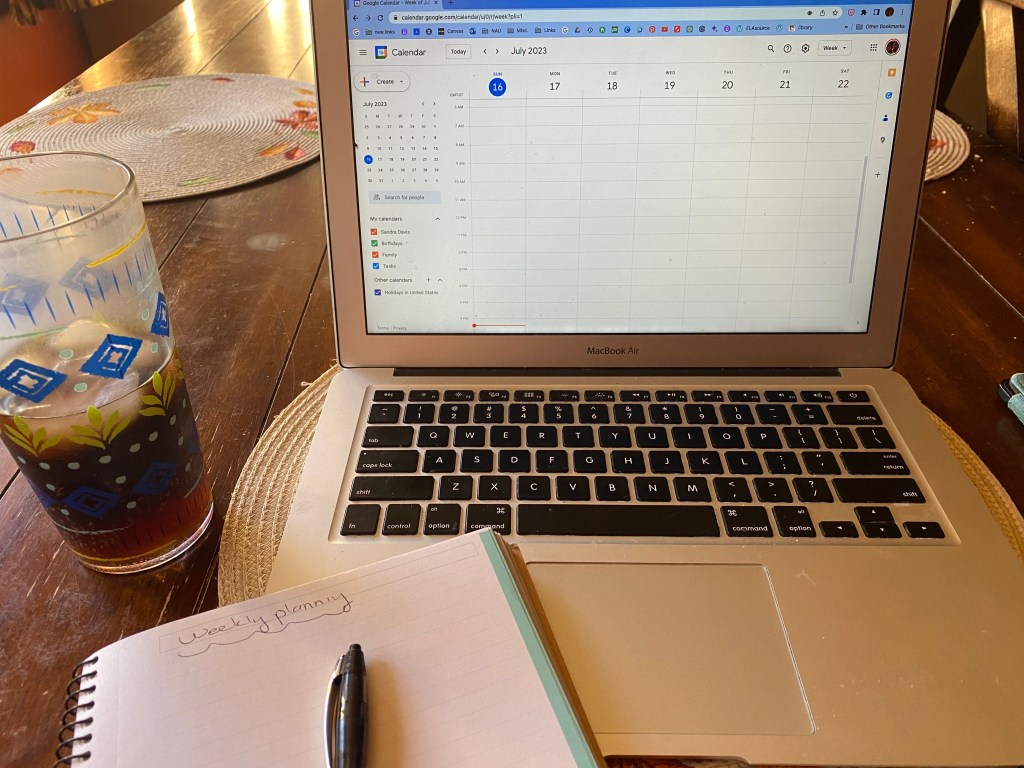
It’s Sunday night! Time to plan the week ahead.

I discovered a few months ago that the cure for the Sunday Scaries (Sunday night anxiety) is to plan for the coming week. I’m usually too anxious to enjoy Sunday afternoons anyway, and this gives me an outlet for my restlessness and allows me to sleep better on Sunday night. It also makes the work week go much more smoothly.

Right now I’m on summer vacation, but I’ve realized that the first week of school will be here before I know it (sorry), and I want to get a jump on planning for the coming year. I also have personal projects that I want to complete before my semester begins (mainly my novel), so I’ve decided that since we’re done traveling for the summer I’m going to try to give my days a bit more structure by creating a very loose schedule and writing down some goals.

Research shows that people who WRITE DOWN THEIR GOALS and MAKE A PLAN, are much more likely to accomplish those goals.

I’ve been reading some productivity books and blogs, and one of the number one recommendations is to put your to-list into your calendar. SCHEDULE YOUR TO-DO LIST. Although I’ve always kept a paper calendar, I’ve decided to give Google Calendar a try. Before creating my schedule, I’m going to a brain dump. I’ll write more on doing a brain dump tomorrow, since that turns out to also be the first step in creating an online course.

Happy Sunday night and happy planning! Here’s to a great week.