The Essential Guide to Writing a Thesis Statement


Why is teaching students to write an effective thesis statement is so important?

In the realm of academic writing, the thesis statement is the compass that guides an essay’s direction and purpose. It serves as a roadmap for both the writer and the reader, ensuring that the argument remains focused and coherent throughout. Teaching students to craft an effective thesis statement is not just a pedagogical formality; it is a foundational skill that equips them with the tools necessary for clear and persuasive communication. In this blog post, we will explore the significance of teaching students how to write an effective thesis statement and its far-reaching implications.

  1. Clarity and Focus

An effective thesis statement is a concise declaration of the central argument or main point of an essay. It sets the tone for the entire piece of writing and helps students maintain clarity and focus in their work. When students learn how to formulate a clear thesis statement, they are better equipped to stay on track and avoid wandering off-topic. This not only makes their writing more coherent but also enhances their ability to convey complex ideas succinctly.

  1. Critical Thinking

Crafting a thesis statement requires students to engage in critical thinking. They must analyze the topic, identify the key components of their argument, and decide on the most compelling way to present it. This process encourages students to develop and refine their analytical skills, enabling them to approach problems and topics in a more systematic and thoughtful manner.

  1. Structure and Organization

An effective thesis statement serves as the backbone of an essay’s structure. It dictates the organization of the paper and helps students structure their thoughts logically. When students understand how to write a strong thesis statement, they are better equipped to create well-organized essays with a clear introduction, body, and conclusion. This skill is invaluable not only in academic writing but also in various professional contexts.

  1. Persuasive Writing

A well-crafted thesis statement is essential for persuasive writing. It allows students to present their arguments with conviction and authority, making it more likely that readers will be persuaded by their ideas. Teaching students how to develop a strong thesis statement empowers them to be more persuasive writers, a skill that is valuable in debates, speeches, and any situation where one must advocate for a particular viewpoint.

  1. Research Skills

Effective thesis statements often require research and evidence to support the argument. Teaching students to write a thesis statement encourages them to delve into research, evaluate sources, and incorporate relevant information into their essays. This fosters a habit of critical inquiry and resourcefulness, skills that are crucial in the information age.

  1. Adaptability

The ability to create an effective thesis statement is a transferable skill that extends beyond the classroom. Whether students are crafting essays, reports, business proposals, or even social media posts, the ability to concisely articulate a central point is invaluable. Teaching this skill prepares students for success in a wide range of personal and professional endeavors.

30-Day Challenge


One thing the productivity gurus like to preach is the power of consistency. One of the biggest problems people have with reaching their goals is trying to do too much at once, burning out, and then giving up. Instead, if we are able to commit to tiny changes over the long haul, we can make enormous strides toward our goals. For example, when dieting people often try to lose 2 or more pounds a week, which is not sustainable, and they give up. Most diets fail. However, if we make small changes and plan to lose only 1/2 pound a week, we can lose 25 lbs. in a year. Even though a year seems too long and 25 lbs. seems too little, in one year I’ll bet most of us are the same weight we are now, or heavier. It’s better to focus on small, consistent goals.

I remember when I first started writing my novel, I heard again and again that writers who commit to a page a day (about 250 words) can finish a novel in a year. Once again, a year always seemed too long, and I couldn’t bring myself to commit to such a tiny challenge. Yet it took me more than 10 years to write my novel (more on that in my next post).

SO, I am committing to making small, consistent changes. One way to do this is the 30-day challenge. Building consistency takes practice. I’m going to pick one small goal, which is write a blog post, of any length and on any topic, at least once per day for the next 30 days.

To demonstrate the power of consistency, I’ll also share my stats and how they have changed over the 30-day period. I know consistency works, because I blogged for two weeks straight in July and my subscriber count doubled. Granted, it was tiny to begin with, but I saw in real time how much just posting consistently impacted my blog stats.

I’m excited to see what the next 30-days brings! If you’re not already, be sure to subcribe to my blog, so you can see my journey and real time, and also because I’ll be having another giveaway at the end of this month.

Getting Ready for the School Year: How to Manage Anxiety and Stress


I haven’t blogged here in a while, mainly because I’ve been getting my kids ready for their school year (I have one in middle school and one in high school) and I’ve also been working with new teachers to help them prepare for the coming year. This can indeed be a stressful and anxiety-inducing time for teachers.. Here are some strategies both new and experienced teachers can use to overcome and prepare for the beginning of the school year anxiety and stress:

  1. Set Realistic Expectations: Understand that the beginning of the school year can be overwhelming, but it’s important to set realistic expectations for yourself and your students. Rome wasn’t built in a day, and it’s okay if everything isn’t perfect from the very start.
  2. Plan Ahead: Create a detailed plan for the first few weeks, including lesson plans, classroom setup, and administrative tasks. Having a clear roadmap can help alleviate anxiety by giving you a sense of control and direction.
  3. Organize Your Space: A well-organized classroom can significantly reduce stress. Take time to arrange desks, materials, and resources in a way that is conducive to learning and easy to navigate.
  4. Connect with Colleagues: Reach out to fellow teachers, both experienced and new, to share ideas, tips, and experiences. Collaborating with others can provide a sense of camaraderie and the opportunity to learn from one another.
  5. Self-Care: Prioritize self-care and well-being. Make sure you’re getting enough rest, eating healthily, staying hydrated, and engaging in activities you enjoy outside of work. Taking care of your physical and mental health is essential.
  6. Set Boundaries: It’s easy for teachers to overwork themselves, especially during the start of the year. Set clear boundaries between work and personal time to prevent burnout.
  7. Practice Mindfulness: Incorporate mindfulness techniques into your routine, such as deep breathing, meditation, or yoga. These practices can help you stay centered and reduce stress.
  8. Celebrate Small Wins: Acknowledge and celebrate even the smallest accomplishments during the beginning of the school year. Each step forward is a reason to be proud.
  9. Reflect and Adjust: Regularly reflect on your progress and adjust your plans as needed. This ongoing assessment can help you stay on track and make necessary improvements.
  10. Seek Support: If your anxiety and stress become overwhelming, don’t hesitate to seek support from a counselor, therapist, or support group. Your mental well-being is a priority.

What are your favorite go-to strategies for getting ready for the new year? Or, if you’re not a teacher, some strategies you use to manage stress or plan your week.

The Creator Mindset


The Creator Mindset is the embodiment of innovation, curiosity, and boundless potential. It is an approach to life that nurtures the belief that we are not passive bystanders, but active creators of our reality. When we embrace this mindset, we tap into our full potential and find a limitless well of possibilities awaiting us.

1. Embrace Curiosity and Continuous Learning

At the heart of the Creator Mindset lies an insatiable curiosity. Creators are always eager to explore, discover, and learn new things. They don’t shy away from challenges but see them as opportunities for growth and expansion. Every setback is viewed as a chance to gain valuable insights, not as a sign of failure. This curiosity-driven approach opens doors to unexplored territories and fuels the drive to seek knowledge beyond conventional boundaries.

2. Embrace Failure as a Stepping Stone

Creators understand that failure is an integral part of the journey toward success. They see it as a stepping stone, not a stumbling block. Instead of being discouraged by setbacks, they learn from them, iterate, and improve. This resilience allows creators to push the boundaries of what is possible and brings them closer to breakthroughs that could transform their lives and the world around them.

3. Cultivate Imagination and Vision

Imagination is the key that unlocks the doors of innovation. Creators dare to dream big, envisioning possibilities beyond the current state of affairs. They don’t limit themselves to what is readily visible; rather, they paint vivid pictures of what they wish to create. This clarity of vision acts as a guiding star, illuminating their path and motivating them to manifest their dreams into reality.

4. Collaborate and Empower Others

Creators understand that they don’t have to go it alone. Collaboration with like-minded individuals amplifies their creativity and multiplies the impact of their endeavors. They foster an environment where ideas are shared freely, and constructive feedback is welcomed. In doing so, they empower others to embrace their own creator mindset and create a collective force of innovation and change.

5. Take Inspired Action

While imagination and vision are essential, the Creator Mindset doesn’t dwell solely in the realm of ideas. Creators take inspired action to turn their dreams into tangible results. They understand that an idea without action remains just that – an idea. By taking the first step, no matter how small, they set in motion a chain reaction that can lead to astonishing accomplishments.

6. Embrace Adaptability and Evolution

The world is ever-changing, and creators are not afraid to adapt and evolve along with it. They understand that clinging to the status quo may hinder progress and limit potential. Embracing change allows creators to stay at the forefront of innovation and ride the waves of transformation, rather than being swept away by them.

7. Find Joy in the Process

Finally, the Creator Mindset thrives on finding joy in the journey, not just the destination. Creators relish the process of creation itself, enjoying the challenges, the ups and downs, and the continuous growth. It is the journey that shapes them and allows them to savor every moment along the way.

In conclusion, the Creator Mindset is not reserved for a select few; it is within the grasp of each one of us. By embracing curiosity, learning from failures, cultivating imagination, collaborating with others, taking action, and adapting to change, we can unlock the creative forces within ourselves. So, let’s dare to be dreamers, innovators, and creators – for it is with this mindset that we can leave an indelible mark on the world and inspire others to do the same.

Edit: This post has been so popular that I’ve created a Creator Mindset Course to be launched in January 2024.

The Case for Rubrics in the Writing Classroom


As educators, we understand the importance of providing constructive feedback to help our students grow academically and develop essential skills. One powerful tool that can significantly enhance the writing assessment process is the use of rubrics. Rubrics offer a structured and transparent way to evaluate student writing, providing both teachers and learners with numerous benefits. In this blog post, we will explore the advantages of using rubrics to evaluate writing and how they can lead to improved student outcomes.

  1. Clarity and Consistency

Rubrics provide teachers with clear criteria and expectations for evaluating writing assignments. By defining specific elements like content, organization, language use, and mechanics, rubrics ensure that all students are evaluated based on the same set of standards. This consistency eliminates ambiguity and allows students to understand precisely what is expected of them, setting them up for success.

  1. Targeted Feedback

One of the most significant advantages of rubrics is their ability to guide teachers in giving targeted feedback. Rather than merely providing a final grade, rubrics break down the assessment into different categories, enabling instructors to pinpoint areas of strength and weakness in a student’s writing. This targeted feedback empowers students to focus on specific aspects of their writing that need improvement, fostering a growth mindset and a desire for continuous learning.

  1. Student Engagement and Self-Assessment

When students are aware of the criteria by which their writing will be evaluated, they become more engaged in the writing process. Rubrics enable them to self-assess their work before submission, allowing for revisions and self-reflection. Students are encouraged to take ownership of their learning, as they can measure their progress against the rubric’s standards and identify areas for improvement independently.

  1. Facilitating Peer Review

Using rubrics in the classroom also enhances the effectiveness of peer review sessions. When students evaluate each other’s writing using a common rubric, they gain a better understanding of the assessment criteria and learn to provide constructive feedback to their peers. Peer review becomes a collaborative learning experience, as students exchange ideas, strategies, and suggestions for improvement.

  1. Time Efficiency

For teachers, grading numerous writing assignments can be time-consuming. However, rubrics streamline the evaluation process, making it more efficient. With clearly outlined criteria, teachers can quickly identify and assess each aspect of a student’s writing without the need for prolonged deliberation. This time efficiency allows educators to dedicate more attention to providing detailed feedback, fostering a stronger teacher-student connection.

Conclusion

Incorporating rubrics into the writing assessment process can significantly benefit both teachers and students. By providing clarity, consistency, and targeted feedback, rubrics enhance student engagement, self-assessment, and peer collaboration. Furthermore, their use promotes a growth mindset and a more efficient grading process for teachers. As we strive to nurture our students’ writing skills and overall academic development, rubrics prove to be a valuable tool in achieving these goals. Let us embrace the power of rubrics in the classroom and witness the positive impact they can have on our students’ writing journey.

My rubric-creation resource is now only $1 on TpT! It contains a fully-editable rubric template in MS Word, along with a sample ELA rubric, guide to creating rubrics, and sample rubric criteria. Check it out:

Congratulations to our Giveaway Winner

The winner of the random drawing for a $25 Teachers Pay Teachers (TpT) Gift Card is Joanna from JoannaESL.com . Be sure to check out her teaching blog! It has interesting articles and amazing resources.

If you’re a new follower, remember that I will do a once-a-month giveaway and also to celebrate major milestones, and if you haven’t started followng my blog, be sure to subscribe below and you’ll never miss a post.

TpT Gift Card Giveaway is Today


To celebrate going from 0-25 subscribers/followers (now 26!) I will be chosing a follower at random to receive a $25 gift card from Teachers Pay Teachers (TpT). I will notify the winner later today.

If you’re not already following, I will do a monthly giveaway of free products or gift cards, plus a special giveaway for each new milestone (the next is 50 subscribers/follower), so be sure to enter your email below. I do not share or market your emails, nor do I spam your inbox. You only receive an email when I post here. I write about teaching, reading, writing, personal development, side hustles, and internet marketing.

Thank you again to all of my followers!

Creating Teaching Materials with Canva


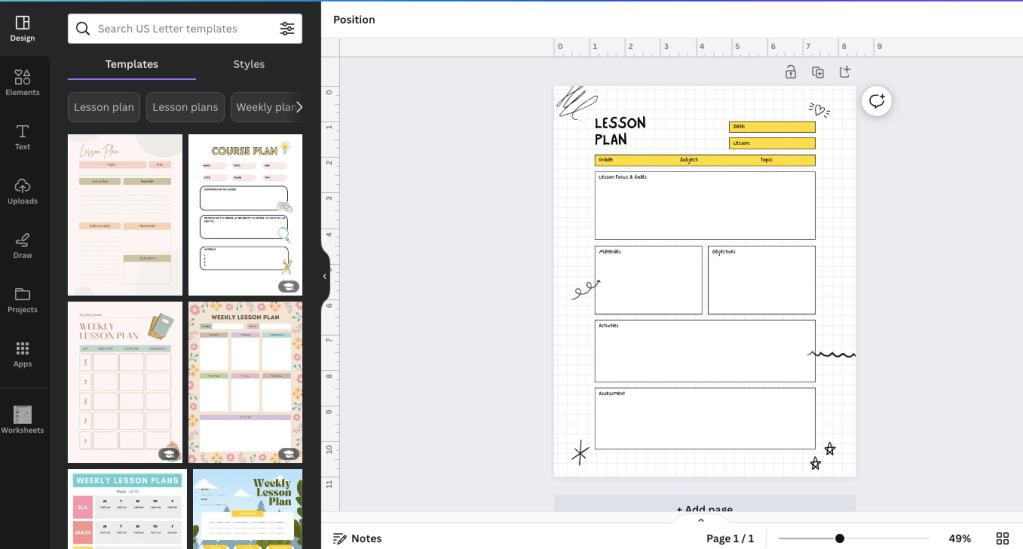
If you haven’t already started using it, Canva is a great tool for educators, and it’s free! You can create lesson plans, reading guides, handouts, printables, graphic organizers, posters, and presentations.

It has some limited funtionality and is best used to create resources that you will print out or that students will read. I prefer Google Docs and other Google programs for documents that I want students to edit or directly interact with.

When creating resources for teaching, as well as for Teachers Pay Teachers, I prefer a mix of MS Word, Google Docs and Forms, and Canva.

The best thing about Canva is their HUGE inventory of clip art and stock photography, which can really improve the overall look and appeal of your handouts, posters, and presentations.

By the way, this is NOT as sponosored post. I wish, ha ha! ๐Ÿ™‚

Getting Started on TpT: Subject Areas


For those you who read my post Tips for Getting Started on Teachers Pay Teachers (TpT), I’ve decided to write more posts on creating for TpT, starting with choosing a subject area for your store to focus on.

You DO NOT have to stick with one type of resource, but it helps to have a general focus. For example, my store is focused on English Language Arts resources.

English Language Arts is a popular, in-demand topic for TpT, and can include:

Balanced literacy, close reading, creative writing, EFL โ€“ ESL- ELD, ELA test prep, grammar, informational text, literature, phonics, poetry, reading, reading strategies, short stories, spelling, vocabulary, writing, writing essays, writing expository, other (ELA)

Here are some other K-12 subject areas and topics you might consider creating resources for:

Arts

Art history, cooking, dance, drama, graphic arts, instrumental music, music, music composition, visual arts, vocal music, other (arts), other (music)

Holidays/Seasonal

Autumn, back to school, black history month, Christmas/Chanukah/Kwanza, earth day, Easter, end of year, Halloween, Martin Luther King Day, Presidentsโ€™ Day, spring, St. Patrickโ€™s Day, summer, Thanksgiving, The New Year, Valentineโ€™s Day, winter, womenโ€™s history month

Math

Algebra, algebra 2, applied math, arithmetic, basic operations, calculus, decimals, fractions, geometry, graphing, math test prep, measurement, mental math, numbers, order of operations, place value, statistics, trigonometry, word problems, other (math)

Science

Aanatomy, archaeology, astronomy, basic principles, biology, chemistry, earth sciences, engineering, environment, forensics, general science, physical science, physics, other (science)

Social Studies

African history, ancient history, Asian studies, Australian history, British history, Canadian history, civics, criminal justice โ€“ law, economics, elections โ€“ voting, European history, geography, government, middle ages, native americans, psychology, U.S. history, world history, other (social studies)

Specialty

Career and technical education, character education, child care, classroom community, classroom management, coaching, computer science โ€“ technology, critical thinking, early intervention, family consumer science, for administrators, for all subjects, gifted and talented, handwriting, health, instructional technology, international baccalaureate, library skills, life skills, occupational therapy, oral communication, physical education, physical therapy, problem solving, products for TpT sellers, professional development, religion, robotics, school counseling, school psychology, special education, speech therapy, student council, study skills, test preparation, tools for common core, vocational education, other (specialty)

World Language

American sign language, Arabic, Chinese, en Francais, Gaeilge, German, Hebrew, Italian, Japanese, Latin, Portuguese, Russian, Spanish, other (world language)

For all subject areas

For educators who are not K-12 teachers, you will select either university discipline or adult education that is appropriate for your skill set. The next question is about the grade level you teach which has selections for preschool, higher education, K-12, homeschoolers, etc.

In the coming week I’ll write more about how to create resources that will sell!

If you’re not already following this blog, enter your email below to subscribe. I’ll be doing a subscriber giveway at the end of the month.

Celebrating my Subscribers with a TpT Gift Card Giveaway


Welcome to all of my new subscribers! I currently have 23 people who have followed or subscribed to this blog (WordPress refers to them as “followers”), so I’ve decided to celebrate by giving away a $25 Teachers Pay Teachers gift card to one random suscriber once I reach 25 subscribers. You will then be notified by email and I will send your gift card to your subscriber email or to the email of your choice.

If you’re not currently following this blog and would like to, please enter your email in the side menu ->

I DO NOT SHARE OR SELL your emails. I will not spam your email with sales pitches or newsletters (I hate it when my email gets clogged up with that junk). The only time you will get email is when I post here.

My plan is do some kind of giveaway the first of every month to thank my followers (Starting with this giveaway on August 1st). Sometimes it will be other kinds of gift cards (Amazon, Starbucks, etc.) and sometimes it will be free digital products from my TpT store or free digital books. These are not hyped up giveaways to drum up followers (I only want real followers), but just to thank my current followers. So you don’t have to jump through crazy hoops that other giveaways require. You DO NOT have to like, comment, follow me on Twitter, share this post, etc.

Thank you again to all of my lovely followers!