

What is Self-Determination Theory?
Self-determination theory refers to a person’s ability to make choices and manage their own life. Being self-determined means that you feel in control, rather than being controlled by others.
Self-determination theory plays an important role in mental health and well-being. Promoting self-determination in your classroom not only motivates students, but leads to better learning outcomes. It is also an emerging best practice when working with students who are not neurotypical or who have learning or behavioral difficulties.
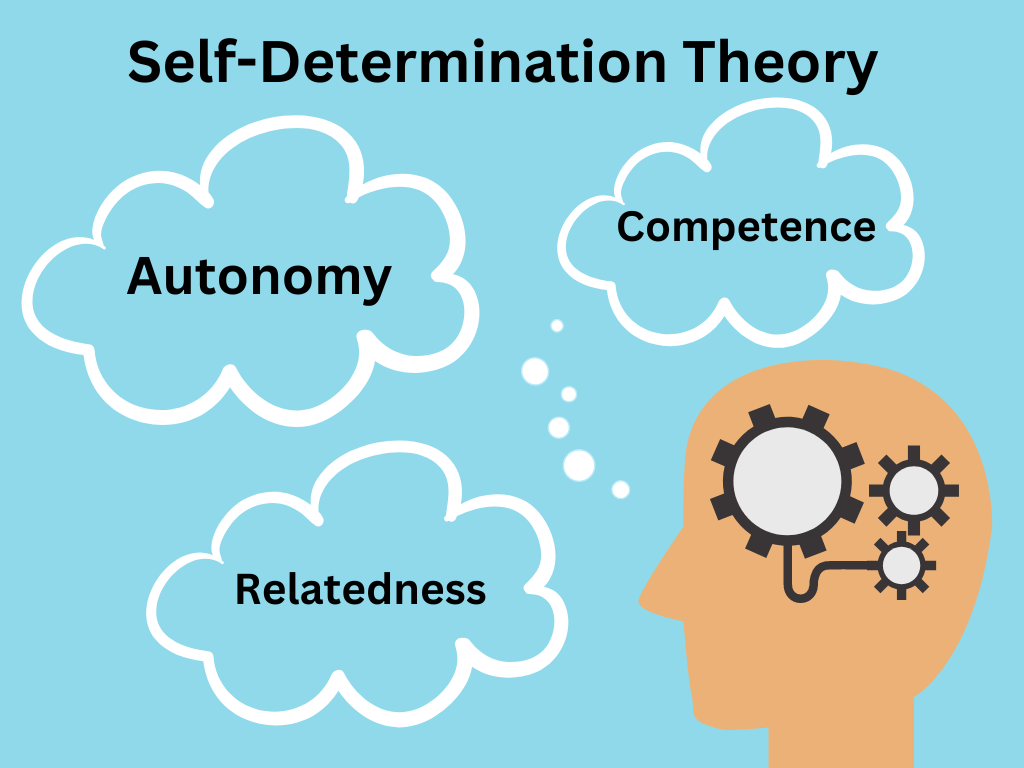
Self-determination theory focuses on three basic psychological needs:
Autonomy: A desire to feel in control.
Competence: A sense of accomplishment that builds confidence in one’s ability to learn.
Relatedness: A desire to belong and feel connected to others.
Self-Determination Theory in the Classroom
Teachers can cultivate self-determination theory in the classroom and increase student motivation by working to increase student autonomy, competence, and relatedness.
Self-determination theory provides a framework for helping teachers foster student motivation and engagement, as well as improving learning outcomes.
This approach will transform the way you think about teaching, student motivation, and course design and preparation.
Tips for Creating Self-Determination in the classroom:
In my next post, I will go over ways to faciliate student autonomy, improve competence and confidence, and foster relatedness and connectedness in your classroom and curriculum. Be sure to follow my blog to receive updates in your inbox.
 ELA Source
You must be logged in to post a comment.