
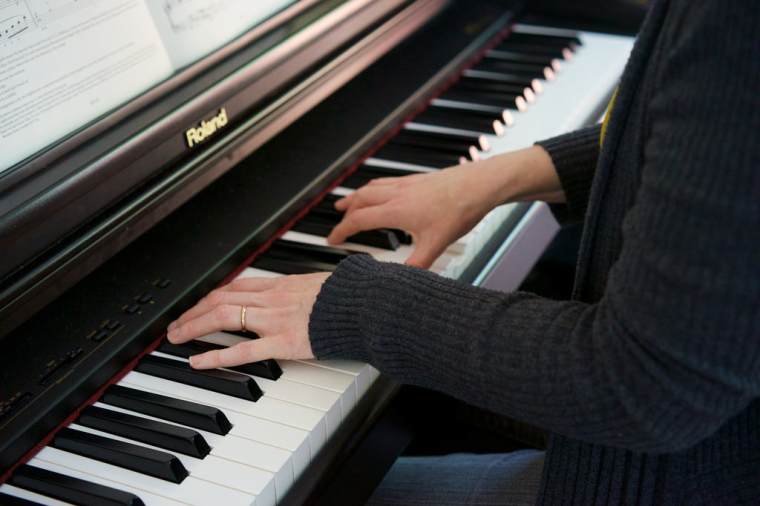
Good writing is not just correct writing. If that were true our jobs as writing teachers would be must easier. Writing is composing. We don’t expect a budding musician to pick up an instrument and begin composing. First, a new musician has to learn how to read music and play the instrument.
This takes years.
We expect it to take years. The new musician has to listen to and learn to play dozens, even hundreds of already existing pieces, while receiving immediate feedback and constant corrections during the process. Corrections in posture, hand position, pacing, etc.. Only after mastering this process can a musician being to learn how to compose small pieces.
Also, even the most experienced musicians have teachers and coaches who provide feedback. Musicians are constantly honing their technique. They expect and even desire feedback.
None of this happens in writing instruction.
Often times we expect students to master the essay form, a beautiful and complex form in its own right, after just one lesson. Sometimes after no instruction at all, just a prompt and a list of requirements.
With writing, we expect students to master writing after one school year, or one semester, or even after one or two assignments, often with minimal feedback from their teachers. Teachers can get angry if they have to tell a student more than once how to use a comma, when a piano teacher knows she will stand by her student and correct her hand position constantly. This is even true of experienced musicians.
I propose a new model of writing instruction, one that focuses more on long-term mastery, teaching specific techniques (such as the selective use of detail or dialogue) rather than assigning one essay after another, providing on-going low-stakes feedback (low-stakes meaning their grade does not depend on it), and creating a culture in our writing classrooms in which students rely on and desire feedback from their instructors and peers.
To find out more about what this technique looks like in the classroom, please follow this blog as I explore this idea in more depth in future posts and provide lessons and resources to implement this new model in the classroom.
 ELA Source
You must be logged in to post a comment.